


You could almost hear that collective pause across social media when the verdict dropped. Or cheers—probably. Because after nearly a year of lawsuits, statements, and silence, the court finally ruled — ADOR wins. NewJeans’ exclusive contracts remain valid until 2029. But behind all the legal jargons and hashtags, this latest court ruling against NewJeans case has left behind deeper questions.
Does this verdict show K-pop still has no room for creative freedom? And what does it say about or female idols/executives trying to lead on their own terms?
And eventually, is this the end of the rebellion — or just the start of a harder truth? Join our discussion below for more thought-provoking insights.
NewJeans Court Case Ruling: ADOR Wins, But at What Cost?
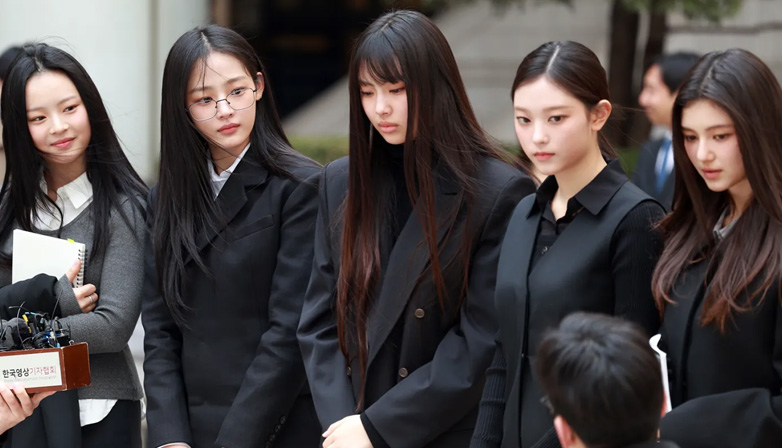
On October 30, 2025, the Civil Division 41 of Seoul Central District Court, with Judge Jung Hoe Il presiding, ruled that NewJeans’ contracts with ADOR remain valid.
The court stated that Min Hee Jin’s dismissal as CEO did not justify contract termination, nor do the alleged“loss of trust” or claims of ILLIT’s plagiarism. In other words, NewJeans must remain under ADOR’s management until July 31, 2029.
“It cannot be recognized that the defendants, the NewJeans members, are being forced to engage in entertainment activities against their free will. The exclusive contracts remain valid, and ADOR retains its position as the management agency of NewJeans under those contracts.”
Seoul Central District Court.
ADOR celebrated the outcome, emphasizing its legal right to manage the group and confirming plans for a new full-length album.
“The court has consistently ruled in multiple related cases that our company holds the position of management agency under the exclusive contracts and that the artists are to carry out entertainment activities with us.
ADOR has finished preparations for NewJeans’s first full album. We are now just waiting on the members.”
ADOR.
NewJeans, through their law firm, announced an immediate appeal, saying a return to ADOR was “impossible” after trust had been “completely destroyed.”
“While the members respect the court’s judgment, given that the relationship of trust with ADOR has been completely destroyed, it is impossible for them to return to ADOR and continue normal entertainment activities.”
Shin & Kim LLC, NewJeans’ legal representative.
The verdict concluded the first chapter of one of K-pop’s most public power struggles — but it also opened up new questions that go far beyond courtrooms.
K-pop’s Invisible Contract: Power Over Passion
Now, you might have seen this coming. You might think that the girls didn’t have a case to begin with. Or that their thoughts and decisions were just the results of Min Hee Jin’s alleged grooming. Yet, others still think that this is just further proof that going against big corporations like HYBE is just impossible.
And that’s the point of how much impact this NewJeans court case ruling for the whole K-pop community.
Because this case is not just about the contract. It represents how far idols can go before hitting the invisible wall of control that defines K-pop’s system.
Since their surprise debut in July 2022, NewJeans symbolized a rebellion against formulaic idol-making — casual aesthetics, minimalist production, and creative confidence.
But that freedom existed under a structure built by others: HYBE’s resources, ADOR’s management, and Min Hee Jin’s vision. That’s why once that structure collapsed, their independence suddenly had no legal foundation.
Now, if you take a look closely, the court basically sent a clear reasoning: emotional trust doesn’t replace written agreements.
Still, to fans, this court ruling against NewJeans case felt just like another reminder that idols can only express creativity within limits set by corporate power.
The Unbreakable System: Why Every Idol Rebellion Ends the Same Way
You might have admired—or loathed her. But either way, Min Hee Jin’s presence shaped every page of this case. The court mentioned her over a hundred times. And they emphasized that her actions — not ADOR’s management — was the one triggering much of the conflict.
But let’s take a step back and look beyond the controversies.
For decades, K-pop has normalized idol obedience and corporate control. Just think of what happened when artists tried to stand up against what they believed was unfair — JYJ, the former FIFTY FIFTY, and now, NewJeans.
No matter how much success these artists built, the power stayed with the company. Freedom, if granted at all, was always on the agency’s terms.

The only company fans once believed to be different was BigHit — until it became HYBE. And the only idols who seemed to have real freedom were BTS, the only group powerful enough to move beyond the system.
But even then, you can’t help but wonder — was that freedom ever truly real?
When a Woman Fights Back: Min Hee Jin and the Cost of Vision
And then came Min Hee-jin — someone bold enough to go “crazy” and challenge everything K-pop stands on. She confronted the system with her vision, reshaped the sound and image of SM Entertainment’s second generation, and built NewJeans as a symbol of authenticity.
And she did it with something that’s still far too rare in this industry: the creative power of a woman.
So when HYBE dismissed her, she became a symbol of resistance. When she fought back, she became a reminder of what happens when women demand control in a male-dominated industry.
Now, as she launches her own agency OOAK, she stands as both cautionary tale and quiet triumph — proof that artistry can survive, even if it cannot win inside the system that birthed it.

Fans as Witnesses: When Fandom Becomes Powerless
This is why, if you have been a longtime avid K-pop fan, the court ruling against NewJeans case just feels…conflicting.
Yes. On paper, the girls might sound ridiculous indeed. But you’ve seen this before, have you? When idols speak out, often times they get silenced—immediately. Groups disbanded, idols terminated not because of failure, but because of friction with management.
NewJeans were supposed to be different — their rise felt organic, their music intimate. Yet, this battle proved that even authenticity can be owned. When the court declared their contract valid, it hits you like another harsh reminder:
in K-pop, artists may inspire the world, but power still belongs to the ones who measure it in contracts, not love.
NewJeans Court Case Ruling: The End of Rebellion — or the Start of a New One?
This case will likely define the next era of K-pop — not through its verdict, but through its aftermath. It will influence how labels structure contracts, how idols approach creative independence, and how fans interpret “freedom” in a world built on control.
Maybe NewJeans lost the lawsuit.
But this fight has already changed the conversation — across fans, companies, and the industry itself. Labels will now rewrite their playbooks to make sure a case like this never happens again. Yet fans will remember what this revealed: that even the most beloved idols still perform with invisible limits, no matter how often the word “freedom” is used.
Yes, NewJeans court case ruling will change the K-pop system entirely. And for better or worse, this is where you—the fans—matter the most. Because in K-pop culture, fandoms are the primary stakeholder. Your choices—what you stream, what you defend, and what you demand—help decide where the industry heads next. And this influence is real and immediate. You do have the power to move where this momentum is going.
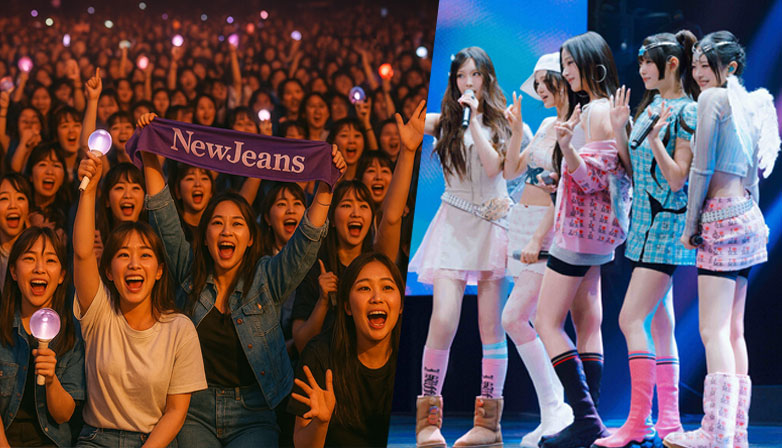
So, what’s your take on this court ruling on the NewJeans case? What kind of K-pop do you want to see—and how will you help make it happen? Let us know in the comments.
Join us on Kpoppost’s Instagram, Threads, Facebook, X, Telegram channel, WhatsApp Channel and Discord server for discussions. And follow Kpoppost’s Google News for more Korean entertainment news and updates.