


BTS reshaped the K-pop business by shifting power from company-defined strategies to audience-driven success. Rather than waiting for institutional approval, global fans propelled BTS into a new economic model that redefined scale and influence. As the BTS Comeback 2026 approaches, their legacy offers a clear case study of how modern K-pop business is built through participation, demand, and global reach.
BTS: From Company Strategy to Global Success
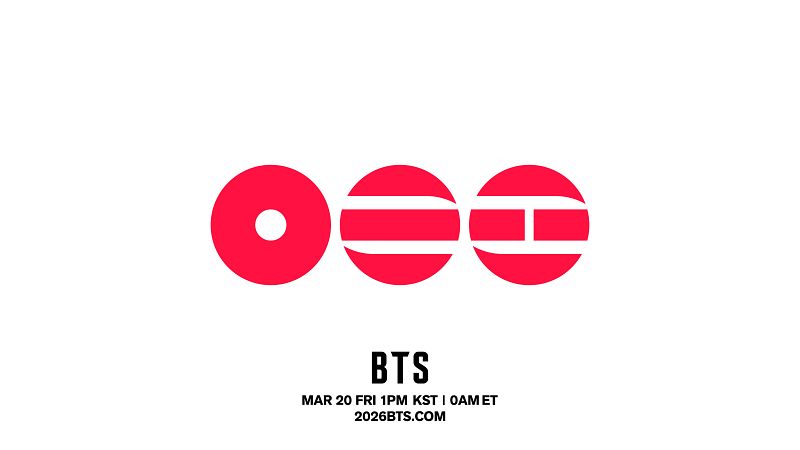


On January 5, Big Hit Music confirmed that BTS would release their fifth album on March 20. Following the release, they will have a World Tour. It marks the group’s first collective comeback after the final member’s military service.
Have you ever wondered how the BTS legacy has slowly turned the gears of K-pop toward a new direction of financial success? How ARMY (fandom) ran up against the limits of the “company-defined” strategy, creating the lead of “audience-defined”? By heading into the deeper reaches of the BTS success timeline, we can understand the journey as we welcome BTS home again.
The Legacy of BTS
Phase 1: “Korea First” 2013 Debut – Early Growth

“Korea First” was all about hierarchy. Domestic validation came first, while international success was expected to follow later, if at all. Agencies believed that, since Korean audiences were their loudest and nearest microphone, pleasing them first felt rational to unlock more exposure. BTS’ career did not challenge this structure. In fact, their experience has grounded the identity among Korean audiences and earned them credibility worldwide.
On July 12, 2013, BTS debuted in Korea with their single album, “2 COOL 4 SKOOL”– a slow commercial test run, but it established their presence in hip-hop style. Eventually, led to a kick-start into their career.
In 2014, fanning out through an early Asia tour that built a reputation for performance and fan engagement, the ARMY culture was born on a small platform–mainly feeding off regular album merch and narrative-driven contexts. Limited interaction created an audience-defining moment as fan participation took hold, bringing attention to the group.
Finally, a first breakthrough through mainstream with HYYH, a concept that follows their main Bangtan universe plot, which translates to The Most Beautiful Moment In Life, resonating deeply with domestic audiences. They earned Top-Tier validation through Album of the Year at the 2016 Melon Music Awards for highlighting ”Young Forever”. Through this platform, BTS was showcased and pulled to the forefront of the global audience.
Phase 2: Global Doors Open – Tremendous Growth
As global streaming platforms expanded, ARMY’s international online presence began to outpace domestic signals, prompting the industry to respond as BTS gained greater success on international charts. Success no longer needed to be validated locally before expanding–international ARMYs were signaled to participate without waiting for permission, a strategy that enhances audience-defined success.
In May 2017, BTS won the Top Social Artist Award at the Billboard Music Awards, which drew attention and expanded their global mainstream visibility. Through a powerful impression with the successful “DNA” track, they hit it up to the first U.S. televised performance at the American Music Awards.
As the doors of the U.S. officially opened in 2018, BTS gained momentum and expanded their overseas fandom with the release of “Love Yourself: Tear,” which peaked at Billboard 200 No.1 as the first K-pop album to top the chart. Following these successes and the opening of more opportunities with global doors. In 2019, BTS launched their world’s biggest tour – “Love Yourself: Speak Yourself”.
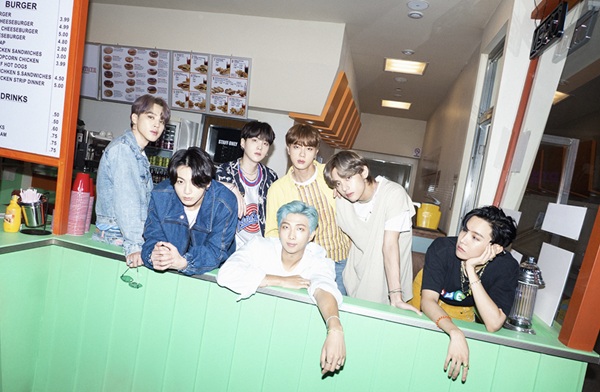
In 2020, “Dynamite” debuted at No. 1 on the Billboard Hot 100. Shortly after, in 2021, it earned BTS their first Grammy nomination (Best Pop Duo/Group Performance). This ultimately shifts the industry’s perspective: making K-pop an immediate success achieved through the support of coordinated global fandom and the members’ hard work.
Business Perspective: HYBE Stocks
Below is a chart analysis of HYBE’s Revenue from 2020 through 2025:
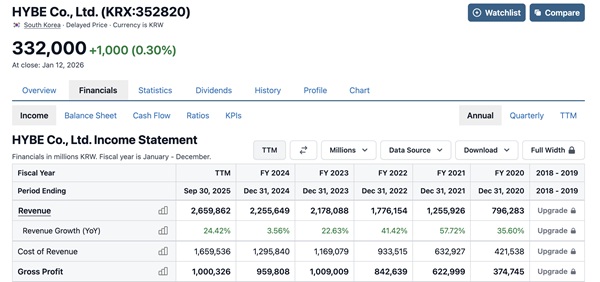
BTS did not initially debut as a global group. They created a new path as the audience-defined strategy scaled. Its financial growth became impossible to ignore. BTS’ overseas demand transformed Big Hit Music (HYBE) from a domestic-focused into a global international enterprise.
HYBE’s revenue offers the clearest explanation why the K-pop industry dropped everything to open doors and welcome an audience-defined strategy. As the charts depict, HYBE’s top line expanded from roughly ₩796.3 billion (2020) and slowly crept up to about ₩2.6 trillion (2024). This significant growth over the five years reflects that global demand could be generated and monetized. Not all company-defined systems are the way to live; it is not the only viable path to scale.
BTS’ legacy does not suggest that Korea became irrelevant as the first market to strike. The audience-defined strategy was only a response that reshaped the economics of global entertainment and how the world consumes content and invests in entertainment artists today and into the future. Now, more rookie groups are debuting with an overseas focus to attract larger crowds and greater exposure.
Join us on Kpoppost’s Instagram, Threads, Facebook, X, Telegram channel, WhatsApp Channel and Discord server for discussions. And follow Kpoppost’s Google News for more Korean entertainment news and updates.