

Movie theaters once held a special place in cultural life. Going to the movies wasn’t just entertainment. It was where families and friends hung out, laughed, and left with something new to talk about. Sometimes a film even sparked a bigger dream. Writing a song, filming a short clip, or imagining your own story on a screen. Then the pandemic hit in 2020, breaking the rhythm. Even years later, the habit never fully returned. In 2025, the Korean box office didn’t produce 10 million hits. Fewer releases. Yet audiences still showed up for the films they truly wanted to see. People didn’t stop loving movies. They just lost the tradition of loving them together. This isn’t a story of failure. It’s a story of change. As streaming and short-form video reshape daily viewing, Korean cinema is being pushed to rethink what a “box office hit” and “success” even mean in 2025.
Korean Box Office 2025: When Going to the Movies Becomes a Choice
The Korean box office had a rocky year in 2025. With fewer films and moviegoers still came to watch their desired movies, the Korean box office in 2025 saw no 10-million hits. The number of moviegoers dropped sharply compared to previous years.
The number of viewers in 2025 reached 106.08 million, down from 123.12 million in 2024. Domestic admissions in 2025 (42.67 million) were the lowest in two decades. In addition, this shows that heartfelt storytelling, unique comedy, and adaptations of webtoons like “My Daughter Is a Zombie” are still loved by moviegoers.
High‑Grossing Films and Admissions in 2025
The Korean horror-comedy “My Daughter Is a Zombie,” released in July 2025, won over audiences’ hearts. The summer broke the year’s opening records with 430,000 viewers, bringing new hope to the Korean film landscape in 2025. It exceeded big films like “Mission: Impossible – Final Reckoning” and even “Exhuma”.
The zombie film also became the highest opening for a Korean comedy, surpassing the Korean hit “Extreme Job.” It broke the record for the highest single-day pre-release sales as well, surpassing Hollywood’s “F1” (4.1 million), becoming the fastest film to reach 4 million admissions in 2025. In addition, the film gained its BEP (break-even-point) in 7 days (2,2 million admissions).
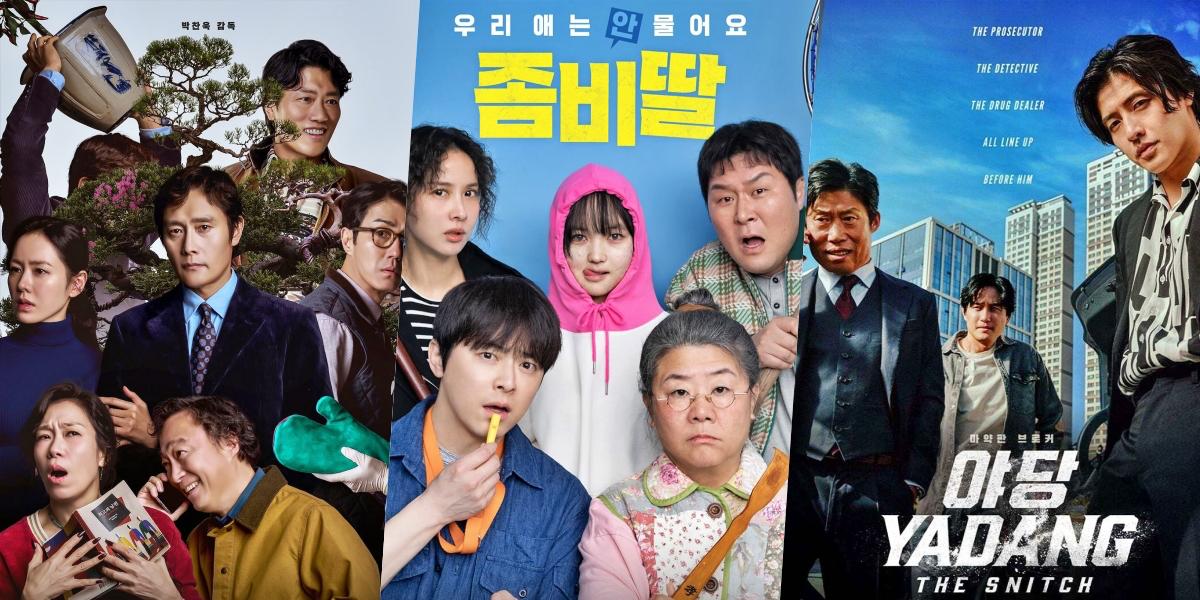
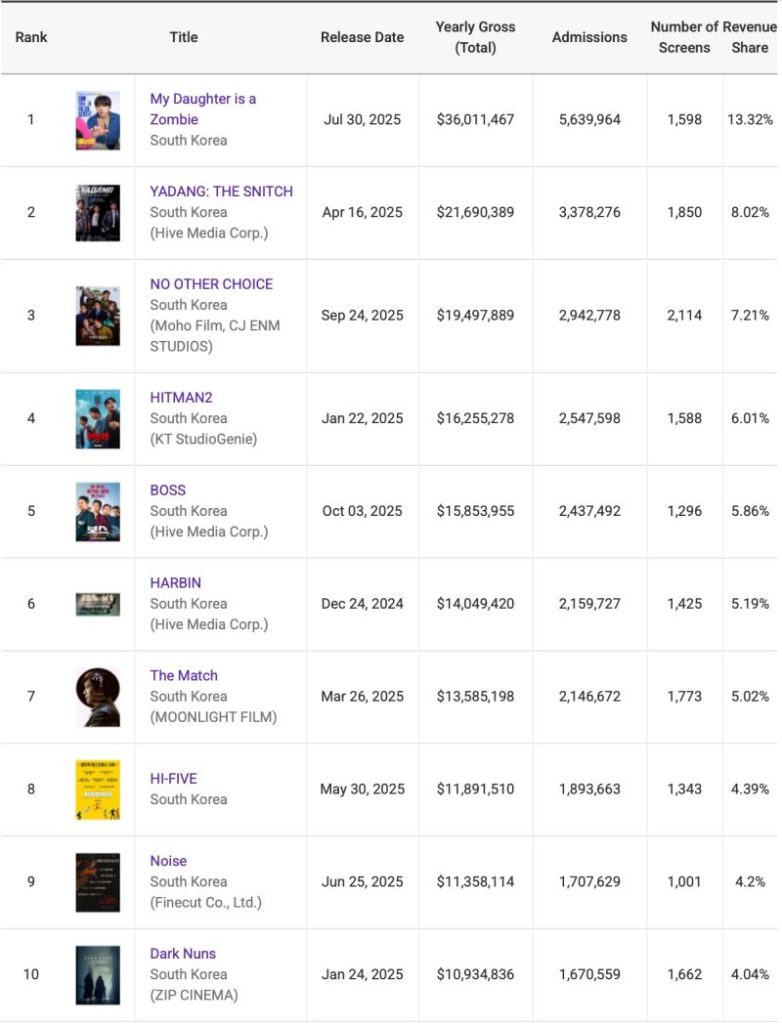
The comedy thriller became the biggest local success, grossing over US$36 million and selling 5.63 million tickets. It surpassed the crime comedy “YADANG: THE SNITCH”, which made over US$21.69 million and drew 3.38 million admissions. The thriller “No Other Choice” followed, earning about US$19 million from 2.94 million admissions. Additionally, compared with pre-COVID years, when two or three films topped ten million admissions, 2025’s threshold for success hovered around five million.
Other films like “HITMAN 2,” “BOSS,” “The Match,” and “HI‑FIVE” made the top ten. But each drew less than three million admissions. The table from KOBIZ below summarises the key numbers.


What Changed in 2025
The “10 Million” Shortage Is Real and Symbolic
In South Korea, 10 million moviegoers isn’t just a high ticket sales number. It’s a symbol of a high-profile film, a blockbuster, and a truly national event. Unfortunately, no film reached that milestone in 2025. Besides the lack of Korean films last year, it shows that people prefer other outdoor activities, such as travel, sports, and other forms of outdoor entertainment, over going to the cinema.
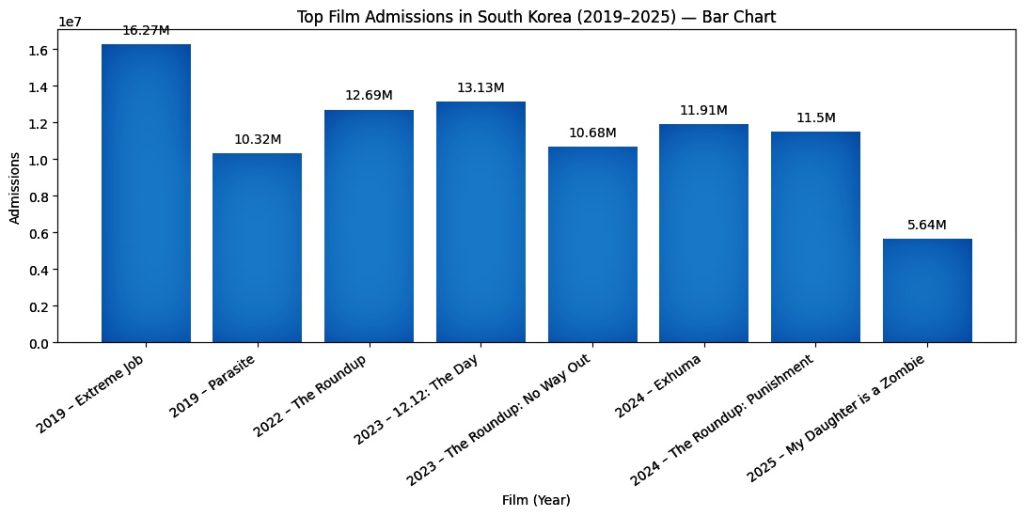
The drop in ticket sales from 2024 to 2025 also shows bigger problems for the industry. Even though “My Daughter is a Zombie” was one of the top movies of 2025, it drew only 5.64 million viewers. This was less than half the number of people who watched the popular film “Exhuma” just a year before.
Foreign Films Didn’t Just Win, They Filled the Calendar
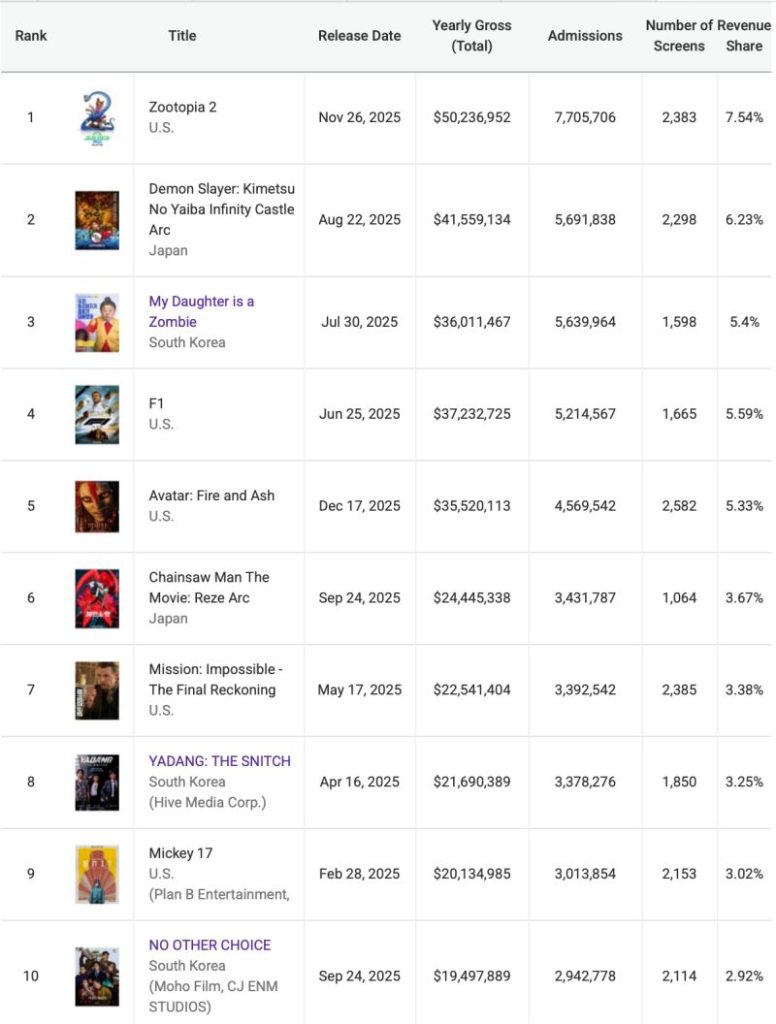
Overall, the top five movies in 2025 were mostly foreign films. A pop culture critic, Jung Duk-hyun, said that because there weren’t many Korean films, theater owners depended on foreign films or animation to keep their businesses running.
Streaming Kept Talent and Risk-Taking Away From Theaters
Some critics say fewer people are going to the movies because filmmakers are putting their movies on global streaming services like Netflix and Disney+. Streaming movies are less risky than traditional movies.
Because of this, the movie industry is changing. Producers are making fewer full-length movies. Investors are putting money into stories people already know, famous actors, and directors who have already made hits. Streaming services are playing a bigger role in funding, sharing, and helping movies generate revenue over time.
They also bring both problems and chances for filmmakers. Some movies now come out online first as originals for the streaming service. Some movies play in theaters for a short time before going online, sometimes for just a few days or up to 6 months. Global streaming services fund Korean original movies that reach audiences worldwide. As technology and viewing habits change, the industry must adapt while keeping theaters alive.
Theatrical Viewing Becomes “Purpose-Driven”
Last year, the government offered a 6,000-won discount on tickets to encourage people to come to the cinema. But the boost shrank after the program ended.
With so many great streaming options at home, going to the movies needs to feel special, like dating or watching your favorite actor’s new movie.
In 2025, Japanese anime and K-pop concert films/documenters showed that this approach works. Releases that create a sense of event and attract dedicated fans can succeed even without large budgets. If you’re a K-pop fan, catching up with your favorite groups like BLACKPINK, BTS, SEVENTEEN, Stray Kids, and other groups feels like a must.
Why Moviegoers Are Staying Home
The pandemic closures broke people’s habits, including going to the movies. The surge of streaming platforms and subscriptions is the biggest factor. Now, viewers have more options with endless libraries of K‑content at their fingertips.
Economic uncertainty also shapes viewing habits. When ticket prices feel too high, many viewers choose streaming platforms like Netflix and Disney+ instead. They offers more content, less cost, and no commute.
According to the 2025 Broadcast Media Usage Behavior Survey, 8 out of 10 people in South Korea use online video services (OTT). The overall OTT usage rate was 81.8%, with users ranging from teenagers to those in their 30s and 40s. The main types of OTT content are short-form video (78.9%), original program (68.6%), and pay broadcast production program (42.0%). That domestic shift is reinforced by the scale of global streamers. In early 2025, Netflix reached over 300 million paid subscribers worldwide.
The Future of Korean Cinema: Why Watching Together Still Matters Now
Korean cinema is not vanishing, but it’s transforming. Moviegoers aren’t disappearing. They’re just choosing their moment. The Korean box office in 2025 shows that many now save theater visits for experiences that feel communal, unmissable, and deeply personal. Everything else waits for streaming.
That shift lowers the ceiling, but it also clarifies what theaters are for. In 2025, the five million admissions became a real achievement, proof that people still want to feel something together. Films like “My Daughter Is a Zombie,” “YADANG: THE SNITCH,” and “No Other Choice” reminded audiences that the cinema can still break routine and create a shared emotional moment.
People still love movies. The question is where, how, and why they choose to watch them. In an era where most households juggle multiple streaming subscriptions and short clips dominate daily attention, theaters must offer something that cannot be paused, skipped, or scrolled past.
The future of Korean cinema will belong to stories that justify the gathering through scale, feeling, sharper storytelling, and films that demand the shared experience. In a smaller market, meaning matters more than numbers. So here’s the real question for 2026: what story will bring people back together?
Join us on Kpoppost’s Instagram, Threads, Facebook, X, Telegram channel, WhatsApp Channel and Discord server for discussions. And follow Kpoppost’s Google News for more Korean entertainment news and updates.