


On February 24th, Taemin was confirmed to have terminated his exclusive contract with his agency, Big Planet Made. Despite still having a remaining contract period, Taemin firmly submitted the termination request to CEO Cha Ga Won. As reported by The Fact, Taemin leaves Big Planet Made over unresolved issue of alleged unpaid wages, with allegations of management negligence. This case is not simply a personal conflict between an artist and an agency. It represents a gap in transparency and industry regulation within the complex governance of the K-Pop industry.
Taemin Leaves Big Planet Made Over Unpaid Wages – What Actually Happened?
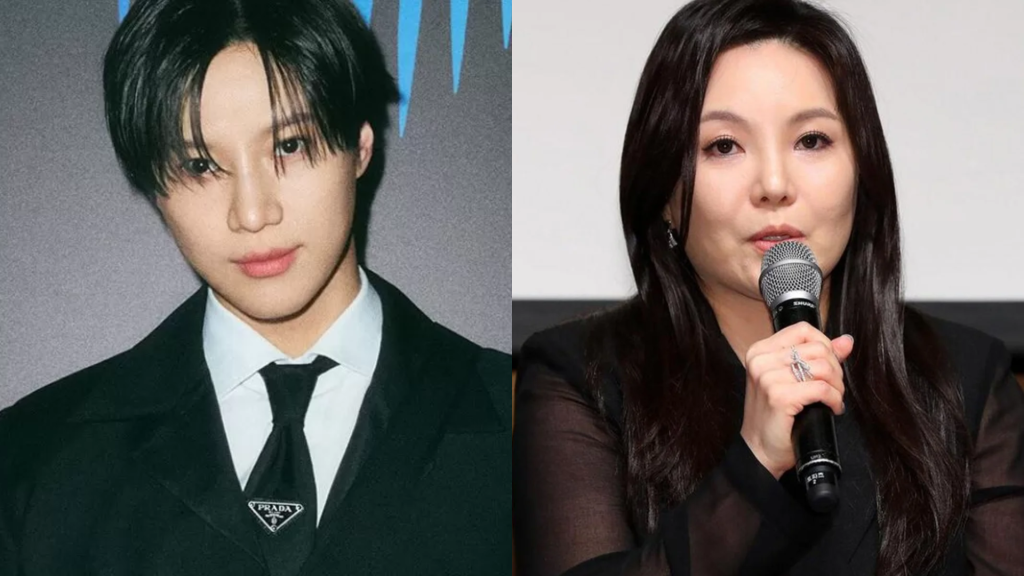
In reality, comfort and benefits will always be the priority in an industry and for artists. If they don’t receive adequate benefits, then be prepared to be left by the agency at any time.
The report stated that, even though the contract period had not yet expired, Taemin chose to directly request termination of the cooperation with CEO Cha Ga Won, ending a professional relationship that had lasted almost two years. This step came purely from the artist’s initiative, and management ultimately had little room to refuse.
Previously, several media outlets raised concerns about alleged unsettled salary arrears, as well as several business decisions allegedly made by management involving outside parties without Taemin’s knowledge or full approval.
On the other hand, the company is said to be facing significant financial pressure, including outstanding payment obligations to several artists and external partners. This situation raises concerns about the company’s operational sustainability and ability to support its artists’ activities.
While no detailed statement has fully clarified these allegations, this dynamic underscores the importance of financial conflicts in the entertainment industry. Disputes over payments, contracts, and corporate governance frequently arise amidst the increasingly complex business structure of the K-Pop industry.
Taemin and His Unpaid Wages: Transparency and Financial Accountability Issue

Beyond individual cases, there’s a far more fundamental issue within the K-Pop industry: how the revenue-sharing system and financial accountability are actually implemented in practice. Musicbusiness notes that South Korea already has a fairly detailed legal framework, specifically the Standard Form of Exclusive Contracts for Musicians (SFEC 2024), issued by the Ministry of Culture, Sports, and Tourism.
According to Article 12 of the SFEC, all artist revenue, whether from music sales, digital content, or commercial activities, is first deposited into the company’s account and then distributed after deducting distribution fees, royalties, direct operational costs, and other mutually agreed-upon expenses. Furthermore, the company also:
- Must pay the artist’s share within 45 days of receiving payment from the third party.
- Must provide detailed income settlement reports.
- Must disclose accounting records upon request by the artist.
However, in practice, conflicts often arise due to several things:
1. Interpretation of Deductible Expenses
Although the law stipulates that only direct costs are deductible, disputes often arise regarding the allocation of manager fees across groups. This is followed by office operating costs and even interest on company loans.
These non-transparent accounting practices often lead to accusations of disproportionate deductions from artists’ shares. In Taemin’s case, the issue of alleged unpaid wages illustrates how financial transparency issues can escalate into contractual conflicts.
While specific details have not yet been fully released, this underscores that even with a strengthened industry regulatory framework, implementing financial accountability remains a critical issue in entertainment agency governance.
2. Transparency Obligations That Are Still Reactive
According to the Korea JoongAng Daily, under the old regulations, agencies were only required to disclose financial reports upon the artist’s formal request. This differing interpretation of “disclosure” often led to disputes.
The issue of Taemin’s alleged unpaid wages could also reflect the future need for access to information. If transparency is reactive, typically only disclosed upon request, the potential for misunderstanding or distrust increases.
A major controversy in 2022 involving Lee Seung-gi, who claimed not to have received music royalties for 18 years, prompted legal reform. The revised law, known as the “Lee Seung-gi Law,” now requires agencies to provide regular financial reports even without the artist’s explicit request.
3. The Risk of Unpaid Wages in a Centralized Fund System
Because the company is authorized to receive all revenue on behalf of the artist, failure to distribute the artist’s share could constitute a serious violation, potentially even amounting to embezzlement of business funds under Korean law.
This means the issue directly relates to industry regulation and potential criminal consequences.
What Should K-Pop Agencies Do?
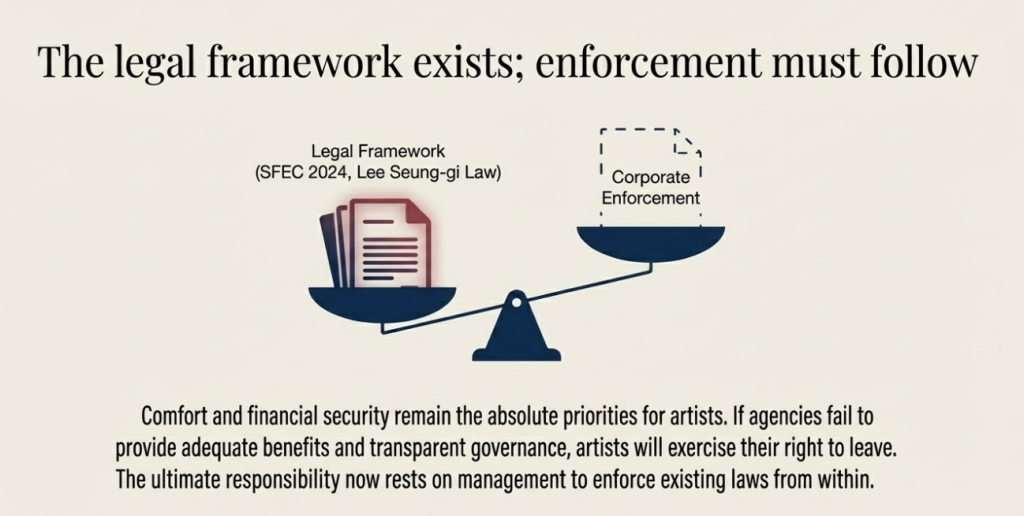
Illustration of the three main pillars that K-Pop agencies must follow to maintain financial transparency
Proactive Financial Reporting
Rather than waiting for artists to request it, agencies should regularly submit reports on revenue, profit sharing, and detailed fee deductions. This approach aligns with the spirit of transparency currently under scrutiny in industry regulatory reforms.
Accurate Bookkeeping
Korean law requires companies to keep separate accounting records for each artist, allowing them to deduct only expenses directly related to the artist’s activities. Neat, auditable bookkeeping is a crucial safeguard against artists being disadvantaged by unfair deductions.
Strict Compliance with Payment Deadlines
Regulations also explicitly stipulate that payments to artists must be made within 45 days of the company receiving funds from a third party. Adhering to this deadline is essential to avoid disputes over outstanding payments and the legal risks that may arise.
Governance, Not Just Regulation
The Taemin unpaid wages allegations expose the structural vulnerabilities beneath K-Pop’s polished global image. When an artist of Taemin’s caliber is pushed to terminate a contract over financial disputes, it signals that regulatory frameworks alone mean little without consistent enforcement. The real need is a cultural shift within agencies toward genuine transparency, accountability, and respect for the artists who drive their business.
That Taemin leaves Big Planet Made under these circumstances is a reminder that South Korea’s legal framework is not the problem — the gap lies in how consistently it is applied at the corporate level. As K-Pop’s commercial value continues to grow, financial accountability standards must grow with it. Without that commitment, the cost of governance failures will keep falling on the artists themselves.
Join us on Kpoppost’s Instagram, Threads, Facebook, X, Telegram channel, WhatsApp Channel and Discord server for discussions. And follow Kpoppost’s Google News for more Korean entertainment news and updates.