
SAMG Entertainment’s 2025 results suggest that, by up-targeting and building an integrated IP ecosystem, Korean animation can become a higher-margin business as content, retail, theatrical releases, and overseas licensing begin to reinforce one another. With a new Teenieping sequel also set for 2026, the franchise’s expansion is still unfolding. Discover how SAMG Entertainment turned animation IP, “Teenieping,” into a major earnings driver.
SAMG Entertainment Turned “Catch! Teenieping” Into a High-Margin IP Business in 2025
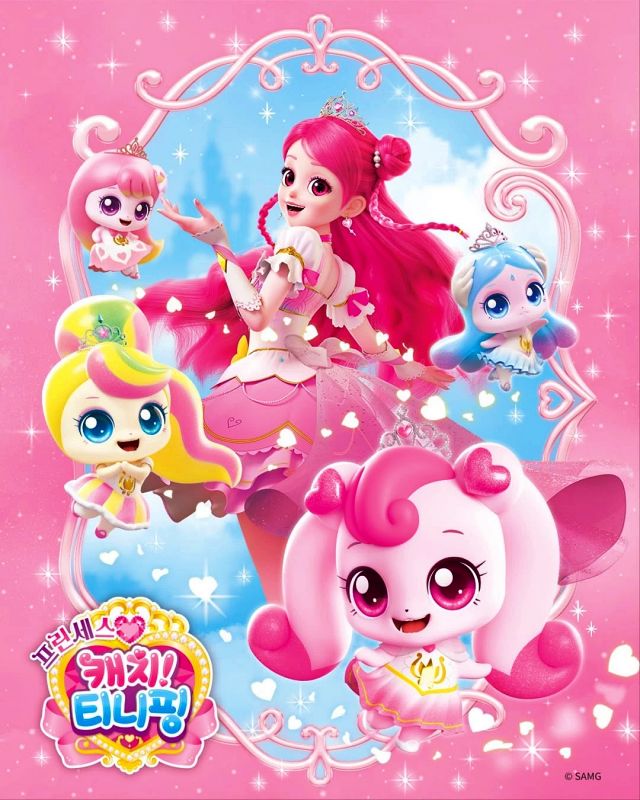


A 3D animated series titled “Catch! Teenieping” was first released on South Korean children’s television during the global pandemic in 2020. Since then, the franchise has grown beyond childhood entertainment and become a notable part of Korean pop culture.
This expanded appeal is evident at SAMG’s Teenieping store in Seongsu-dong. It drew visitors in their 20s and 30s seeking nostalgic comfort, extending foot traffic beyond the franchise’s core young audience.
That cross-generational connection is now a scalable business driver for SAMG Entertainment. As a result, the once-niche children’s franchise is transitioning into a lifestyle brand, underpinning both the company’s earnings rebound and future growth trajectory.
Why 2025 Became a Breakout Year for SAMG’s Character IP Business
SAMG Entertainment’s 2025 results show that a Korean animation franchise can grow into a broader consumer business. The company reported KRW 141.2 billion in revenue and KRW 22.6 billion in operating profit for 2025, reversing a KRW 6.1 billion operating loss in 2024. Operating margin reached 16%, a notable jump from the prior year’s negative margin
Those numbers matter because they point to more than a one-year recovery. They suggest that SAMG’s earnings mix is changing. Instead of relying mainly on broadcast performance, the company is generating greater value from its owned intellectual property through products, collaborations, licensing, theatrical releases, and destination-style retail. “Catch! Teenieping,” which began as a children’s 3D animated series, now sits at the center of that shift.
Why “Teenieping” Is No Longer Just a Children’s Franchise
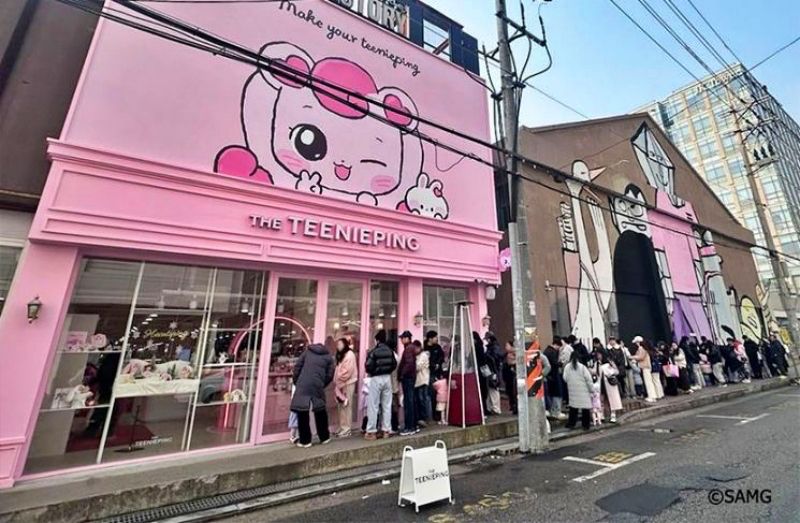
The shift is not only visible on the balance sheet but also in Seoul. At The Teenieping Seongsu flagship store, adults line up alongside children and parents, turning the franchise into a multigenerational retail brand instead of a single-age children’s hit.
SAMG said the store drew 3,000 visitors in its first two days and has averaged around 700 visitors a day. According to SAMG’s 2025 reports, visitors in their 20s account for 20.6% of total customers.
These young adults have more money than children. They view characters as fashion and lifestyle icons. The collaboration with aespa, Hearts2Hearts, and NCT WISH acts as a vital bridge. It connects animation fans with K-pop fandoms. This creates a multi-layered ecosystem of loyal fans.
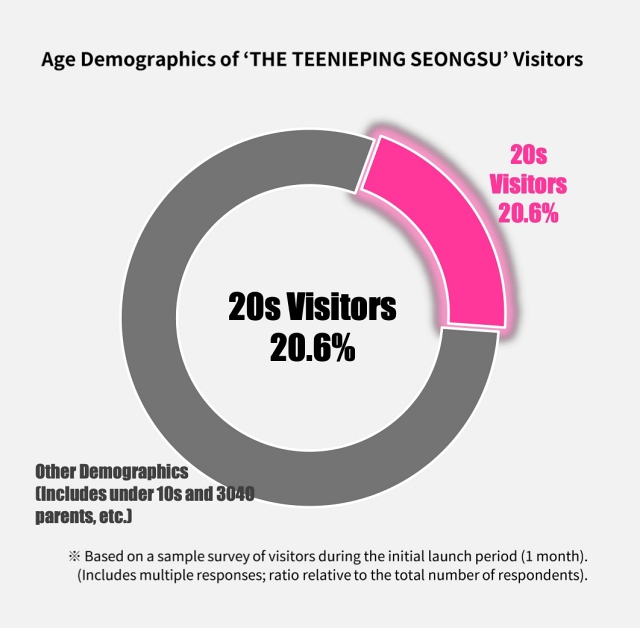
That adult demand matters for two reasons. First, it expands the addressable market beyond preschoolers and young families. Second, it supports higher-margin revenue from character goods, collaborations, and collectible merchandise.
In other words, emotional attachment is becoming a monetizable business asset. SAMG’s own language around “up-targeting” captures the strategy well: the company is raising the average age of its fandom without abandoning its core child audience.
How Did SAMG Entertainment Turn a Loss Into a Record Profit
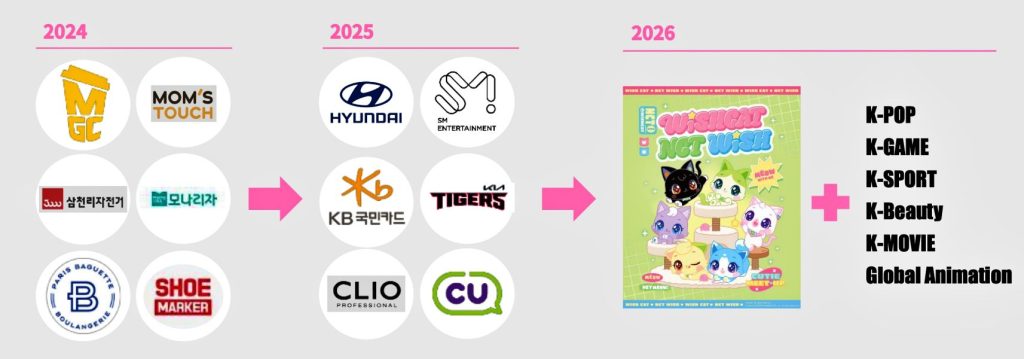
Animation is expensive, and hit-driven media businesses are fragile when they rely on one channel alone. SAMG’s 2025 results suggest a different model is emerging. The company tied its IP to higher-margin channels throughout the year, including retail and cross-industry collaborations. The 2025 performance as more than a simple rebound, arguing that the company had effectively reshaped its profit structure.
The numbers support that interpretation. Revenue rose 21.3% year over year, while operating profit improved by roughly KRW 28.7 billion. That scale of margin recovery usually signals that a company has done more than sell a few more units. It signals better operating leverage.
For SAMG, the key difference appears to be the ability to translate fandom into repeat purchasing and broader brand usage, rather than relying solely on animation viewership. CEO Kim Suhoon said,
SAMG Entertainment’s mission is to bring paradigm-shifting Korean characters and animation to the world stage. Riding the global K-culture wave, we’ll swiftly demonstrate our potential to fans worldwide.
CEO Kim Suhoon
Table 1: SAMG Entertainment Key Financial Metrics (FY2024–FY2025)
| Metric | FY 2024 | FY 2025 | YoY Change | Strategic Impact |
|---|---|---|---|---|
| Total Revenue | KRW 116.4 Billion | KRW 141.2 Billion | + 21.3% (Record High) | Achieved record-high revenue through IP-driven retail and global licensing. |
| Operating Profit/Loss | (KRW 6.1 Billion) | KRW 22.6 Billion | + KRW 28.7 Billion | Representing a massive KRW 28.7 Billion year-on-year improvement. |
| Operating Profit Margin (OPM) | (5.0%) | 16.0% | + 21.0% points | Proves the leverage of owned IP; shift from low-margin service to high-margin branding. |
What Makes Collectability So Powerful in the Teenieping Business Model
One reason “Teenieping” has scaled so effectively is its design. The franchise has more than 140 interwoven characters and a highly structured universe built around emotion, identity, and collecting behavior.
CEO Kim Suhoon said the strategy was built not around a single mascot, but around a growing set of characters with different personalities and traits.
“Teenieping doesn’t rely on a single character. Each season expands the universe with new ones.”
CEO Kim Suhoon
That matters because collectability is one of the strongest engines in character merchandising. A child or fan who likes one character may buy it once. A child or fan who wants to complete a set behaves differently. That behavior produces repeat purchases, greater resilience across seasons, and longer franchise life.
It also helps explain why “Teenieping” has become a cultural phenomenon in Korea. For the past two years, according to the 2024 Character Industry White Paper cited by Korea JoongAng Daily, Teenieping ranked No. 1 among favorite characters for children ages 3 to 9, overtaking Pororo’s long-held dominance.
Why SAMG’s Global Growth Looks More Balanced Than Hype-Driven
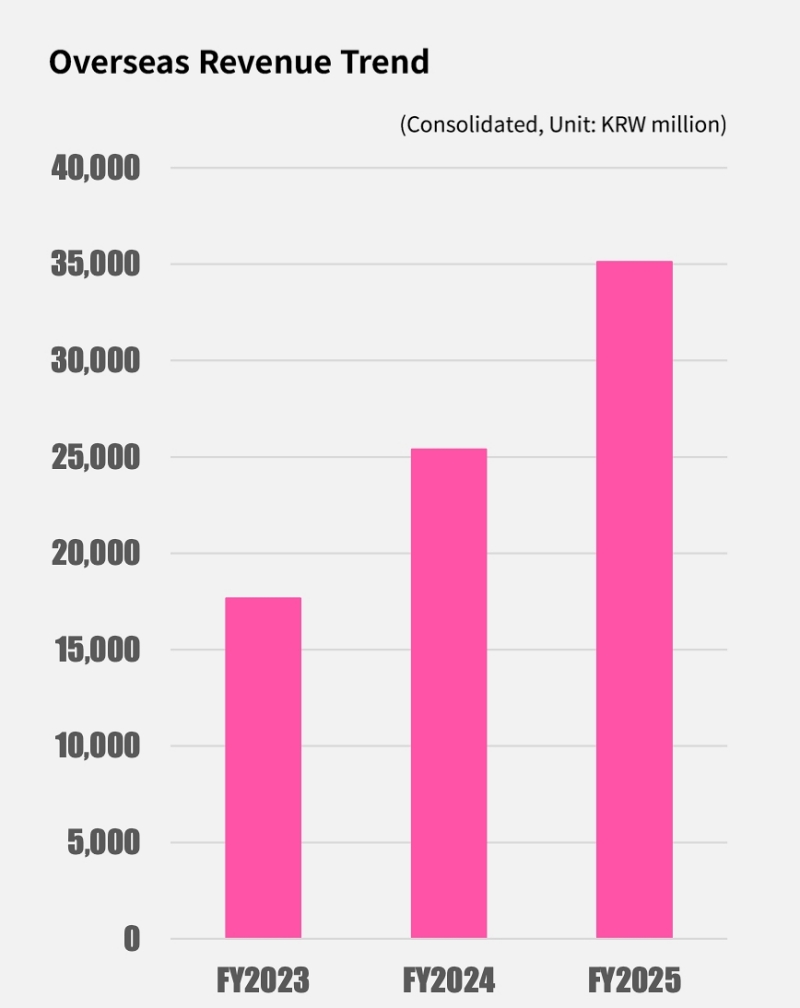
The company’s overseas business also deserves attention, though this is where precision matters most. SAMG said overseas revenue rose 35.3% year over year to about KRW 35.1 billion in 2025, showing that its IP expansion is not confined to the Korean domestic market.
The company also highlighted growth tied to “Metal Cardbot” in China and Russia, suggesting that its global story is broader than a single franchise.
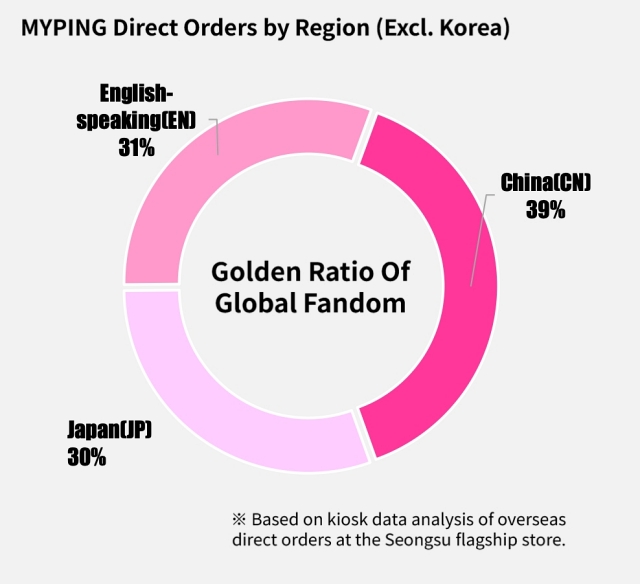
Just as important, the Seongsu store’s on-site kiosk revealed a fairly balanced mix of overseas direct orders: 39% from China, 31% from English-speaking markets, and 30% from Japan. That does not represent the company’s entire international revenue mix, but it does suggest that fandom interest is not concentrated in only one overseas region.
SAMG recently signed an agreement with UK company 8Lions to distribute English-language versions of its IP content mainly through new media, an awareness-building move before fuller commercial expansion.
| Region | Entry Asset | Strategic Partner / Tactic |
|---|---|---|
| English-Speaking Markets | Catch! Teenieping | Partnership with 8Lions (UK) for new media distribution; a “seed-sowing” strategy to build IP awareness before retail entry. |
| China & Russia | Metal Cardbot | Rapid expansion of Season 2 and 3; leveraging established “boys’ genre” demand to diversify the IP portfolio. |
| Global (General) | Heartsping Secondary Feature | Secondary theatrical installments aimed at solidifying global box-office presence following the success of the 2024 film. |
Why “Teenieping”’s Theatrical Expansion Matters for SAMG’s IP Business
“Teenieping”’s theatrical strategy is another reason the franchise now looks more durable. A film does more than add ticket sales. It refreshes the story world, deepens attachment, and creates new moments for merchandise, licensing, and social media marketing.
SAMG said the first feature, “Heartsping: Teenieping of Love,” reached 1.24 million admissions, placing it among the top three highest-grossing Korean animated films.
The sequel, “Teenieping: Legend of the Whale Heartstone,” is scheduled for release in summer 2026. That sequel matters because it shows SAMG is treating the franchise like a long-cycle IP rather than a short-lived TV property.
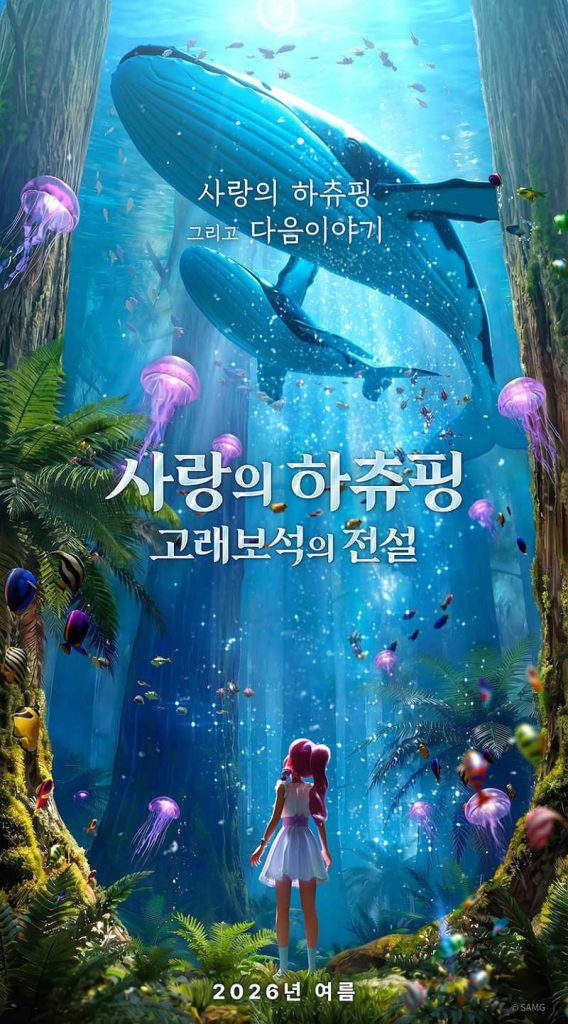
The company has also partnered with BY4M Studio on the new film, combining theatrical expansion with digital marketing strength. For an IP business, that kind of extension is strategically important: every new release is both a content event and a commercial reset button.
“This new feature represents an important milestone for the expansion of SAMG Entertainment’s IP universe,” a company spokesperson said.
Why Policy Support Matters for the Next Phase
SAMG’s success remains company-specific, but it is unfolding in a policy environment that is increasingly supportive of animation.
In April 2025, South Korea’s Ministry of Culture, Sports and Tourism announced its 2025–2030 Basic Plan for Animation Industry Promotion. The plan calls for a KRW 150 billion animation-focused fund by 2029 and an expansion of the animation workforce to 9,000 by 2030.
Those targets matter because Korea’s animation industry has long faced structural limits in investment, workforce depth, and distribution. Government support alone does not create durable global IP. But it can reduce the bottlenecks that make it harder for studios to scale. If SAMG’s 2025 performance is a company-level proof of concept, the policy plan suggests the state also wants more Korean animation businesses to move in the same direction.
What SAMG’s 2025 Results Really Suggest
It is still too early to call “Teenieping” a permanently proven global franchise. One strong year does not eliminate execution risk, and international scaling is rarely smooth. But SAMG’s 2025 results do make one thing clearer. Korean animation becomes much more financially powerful when it is treated as an IP ecosystem rather than a programming slot.
That is the real significance of “Teenieping”’s turnaround story. SAMG did not just produce a popular show. It built a business around fandom, collectability, retail traffic, theatrical extension, and overseas licensing. If the company can keep that system working across new seasons and new markets, “Teenieping” may become more than a hit. It may become one of the clearest modern examples of how Korean animation creates durable enterprise value.
Join us on Kpoppost’s Instagram, Threads, Facebook, X, Telegram channel, WhatsApp Channel and Discord server for discussions. And follow Kpoppost’s Google News for more Korean entertainment news and updates.