

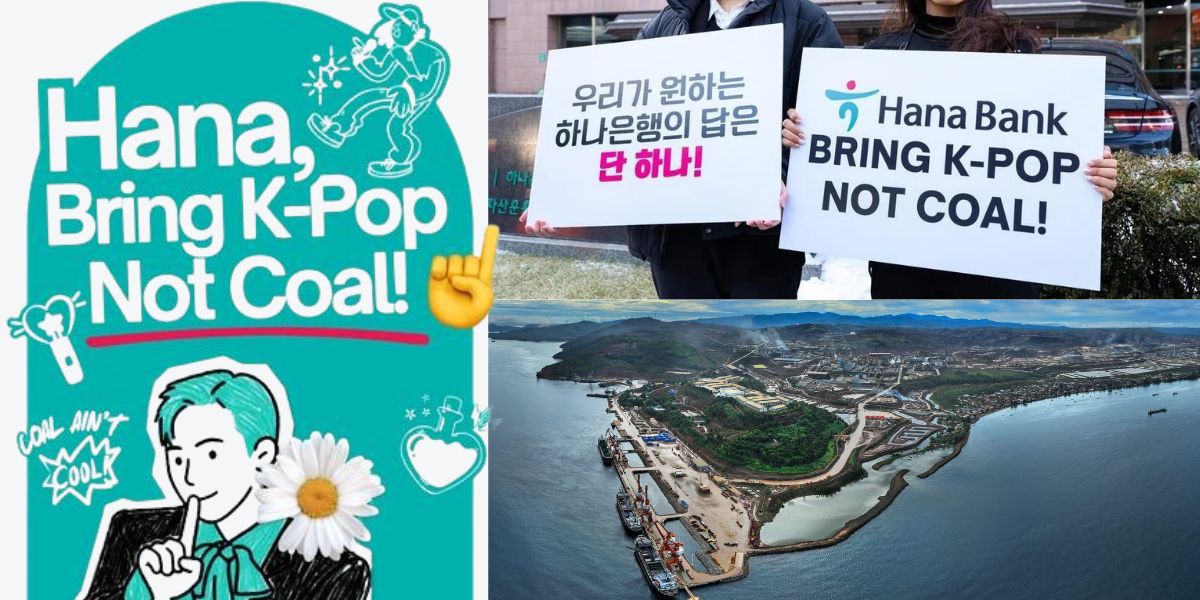
As the EV boom accelerates, the coal-powered reality behind nickel production on Obi Island—financed in part by Hana Bank—has sparked global backlash led by Kpop4Planet, summed up in one demand: “Hana, Bring K-pop Not Coal.”
When K-pop Meets Coal: Fans Challenge Green Image of Hana Bank
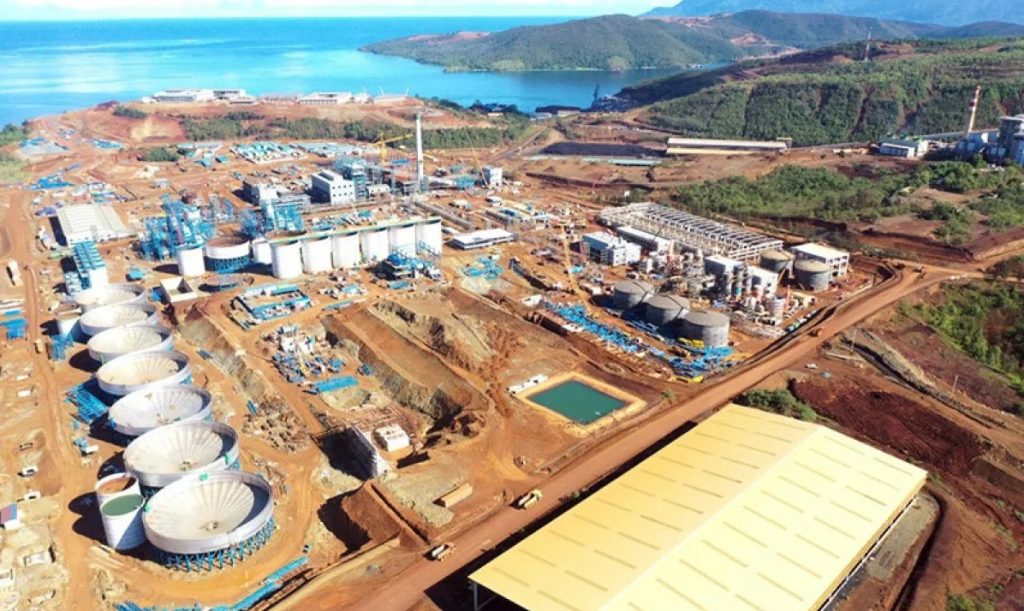
The promise of clean energy—and the reality behind it
Electric vehicles are often framed as the future: cleaner cities, lower emissions, a decisive shift away from fossil fuels. At the center of this transition is nickel—an essential material for EV batteries.
On Obi Island, that future is being built at scale.
Operated by Harita Nickel under the larger Harita Group, the island has transformed into a major hub for nickel extraction and processing. The output feeds directly into the global EV supply chain, powering ambitions from major manufacturers like Tesla and beyond.
But what fans—and eventually activists—began to uncover tells a more complicated story.
Nickel processing is energy-intensive. On Obi Island, that energy largely comes from captive coal-fired power plants built specifically to support smelters.
This creates a stark contradiction:
Electric vehicles may reduce emissions on the road,
but their supply chain can still depend heavily on coal.
In other words, the EV revolution is not fully “clean”—at least not yet.
Role of Hana Bank: The Companies Behind the System
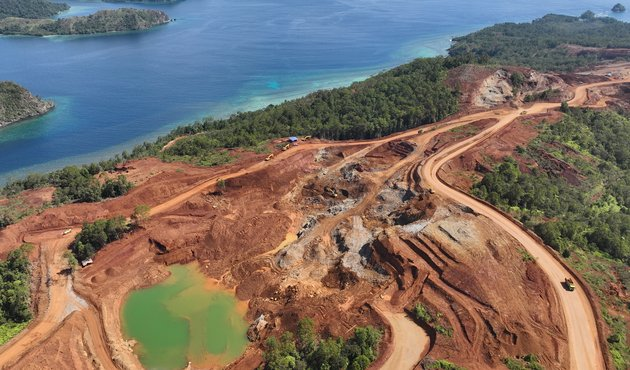
What makes the Obi Island case particularly complex is the multi-layered ecosystem of companies involved:
- Core operators, in this case Harita Nickel, part of Harita Group.
- Financing banks, such as Hana Bank.
- Government and customers
The bank provide loans and financial backing that make large-scale industrial expansion possible.
Can We Quantify “Who Is Responsible”?
Here’s where things get tricky—and often misunderstood.
There is no verified public breakdown in exact percentages showing how much each bank or company “contributes” to environmental damage on Obi Island.
That’s because banks provide capital, not direct operations. Meanwhile, operators (like Harita) control on-the-ground activities and energy (coal plants) is embedded within the industrial system.
So instead of clean percentages, responsibility is distributed across the system:
- Operators → direct environmental impact
- Energy providers → emissions source
- Banks → enable expansion through financing
- Global buyers → sustain demand
The impact is collective, not easily divisible.
The Finance Perspective: Where the Real Leverage Is
From a financial point of view, this case highlights a growing gray area in ESG (Environmental, Social, Governance) commitments.
Many banks—including Hana Bank—have pledged to reduce or eliminate coal financing.
But the Obi Island project exposes a loophole banks are not directly funding coal plants. They are funding nickel processing facilities. Yet, those facilities depend on coal power to operate.
This creates what analysts often describe as “indirect fossil fuel exposure.”
A commonly cited critique from civil society groups can be summarized as:
“Financing coal-dependent industries is still financing coal—just indirectly.”
From the banks’ perspective, however, the argument is different:
“Nickel is essential for the clean energy transition. Supporting it is part of climate progress.”
This tension—between transition finance and actual emissions impact—is now at the center of global debate.
When K-pop Fans Entered the Conversation
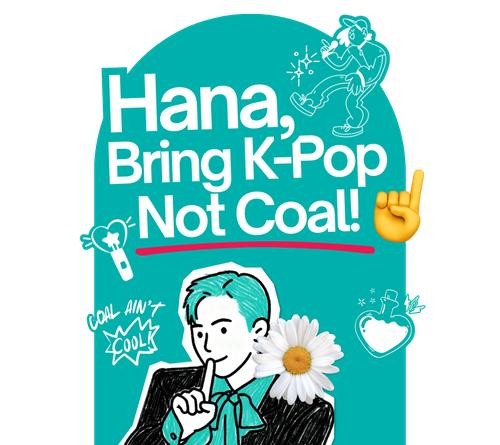
The turning point came when this issue reached an unexpected audience: K-pop fans. This all started with the collaboration between Hana Bank and G-Dragon and IVE An Yujin. With the collaboration, Hana Bank targets K-pop fans worldwide.
Led by communitites like Kpop4Planet, fans began connecting the dots between Hana Bank’s K-pop-driven branding and its financial involvement in the nickel project
Their campaign message was clear and widely shared:
“Hana, bring K-pop—not coal.”
This wasn’t just a slogan. It reframed the issue.
What was once a complex financial and industrial story became a cultural and ethical conflict.
Response from Hana Bank; And Growing Fan Pressure
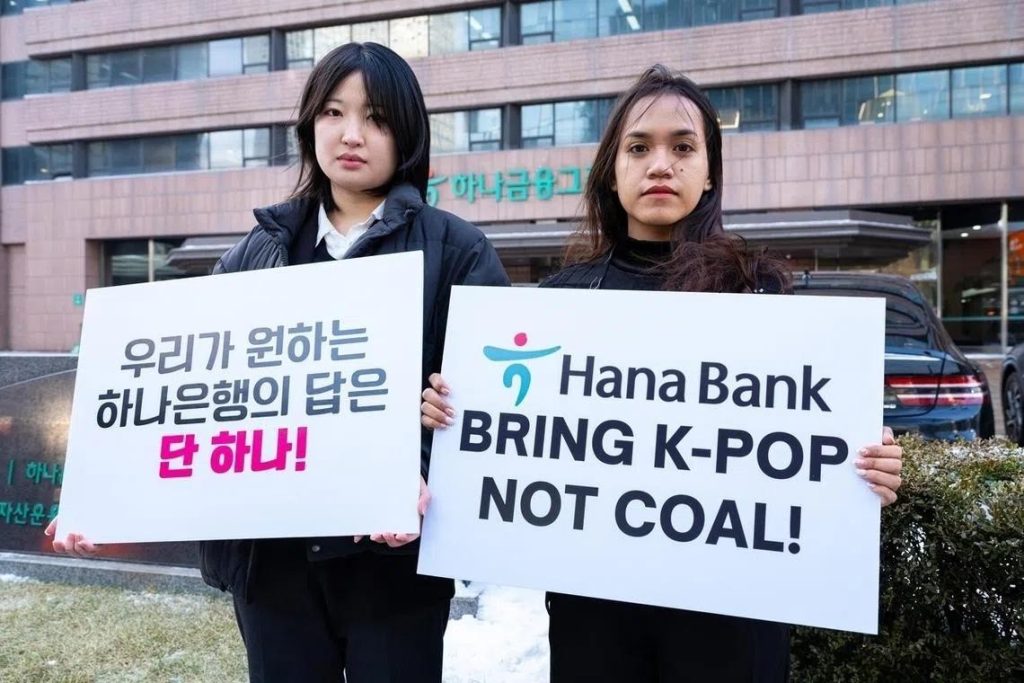
In response to an open letter from Kpop4Planet and K-pop fans calling for an end to new coal financing, Hana Bank issued a statement that many viewed as vague.
The bank said it would “develop policies to support carbon reduction by strengthening coal-related risk management,” but did not outline any clear timeline or concrete actions.
For critics, the response fell short.
Reacting to this, Kpop4Planet and K-pop fans escalated their efforts, launching a petition urging the bank to commit to a clear and actionable plan to stop financing coal projects.
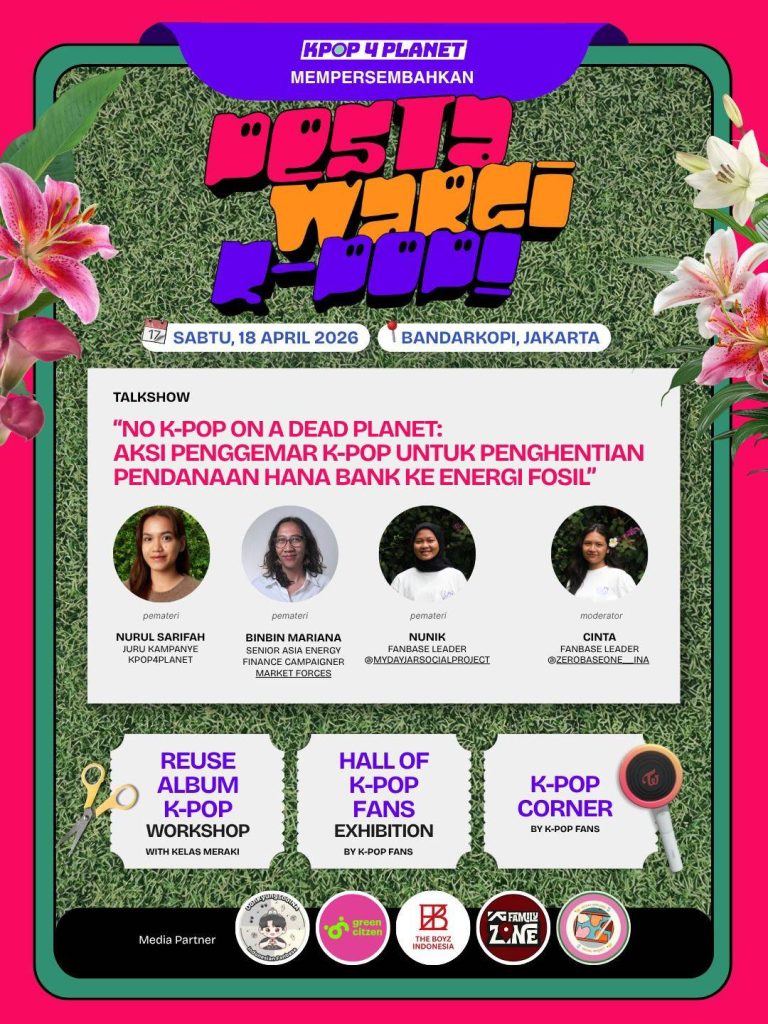
The movement extended offline through a talk show titled:
“No K-pop on a Dead Planet: K-pop Fans’ Action to Urge Hana Bank to Stop Financing Fossil Fuels,” held during the “PE5TA WARGI K-POP” event on April 18, 2026, in South Jakarta.
Why This Case Resonated Globally
Unlike typical mining controversies, this one crossed boundaries:
- Geography: Korea → Indonesia → global markets
- Industries: Finance → mining → entertainment
- Audiences: Investors → policymakers → K-pop fans
K-pop fandoms, known for their organization and digital influence, amplified the issue far beyond traditional environmental circles.
The Bigger Picture: A Transition In Progress
The Obi Island case reveals an uncomfortable truth about the global energy transition:
The shift to clean energy is not happening in a fully clean way.
Instead, it is rapid, resource-intensive, and still partially dependent on fossil fuels
For countries like Indonesia, coal remains affordable, accessible, and scalable. However, for global industries, demand for nickel continues to surge.
And for financial institutions, the line between supporting transition and enabling emissions remains blurred.
Final Takeaway
What fans uncovered isn’t just a controversy—it’s a reality check.
The EV boom is real.
But so is the coal powering parts of it.
And as this case shows, the pressure to resolve that contradiction is no longer coming only from policymakers or investors—
It’s coming from the public, from consumers, and increasingly, from fans.
Join us on Kpoppost’s Instagram, Threads, Facebook, X, Telegram channel, WhatsApp Channel and Discord server for discussions. And follow Kpoppost’s Google News for more Korean entertainment news and updates.