
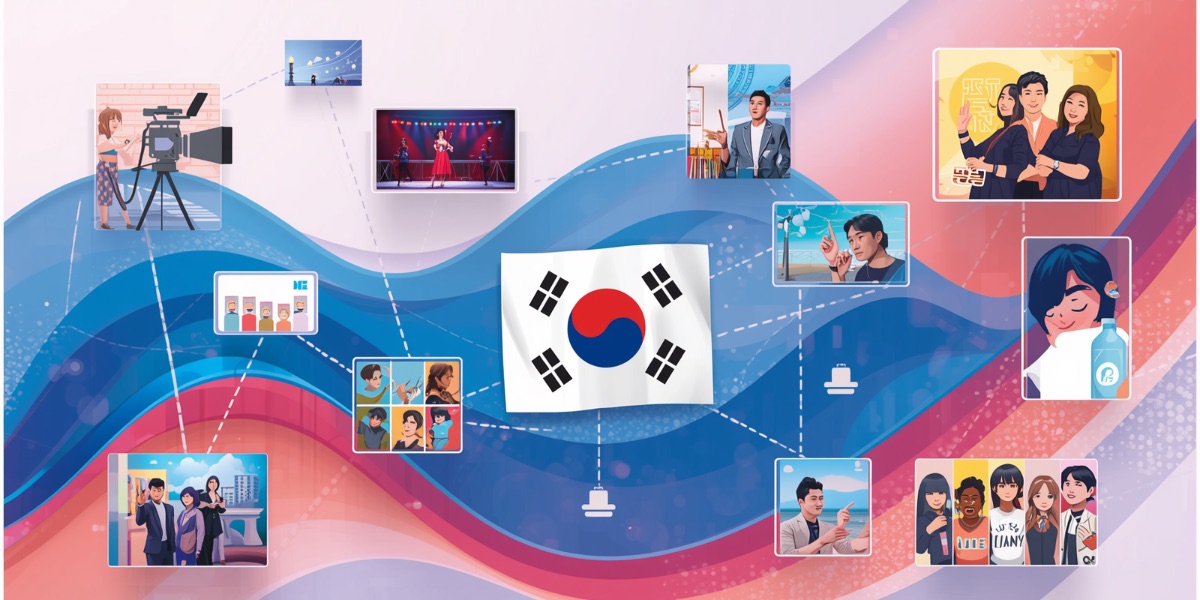
The next phase of Hallyu will not be defined by global reach, but by how well Korean IP behaves like a locally relevant system in every market it enters. As the global appetite for Korean content matures, the conversation is shifting from distribution to design. How Korean IP expansion is strategically engineered to adapt across Southeast Asia and the US. This evolution reflects a deeper transformation in the Korean IP strategy. That said, success is no longer driven solely by visibility, but by the ability to integrate with local audience behaviors, platform dynamics, and cultural expectations.
From Hit Culture to System Culture: A Shift in Korean IP Logic
For years, the global rise of Korean content has been defined by reach: viral hits, chart-topping music, and globally streamed dramas. But reach alone is no longer the differentiator.
Today, Korean IP is undergoing a structural evolution. It is no longer being exported as finished content. Instead, it is being designed as a scalable ecosystem; capable of adapting across markets, platforms, and audience behaviors from the outset.
Nowhere is this Korean IP shift more evident than in Southeast Asia (SEA) and the United States. The two regions are not just consuming Korean content, but actively reshaping how it is created, distributed, and monetized.
A clear example of this shift can be seen in emerging short-form drama ecosystems.
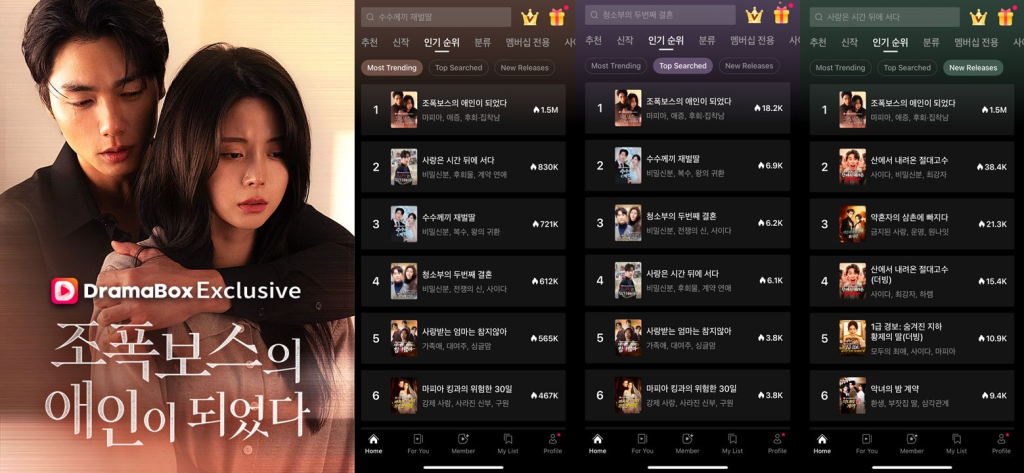
Recent performance data from DramaBox Original “My Mafia Boss Boyfriend” (starring Ha Yun-ha and Jang Yeonwoo) highlights the velocity of modern IP distribution:
- Released: March 24
- #1 New Release on Day 1
- #1 Global Chart within 5 days
But beyond individual performance, the strategic signal is more important than the title itself.


As Dabin Chung, CEO of BambooNetwork, shared in a recent industry insight:
“What matters is not a single hit. What matters is repeatability.”
Dabin Chung.
Case Study: System-Driven Short-Form Drama Production
Rather than relying on isolated creative success, BambooNetwork’s production model represents a shift toward engineered content scalability:
- 90%+ of titles enter Top 10 charts
- 40% reach #1 within Top 10 rankings
- Distributed across 8 global platforms
- Produced by rotating creative teams
This model reframes content success entirely.
“This is not creator-dependent success. This is system-driven output.”
Dabin Chung.
At its core, the approach treats content not as standalone intellectual property, but as output from a repeatable production system optimized through continuous data feedback loops.
The mechanism is simple but powerful:
- More titles → more data
- More data → higher success probability
- Higher probability → compounding repeatability
In effect, the goal is no longer to create one successful show, but to engineer a system that reliably produces successful shows across markets and formats.
Why This Matters for Korean IP Expansion
This system-driven model aligns directly with how Korean IP is evolving globally, particularly in Southeast Asia and the US.
Rather than optimizing for a single breakout moment, modern Korean IP strategies are increasingly focused on:
- Scalable production systems over artisanal output
- Platform-wide performance rather than single-channel success
- Data-informed storytelling instead of intuition-led development
This represents a structural shift from creative dependency → operational repeatability.
Understanding the Demand–Behavior Gap
While demand for Korean content is strong across both SEA and the US, audience behavior diverges significantly.
In Southeast Asia, content consumption is predominantly mobile-first. Moreover, Southeast Asians are more driven by short-form discovery platforms and highly responsive to localized language and cultural nuance.
In contrast, US audiences exhibit platform fragmentation across streaming and social channels. They have stronger reliance on fandom ecosystems and higher expectations for originality and narrative depth
This creates a critical insight: Global demand does not translate into uniform engagement.
The same IP must operate differently depending on where and how it is consumed.
The Rise of Korean IP Flywheels: A New Operating Model
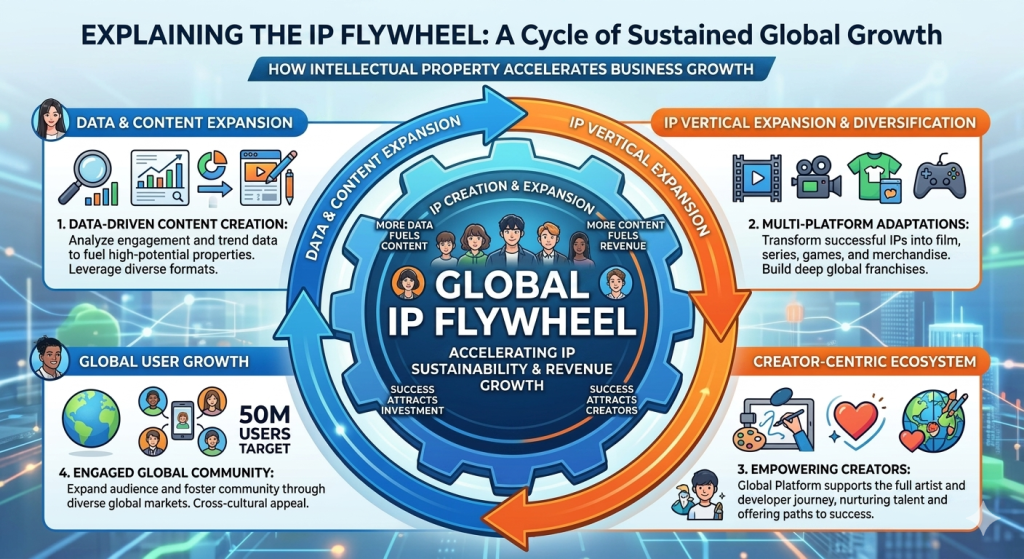
The most successful Korean IP today is not built as a single product. It functions as a flywheel.
At its core, this model includes:
- A primary IP anchor (drama, webtoon, or music)
- Continuous format extensions (short-form, spin-offs, behind-the-scenes content)
- A fandom activation layer (user-generated content, interactive formats)
- Multiple monetization streams (brand partnerships, licensing, merchandise)
- Embedded localization strategies for each target market
This ecosystem approach allows IP to remain relevant, discoverable, and monetizable over time, rather than peaking and fading after initial release.
Winning Content Formats Across Markets
1. Narrative-Driven Universes

High-concept storytelling continues to travel well globally, particularly when it can be extended across formats.
A strong example is “Squid Game,” which evolved beyond a single-season drama into a multi-format franchise, including reality adaptations and brand collaborations.
Key insight:
Concept-driven narratives create entry points, but format diversification sustains longevity.
2. Webtoon-to-Screen Pipelines
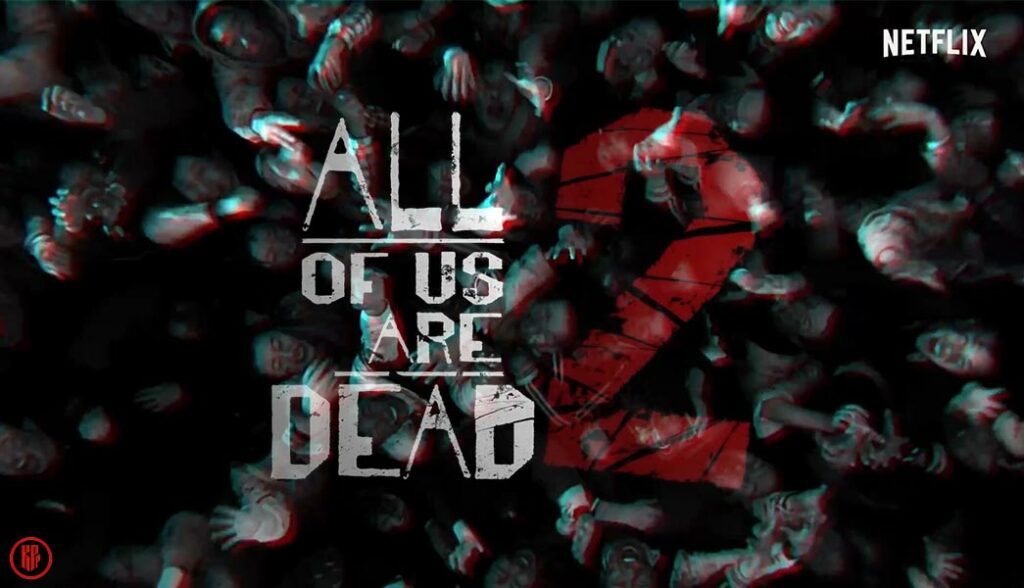
Webtoon-based adaptations have become a reliable engine for cross-market success.
Series like “All of Us Are Dead” demonstrate how pre-validated storytelling can reduce risk while increasing global resonance, especially in genre-driven categories like thriller and horror.
Why it works:
- Built-in audience familiarity
- Episodic structure optimized for binge consumption
- Strong adaptability to short-form content
3. Idol IP as Continuous Content Engines

The music industry is also shifting fast. K-pop groups are no longer just music acts. They are full-scale content ecosystems.
Take BLACKPINK, whose content spans music releases, documentaries, short-form videos, and global brand campaigns.
Regional nuance:
- SEA: High engagement through short-form edits and fan-generated content
- US: Strong alignment with premium branding and cultural influence
Key insight:
Idol IP operates as an always-on engagement loop, not a periodic release cycle.
4. Short-Form Native Storytelling
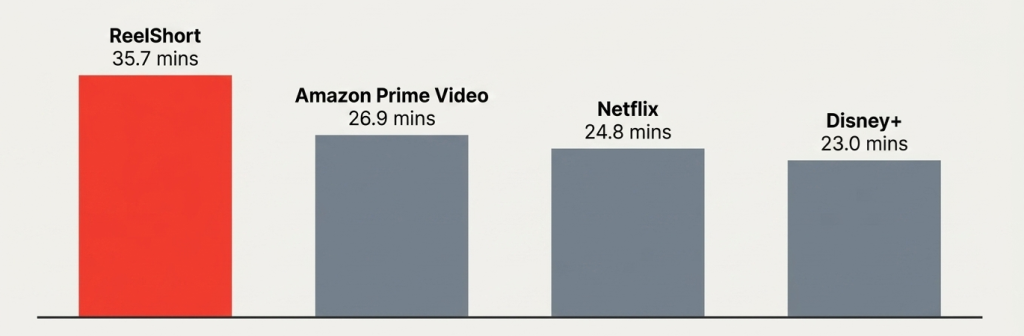
Short-form is no longer a promotional tool. It is a primary storytelling format. Content designed specifically for vertical, mobile-first platforms consistently outperforms repurposed clips.
Emerging formats include:
- Character-driven POV videos
- Alternate narrative scenes
- Actor-led, in-character content extensions
Platforms as Co-Architects of IP Success
Modern IP success is inseparable from platform behavior:
- Netflix shapes global narrative distribution
- TikTok drives discovery and virality loops
- YouTube sustains long-tail engagement
Content is no longer simply distributed on platforms. It is co-designed with them.
Monetization Beyond Content
The economic structure of Korean IP has expanded into multi-layered revenue systems:
- Brand integrations
- Fandom-driven economies
- Licensing ecosystems
- Live and hybrid experiences
BTS remains one of the clearest examples of how IP can evolve into a diversified global business system.
Conclusion: From Hits to Systems
The future of Korean IP expansion is no longer about producing isolated successes. It is about building systems that make success repeatable across markets, formats, and platforms.
As Dabin’s perspective highlights, the competitive advantage is shifting; not toward better content alone, but toward better systems that consistently generate it.
The next phase of Hallyu will belong to those who understand one fundamental shift:
global success is no longer a product. It is an engineered process.
Join us on Kpoppost’s Instagram, Threads, Facebook, X, Telegram channel, WhatsApp Channel and Discord server for discussions. And follow Kpoppost’s Google News for more Korean entertainment news and updates.