

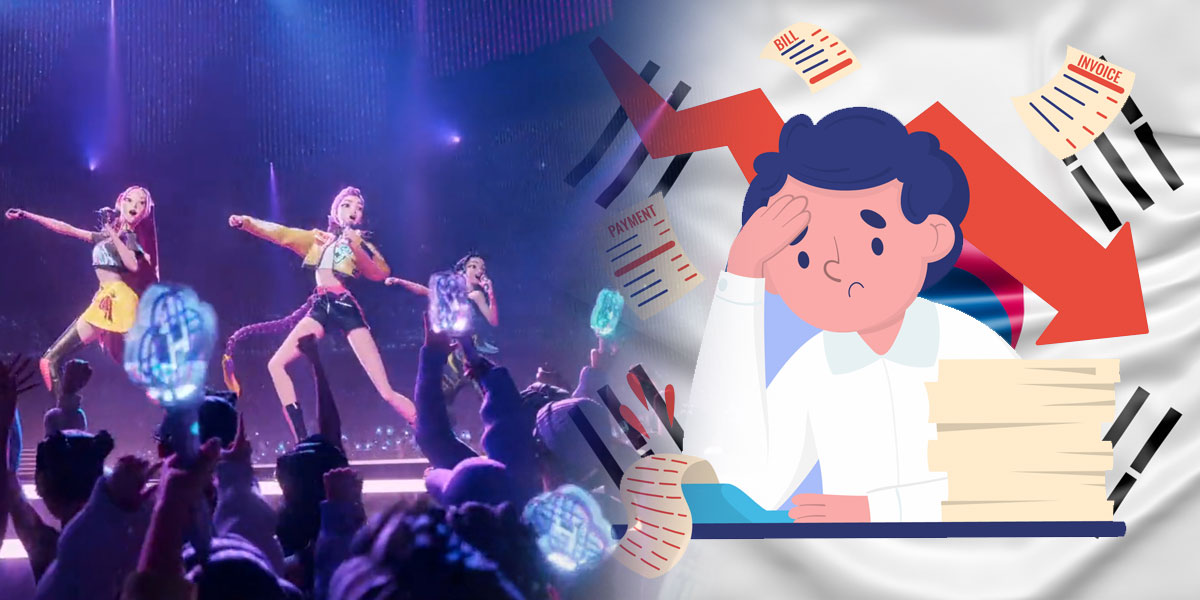
HUNTR/X just made late-night history — EJAE, Audrey Nuna, and Rei Ami successfully turned “The Tonight Show” golden with…well…“Golden.” Not only that, but the “KPop Demon Hunters” soundtrack has also hit Platinum in the U.S., topped the Billboard 200 twice, and now sits among Grammy contenders. Everything about it speaks K-hallyu — the energy, the emotion, the soul. And that’s why you just wished that “KPop Demon Hunters” is really a Korean original, especially knowing how Korea actually possesses billions—BILLIONS—in K-content budget.
Yet, as much as it hurts, the fact is there’s no way for projects like “KPop Demon Hunters” can be created in South Korea. At least not right now. Why? Well, let’s dive deep into the secret of this mission impossible.
The K-Content Paradox: Billions in Budget, but Creativity on a Leash
If you’ve ever scrolled through news about Korea’s booming K-Content funds, you’d think the creative industry is thriving. The Ministry of Culture and government agencies have poured more than KRW 2.7 trillion into content projects between 2022 and 2025. On paper, it’s the dream — a nation investing in its cultural exports.
But with such a massive K-content budget poured into the sector, why can’t the industry independently produce a blockbuster like “KPop Demon Hunters,” for example?
Well, because here’s the uncomfortable truth: almost half that massive K-content budget money hasn’t actually been used.
Reports show that over KRW 1.4 trillion (about $1 billion) still sits untouched. Why? Because the rules that decide where the money can go are so tight that even the most brilliant creative ideas don’t qualify.
Think of it this way: Korea’s creative scene is full of ideas bursting with color, but the funding pipelines only accept black and white. This is the main reason why, right now, most of the money in Korea’s K-content budget is just left there—untouched.
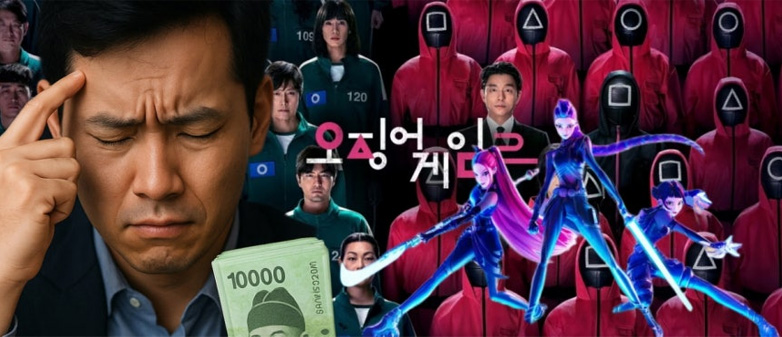
“KPop Demon Hunters”: Global Fans See Magic, Korea Sees “Too Risky”
Now, for many local and international fans, “KPop Demon Hunters” feels like a celebration of everything we love — fierce heroines, high-energy music, and a futuristic Seoul pulsing with rhythm.
However, for Korean investors, a concept like this doesn’t fit the boxes set by policy-driven funds.
Government-backed investments often focus on “safe” cultural categories like documentaries, heritage dramas, or educational shows. Because animated features — especially ones blending Western production methods and Korean pop aesthetics — are considered risky.
So instead of bold experiments, Korea ends up funding smaller, short-term projects that rarely break beyond domestic borders.
Meanwhile, in the U.S., producers saw this same idea not as “risky” but as revolutionary.
K-Content Budget Bottlenecks: The Bureaucracy that Chokes the Beat
Now, please don’t be mistaken for lack of passion, or plans, or intentions. That has never been an issue. The brilliant minds in South Korea will have no problem in creating the next “KPop Demon Hunters” if not for the system, which has long been the main K-content budget bottleneck.
The process of getting cultural funding in Korea is a complex process. It involves multiple ministries, review boards, and approval stages that evaluate projects based on traditional criteria: profitability, export probability, and alignment with national image.
This is why creative freedom then takes a backseat. If a project doesn’t clearly promise measurable returns, it gets shelved. One investor even admitted that he once backed a drama and “never got a single won back”, so now he avoids cultural projects altogether.
“We once invested in films and dramas but didn’t recover a single won. After that, we stopped touching cultural content entirely.”
An anonymous VC CEO.
Now, this is a cycle — a demonic one that kills experimentation before it even starts.
That’s why studios abroad, often led by Korean diasporic creators, step in. They take Korean ideas, remove the red tape, and transform them into what global audiences now call “the future of Hallyu.”
When Pride Turns Bittersweet for Global Fans
If you’ve ever felt proud seeing “KPop Demon Hunters” dominate Netflix, there’s also that bittersweet ache — the one that wonders what it would’ve been like if it were made by Korean creators, in Korean studios, with Korean ownership.
Because beyond the streaming numbers, it’s about creative sovereignty. When a Korean story is made abroad, the profits, control, and legacy often stay abroad too. That means the very ecosystem that built Hallyu — from K-pop to K-drama — risks becoming dependent on foreign production for its own identity.
So while Korea’s K-Content budget keeps growing, what the creative community truly needs isn’t just more money — it’s more freedom.
“KPop Demon Hunters” and the Cost of Caging Imagination
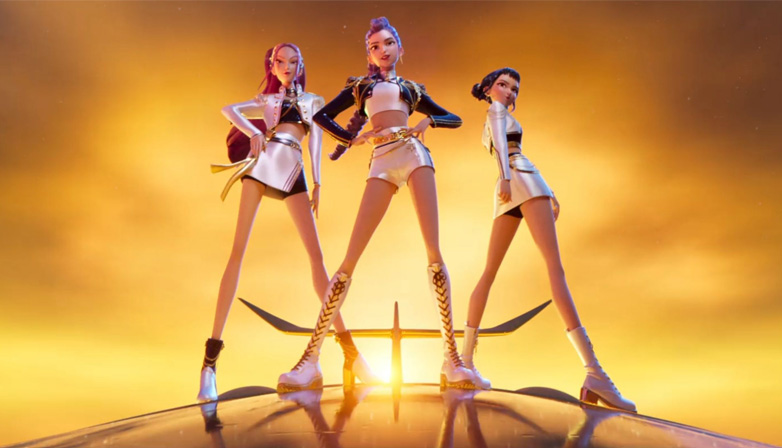
Some of you might consider this as trivial. But for many hallyu enthusiasts, they believe that brilliant projects like “KPop Demon Hunters” should’ve been Korea’s crown jewel. The film should have been a wonderful milestone in how K-pop meets animation.
Instead, it became a mirror reflecting what the country’s creative system is missing.
Maybe someday, Korea will stop measuring creativity by its financial risk and start valuing it for its cultural power. Because when creativity breathes freely, Hallyu doesn’t just spread — it evolves.
And when that day comes, when these K-content budget bottlenecks are eventually set free, the next “KPop Demon Hunters” won’t need to be “inspired by Korea.”
It will be made in Korea.

Don’t you think so too? If “KPop Demon Hunters” were made in Korea, would it feel different — or would it finally feel complete for you as well? Please share your thoughts in the comments.
In the meantime, let’s once again watch Ejae, Audrey Nuna, and Rei Ami singing “Golden” live from “The Tonight Show.”
Join us on Kpoppost’s Instagram, Threads, Facebook, X, Telegram channel, WhatsApp Channel and Discord server for discussions. And follow Kpoppost’s Google News for more Korean entertainment news and updates.