


Park Jin Young, founder of JYP Entertainment, will step down from his position as an internal director ahead of the company’s shareholders’ meeting in late March. Despite stepping down from the board, Park Jin Young retains his role as the founder and Chief Creative Officer (CCO), focusing on creative projects and artist development. It relates to his involvement in the presidential committee that supports the development of Korean popular culture. The decision raises new questions about the founder effect and how Park Jin Young’s changing role could impact JYP Entertainment’s strategy and business outlook in the future.
Park Jin Young Steps Down from JYP Entertainment Board

According to the Chosun Daily, JYP Entertainment’s founder was recently reported to be stepping down from his position as an internal director at the company. JYP Entertainment announced that Park Jin Young will not seek reappointment as an internal director at its upcoming shareholders’ meeting scheduled for March 26. From a business perspective, this move has sparked discussion about what his departure from the board of directors means for JYP Entertainment’s growth.
The Founder Effect of Park Jin Young in JYP Entertainment
In the creative industry, a founder’s influence on their company is often far deeper than in other industries. It extends beyond organizational structure and initial capital to more fundamental aspects such as artistic identity, teamwork, and how the company positions itself in the public eye.
In entertainment companies, the founder’s personal tastes and values permeate every decision, from artist selection and music concepts to employee treatment.
With a musical background, Park Jin Young built JYP not solely from a business perspective, but also incorporated artistic sensibilities that shaped the company’s three main foundations: quality music production, an organized idol training system, and a work culture that emphasized dedication and attention to the mental health of its artists, something that was quite progressive by Korean entertainment industry standards at the time.
One of the easiest ways to observe the founder effect is to look for recurring patterns among artists produced by a single agency. In JYP’s case, several characteristics are quite consistent. Musically, JYP’s songs are known for their catchy, easily digestible melodies, making them accessible to diverse international tastes. Just look at TWICE and ITZY, whose songs are popular worldwide.
How JYP Entertainment Business Has Grown Globally

JYP’s business growth is not solely driven by the domestic market, but is also supported by the massive wave of K-Pop globalization that continues to spread worldwide.
A significant turning point in JYP’s business journey occurred in 2016, when the company became one of the pioneering agencies in implementing a multi-label model. This approach splits artist management into several specialized divisions, enabling JYP to operate more nimbly than its competitors. This more efficient structure has also positively impacted the company’s financial performance, as reflected in its solid EBITDA margin.
Behind JYP’s global growth lies the significant role of three key artists: TWICE, Stray Kids, and ITZY. These three artists are not only popular in Korea but also have established fan bases across multiple countries, regularly tour the world, and actively penetrate the international album market.

In terms of track record, JYP has long been recognized as an agency with exceptional skills in developing girl groups. Wonder Girls, TWICE, and ITZY are living proof of this expertise. But recently, JYP has also demonstrated its equally formidable strength in developing global-class boy groups. Stray Kids is the most tangible example of this, when in June 2023, they topped the Billboard 200 for the third time, a feat that underscored their far-reaching influence on the global music scene.
Several key revenue sources in the global music industry support JYP Entertainment’s business model.
1. World Tours and Concerts
In some financial reporting periods, concert revenue has increased by more than 300% year over year, primarily driven by world tours by artists such as Stray Kids and DAY6.
2. Album Sales and Streaming
Physical and digital album sales are also a significant pillar of the company’s revenue. The global popularity of artists like Stray Kids and ITZY has led to significant increases in international album sales and streaming on various digital music platforms.
3. Global Merchandise and Collaborations
The report stated that revenue from this sector has even increased by more than 350% in a single reporting period, demonstrating the importance of business diversification in the modern entertainment industry.
Will Park Jin Young’s Board Exit Affect JYP Entertainment Stock?
To discuss the above question, it is best to first look at a brief analysis of JYP Entertainment’s financial condition and stock performance.
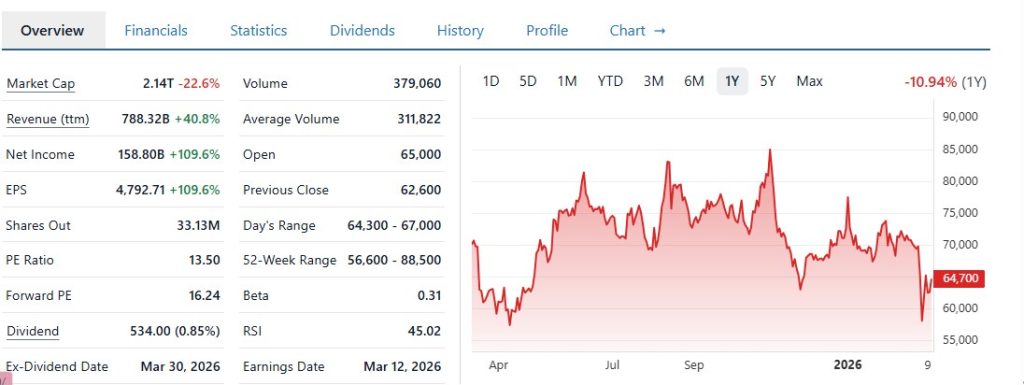
Park Jin Young’s decision to step down from the board of directors is unlikely to shake the foundations of his business immediately. Recent data from Stock Analysis shows revenue growth of around 40.8% year-on-year, while net profit has surged by over 109%, figures reflecting a very healthy business.
That said, the company’s market capitalization has actually shrunk by around 22.6%, and its stock price has fallen by around 10.9% over the past year. There’s an interesting discrepancy here: strong business performance doesn’t always translate to market confidence, especially when there’s uncertainty surrounding management changes or the overall industry outlook.
Indeed, leadership changes almost always elicit a reaction from the stock market. Investors tend to be sensitive to any signals perceived as shifting a company’s strategic direction or stability.
However, in this case, it’s important not to interpret Park Jin Young’s departure from the board of directors as a loss of influence within JYP. He remains as founder, Chief Creative Officer, a major shareholder, and a crucial role in the entertainment industry of K-Pop.
This is where the distinction between corporate governance and creative leadership becomes relevant. While the board of directors handles strategic oversight and business governance at the highest level, the soul of a music label lies in its creative direction, from music production and artist concept development to content strategy. And control over all of this remains in the hands of those who understand the industry best.
Business Outlook for JYP Entertainment After Park Jin Young
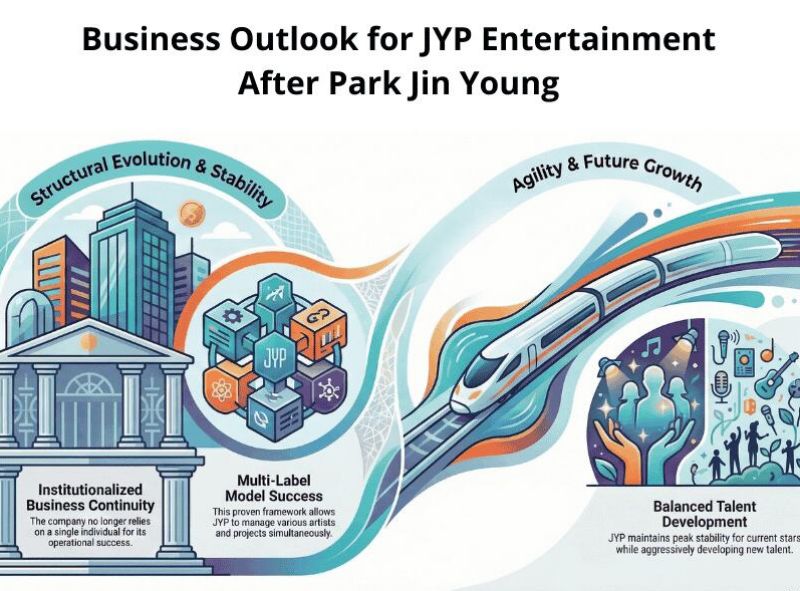
Although Park Jin Young will not seek reappointment as an inside director, JYP Entertainment’s prospects are not necessarily bleak. The company has changed significantly from its past; its structure is now much more mature and institutionalized, so business continuity no longer relies on a single individual.
Furthermore, the transformation JYP has undertaken in recent years, particularly the adoption of a multi-label model and a streamlined organizational structure, has made the company more agile in managing multiple artists and projects simultaneously. With this system, JYP has ample room to continue discovering and developing new talent without sacrificing the stability of artists already at the peak of their careers.
Join us on Kpoppost’s Instagram, Threads, Facebook, X, Telegram channel, WhatsApp Channel and Discord server for discussions. And follow Kpoppost’s Google News for more Korean entertainment news and updates.