


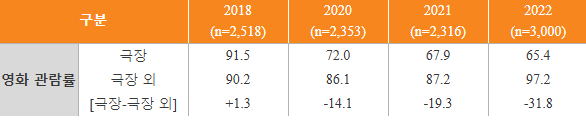
In recent years, the competition in the film industry has changed amid declining cinema attendance. The impact of streaming services is clearly visible through the increased use of over-the-top (OTT) platforms across various segments of society. Surveys show that OTT has reached 74%, surpassing cinema attendance at 66%. This shift illustrates the increasingly flexible, convenience-driven way people watch films. Cinemas are no longer the primary choice due to time, cost, and access constraints.
As a result, the film industry’s competitive landscape is shifting toward OTT platforms, which offer easy global access. Studios must adapt their distribution strategies to address the impact of streaming services and changing consumer behavior. The drivers of this change will be explained below.
Streaming Platforms and Cinemas Reshape Competition in the Film Industry
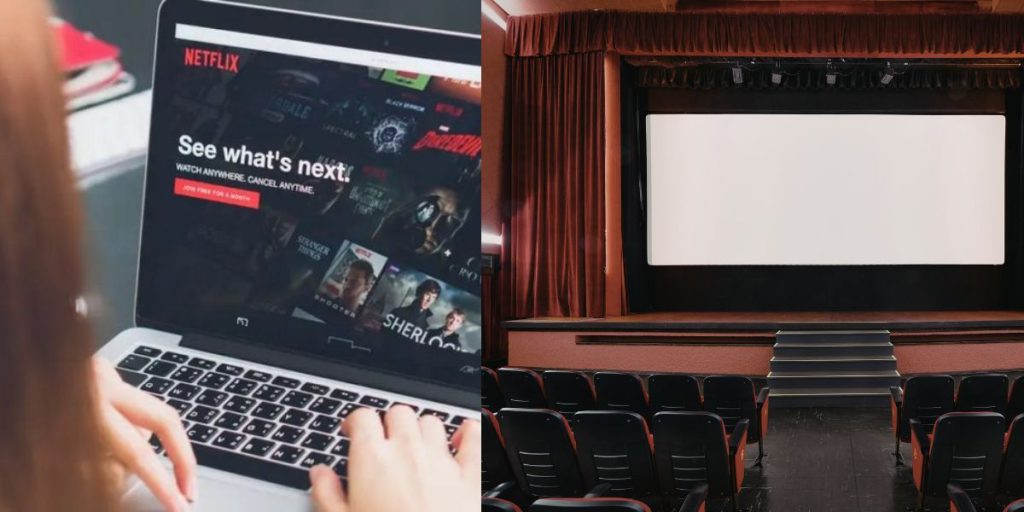
Competition in the film industry continues to shift as cinemas and OTT platforms compete for audience attention. The influence of streaming services is growing as more people shift from the big screen to digital entertainment. This is reflected in data showing that OTT content consumption reached 97.2% in 2022, surpassing the 65.4% figure for cinema attendance.
The high price of cinema tickets has also made many moviegoers think twice before going. Many feel the expense isn’t worth the experience, leading 45.8% of respondents earlier this month to report reduced cinema visits in the past year.
On the other hand, evolving audience expectations are also driving significant changes in viewing habits. Viewers are now much more selective in choosing films worth seeing in theaters. Many prefer to wait until films are available digitally through OTT platforms, which are considered more convenient and affordable.
Streaming Services’ Impact on Consumer Viewing Habits
The impact of streaming services is clearly evident in modern society’s changing viewing habits. Many viewers are now turning to OTT platforms due to the ease of access they offer. This allows them to enjoy movies anytime without leaving home.
Convenience is a determining factor, slowly shifting the traditional viewing experience. Watching from home is considered more practical and in line with today’s dynamic lifestyles, making OTT platforms increasingly the primary alternative to brick-and-mortar cinemas.
Meanwhile, according to Choi Eun Kyoung, CEO of Clay Studio, OTT’s greatest value lies in giving audiences control over their own viewing experience.
“Audiences don’t want to be told when or how to watch — OTT gives that choice back to them. But deeper than convenience is emotional safety: the ability to pause, rewind, and sit with a moment. After twenty years of directing, I’ve come to believe people don’t watch films to be entertained. They watch to feel understood. OTT makes that possible.”
Choi Eun Kyoung, CEO of Clay Studio
From a financial perspective, subscription fees are considered much more affordable than the ever-increasing price of movie tickets. This is evident in a survey that revealed that over 60% of respondents prefer to wait for films to be released on OTT platforms due to the high cost of cinema tickets. Meanwhile, a third of viewers admitted to reducing their visits to cinemas since the COVID-19 pandemic.
OTT Platforms and Cinemas: A Shifting Business Landscape
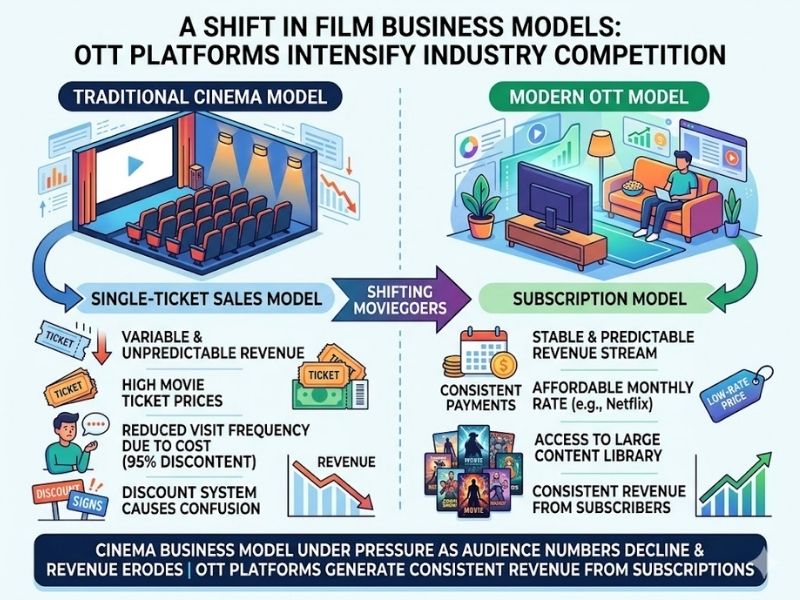
OTT platforms have fundamentally altered how the film industry generates revenue, moving away from single-ticket sales toward a subscription model that offers providers a more stable and predictable income. For audiences, the appeal is straightforward: a monthly streaming subscription costs a fraction of a cinema ticket, and platforms like Netflix have made that gap increasingly difficult to ignore.
The financial pressure on cinemas runs deeper than pricing alone. Surveys show that over 95% of moviegoers feel ticket prices are no longer reasonable, prompting many to visit less frequently. Confusing discount structures compound the problem. Many audiences believe they are getting a significant deal when the base price was already far lower than the advertised figure. As foot traffic declines, cinema revenues erode, while OTT continues to grow on the strength of consistent subscription income.
Yet not everyone sees this as a story of replacement. CEO Choi Eun Kyoung argues that cinemas will survive — but only by transforming. What streaming cannot offer, she contends, is the collective emotional experience of a shared room: the laughter, the gasps, the feeling of being moved alongside strangers. In her view, cinemas will grow more curated and event-driven as everyday viewing moves to OTT, ultimately reclaiming their identity as a communal ritual — much as live theatre found its footing after television arrived.
Key Takeaways
- Competition in the film industry is shifting as OTT platform use continues to grow while moviegoing numbers decline.
- Streaming services are influencing viewing habits, with audiences prioritizing convenience and flexibility over the traditional cinema experience.
- High ticket prices are making visits to cinemas and movie theaters less attractive, prompting audiences to seek alternatives.
- Many viewers prefer to wait for films on OTT platforms rather than watch them in theaters.
- OTT platforms offer more affordable subscription models, intensifying competition with cinemas.
- To survive, both cinemas and OTT platforms must adapt their business and distribution strategies.
Final Thoughts
The shift has taken a clear toll. Cinema revenues have fallen, investment has shrunk, and mid-budget productions have lost ground. OTT leads in flexibility and price, while cinemas still struggle to justify their cost. The future depends on both sides adapting — not replacing each other, but staying relevant.
For some, that adaptation is already underway. Choi Eun Kyoung frames the moment as one of opportunity, “We see the OTT era not as a threat to storytelling, but as its expansion.”
Studio Clay uses AI filmmaking tools — from Kling AI and Runway to ElevenLabs. She adds, “it’s not to replace human creativity, but to lower the barrier for bold, original stories that might never have been greenlit by traditional broadcasters.”
Their AI short film “Dream of Atlantis” was selected at the 2025 Busan AI International Film Festival and continues to travel internationally. Meanwhile, an original Netflix series — a healing fantasy drama set in a pediatric ward — is currently in development.
Her read on the streaming landscape is equally direct.
“The streaming era rewards specificity. Audiences can find any genre, any tone, any niche — so the stories that win are the ones that feel irreplaceable.”
Choi Eun Kyoung, CEO of Studio Clay.
It is precisely there, she argues, that AI-assisted production becomes a genuine creative advantage — enabling teams to “move faster, experiment more freely, and bring emotionally precise stories to platforms that are hungry for original voices.”
Join us on Kpoppost’s Instagram, Threads, Facebook, X, Telegram channel, WhatsApp Channel and Discord server for discussions. And follow Kpoppost’s Google News for more Korean entertainment news and updates.