

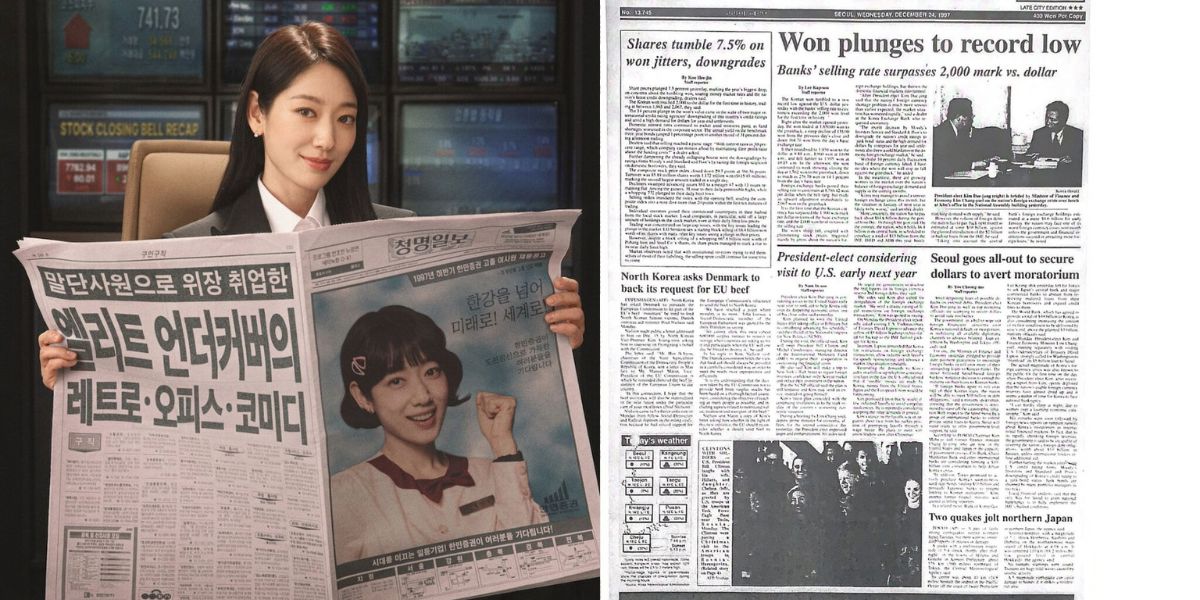
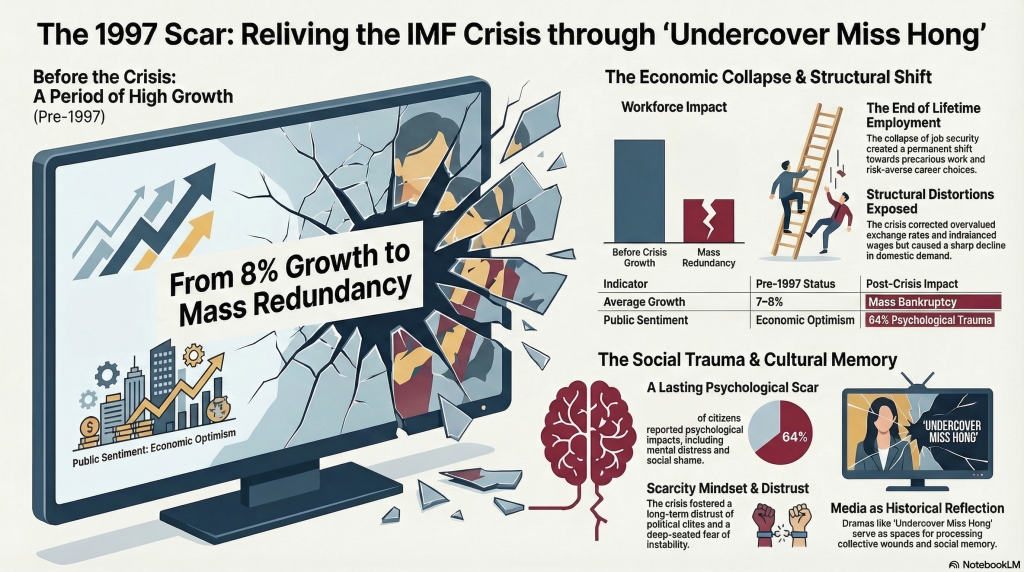
The 1997 Korean IMF crisis remains one of the deepest economic scars in South Korea’s history. According to the Asia Regional Integration Centre, in December 1996, the country became the second Asian member of the Organisation for Economic Co-operation and Development (OECD), with average growth of 7-8% and stable inflation below 5%. However, this sudden change in the crisis left the country facing tremendous financial pressure. The Korean drama “Undercover Miss Hong” now relives this moment for modern audiences, exploring how the real events of the Korean IMF crisis affected social relations and perceptions of monetary value in Korean society.
K-Drama “Undercover Miss Hong”: Bringing the 1997 IMF Crisis to Life
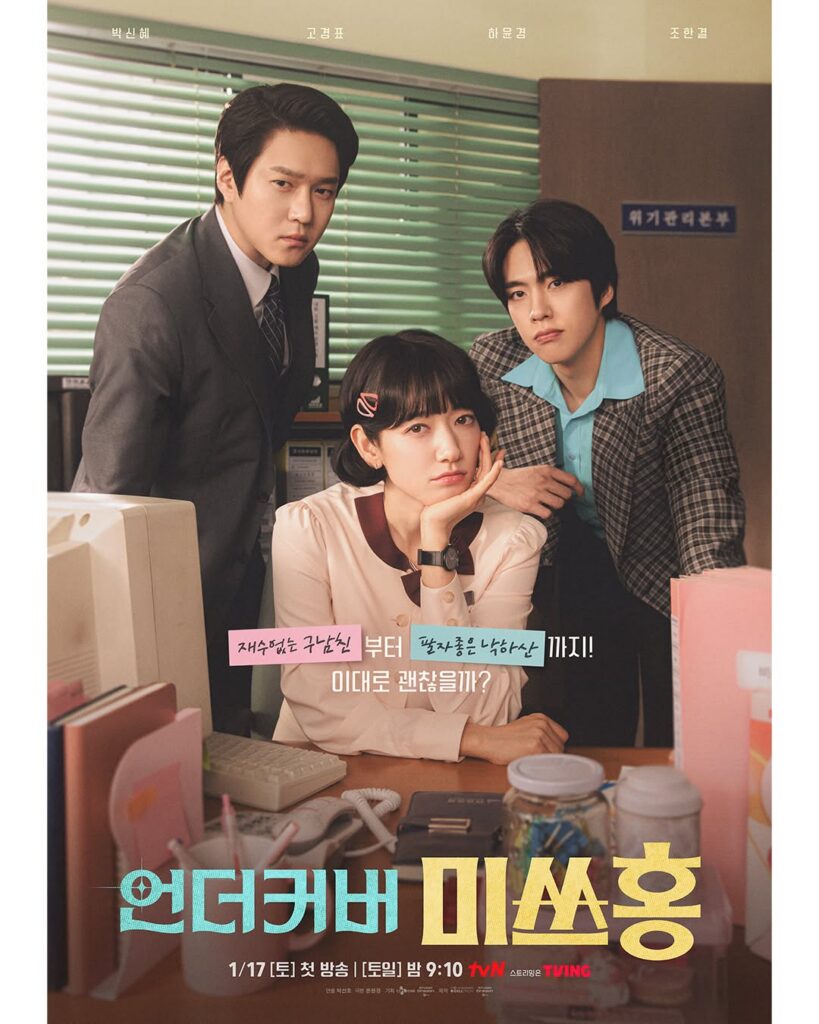
The latest Korean drama, “Undercover Miss Hong,” relives one of the darkest chapters in Korean economic history: the 1997 IMF crisis. The drama depicts a public movement to save the country’s economy while also invoking nostalgia for the early digital era through the “Yeouido Pirates” scene.
Although the drama is fictional, it successfully conveys a meaningful message about social crises, depicting the real-life impact of the Korean IMF crisis on society.
Evaluating the IMF Crisis’s Impact on Characters and Plot
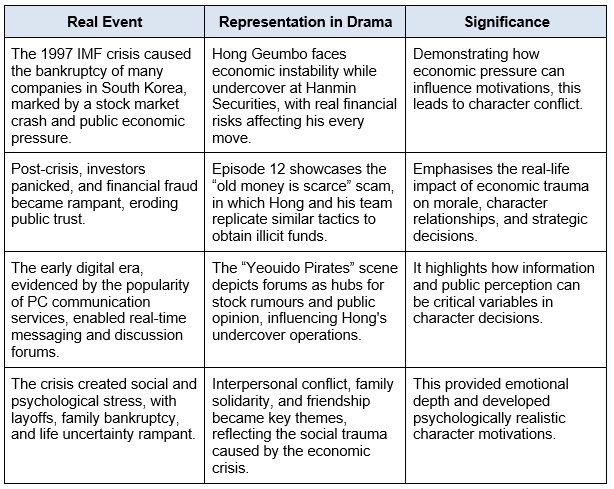
In “Undercover Miss Hong,” the impact of the 1997 IMF Crisis is a key driver of conflict and character development. Hong Geumbo faces real financial pressures while undercover at Hanmin Securities, reflecting the instability of the post-IMF economy, fraught with risk and uncertainty. The “Yeouido Pirates” scene shows how stock rumors and public opinion in the early digital era influenced the characters’ strategies and decisions, demonstrating the fragility of market confidence at the time.
Furthermore, the drama also depicts the social consequences of the crisis on a more personal level. From the restructuring at Hanmin Securities, which cut 40% of its workforce, to Kim Mi Sook (Kang Chaeyoung) attempting suicide due to the stress of life, the narrative realistically depicts the social and psychological scars the IMF Crisis left on Korean society.
The “old money is scarce” fraud subplot shows how greed, trust, and economic trauma shape moral decisions and relationships between characters. In this way, the drama successfully blends fiction with real history, demonstrating the economic and social effects of the crisis on individual lives.
Social Trauma and Psychological Traps
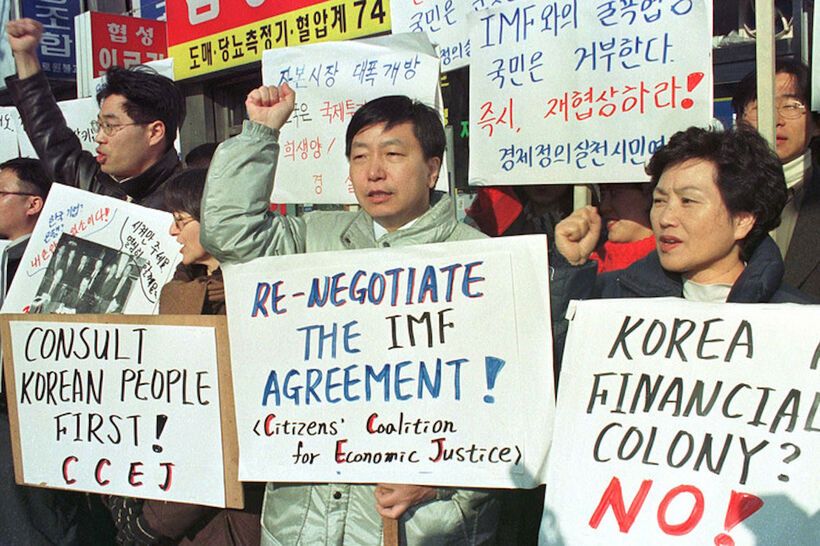
The impact of the 1997 IMF crisis was truly felt by the South Korean people. The profound trauma was also felt, with many families experiencing bankruptcy and mass unemployment, and even household assets being seized by creditors. According to The Korea Times, more than half of citizens considered the crisis the most difficult moment in Korea’s modern economic history, with 64% reporting psychological impacts. Mental distress, social shame, and fear of losing economic status became a collective experience that lingered across generations.
Beyond economic losses, the crisis permanently altered social structures. The system of lifetime employment collapsed, giving rise to a wave of precarious workers with low job security. This, in turn, created long-term anxiety about instability and widened the income gap. It is not surprising that post-crisis generations preferred stable jobs, such as the civil service, to avoid risk.
Psychologically, mental traps emerged in the form of fear of instability, distrust of political and business elites, and a scarcity mindset. Many citizens blamed policy failures and corruption for the crisis, weakening public trust in institutions. Amid this trauma, social solidarity also strengthened, as evidenced by the national gold collection campaign.
Addressing Structural Distortions
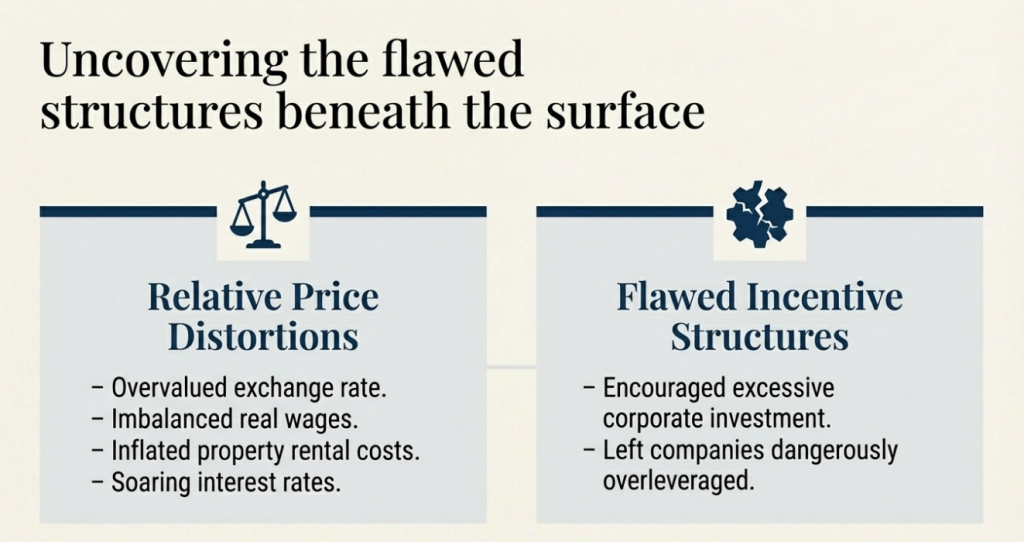
In addition to addressing financial issues, Korea needed to focus on addressing structural distortions. The Asia Regional Integration Centre stated that these structural problems encompassed two main areas.
- Relative price distortions, such as an overvalued exchange rate, imbalanced real wages, property rental costs, and soaring interest rates.
- A flawed incentive structure encouraged excessive investment and left companies overleveraged.
The first problem has actually begun to be addressed. The previously inflated exchange rate has now been corrected, real wages have fallen quite drastically, and property prices, including rentals, are slowly adjusting. Interest rates, which had previously soared, have returned to pre-crisis levels.
Overall, the relative price balance is showing signs of improvement. While the sharp decline in domestic demand severely impacted the cash flow of many companies, their cost structures have become much more streamlined, and their competitiveness in export markets has improved significantly.
However, comprehensive structural reforms remain delayed. The government has set a timetable for improving corporate governance, accounting standards, and competition policy. While progress has been made in some areas, a clearer plan is still needed.
K-Drama: Medium for Historical Reflection
“Undercover Miss Hong” functions more as an emotional historical reflection than a documentary. Rather than presenting economic data, the drama presents the 1997 IMF crisis through the personal experiences of its characters.
Economic contexts such as the threat of bankruptcy, the restructuring of securities firms, and the risk of job loss make the crisis feel concrete. Financial pressure is illustrated as a driving force behind the characters’ risky decisions. This reveals how economic conditions shape motivation, ambition, and even despair.
The relationships between the characters also reflect social trauma. Conflicts of interest arise amidst the unstable situation. At the same time, solidarity emerges in response to the crisis. Family relationships and friendships are tested by economic pressure, demonstrating how the crisis profoundly affects social structures.
Lessons from a Scarred Economy
The crisis involving the IMF resulted from a combination of contagious external pressures and long-standing structural issues that had become irrelevant in an increasingly open and globally integrated economy. When old systems were forced to survive in a rapidly moving market, collapse became almost inevitable. Weak oversight, unresponsive regulations, and slow policy responses exacerbated the impact.
From this bitter experience, several important lessons can be learned.
- Stability should not be built on fragile structures.
- Liberalisation without institutional preparedness only accelerated the crisis.
- Economic trauma created a culture of greater caution and risk apprehension.
- Media and drama became spaces for remembering, processing, and understanding collective wounds.
Economic recovery may have been achieved in a matter of years. But the so-called social memory of the crisis endured far longer than the statistics that recorded it.
Join us on Kpoppost’s Instagram, Threads, Facebook, X, Telegram channel, WhatsApp Channel and Discord server for discussions. And follow Kpoppost’s Google News for more Korean entertainment news and updates.