

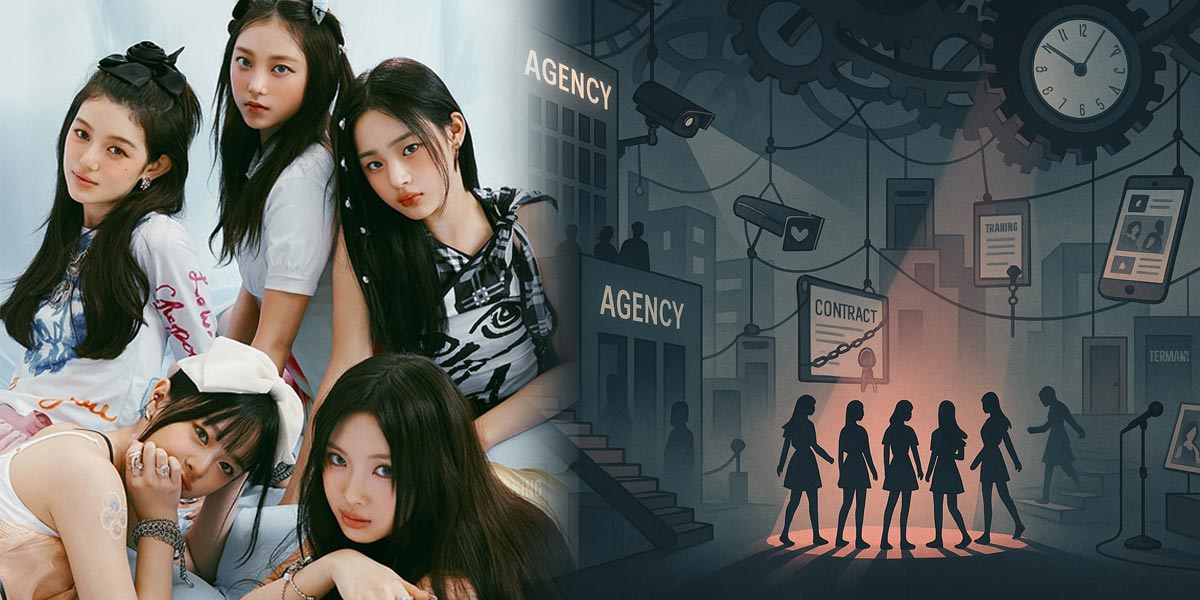
When you hear about the “most expensive K-pop lawsuit,” the first thing that comes in your mind might be a clash over money, fame, or even betrayal. You might not expect to read something like NewJeans VS ADOR case. Yet, behind the headlines and courtroom drama, this case reveals something far more personal for both idols and the agencies: what happens when idols fall into legal limbo—with no one left to catch them? Explore our extensive insights explained from NewJeans VS ADOR case, the most expensive lawsuit K-pop is now facing in history.
Most Expensive Lawsuit in K-pop: Beyond the Numbers
On paper, the ₩1 billion (~$720,000 USD) penalty slapped on NewJeans for halting group promotions seems like a hard lesson in contract enforcement. But if you look past the viral hashtags and courtroom transcripts, that number reveals something deeper.
This case is not just about NewJeans, but also about each one of your favorite idols who’s navigating the invisible border between protection and control.
Now, when NewJeans, the most successful fourth-gen idol, gets entangled in what’s now described as the most expensive K-pop lawsuit, the focus often lands on who’s right and who’s wrong.
However, there’s a quieter story buried underneath.
Once an idol’s agency becomes the subject of dispute—who steps in to protect the idol themselves?
That’s the part you may have never really seen all this time. And it’s where the system shows its cracks.


NewJeans VS ADOR Case Lawsuit Explained: Nonexistent Idol System vs Powerful Legal System
The current K-pop lawsuit against NewJeans revolves around contract validity. In court, ADOR claims everything is still legally sound, while NewJeans (or NJZ) says they can no longer trust the agency—emotionally, artistically, or professionally. They’re not demanding money or any kind of compensation. Instead, they’re asking for distance, safety, and some even say dignity.
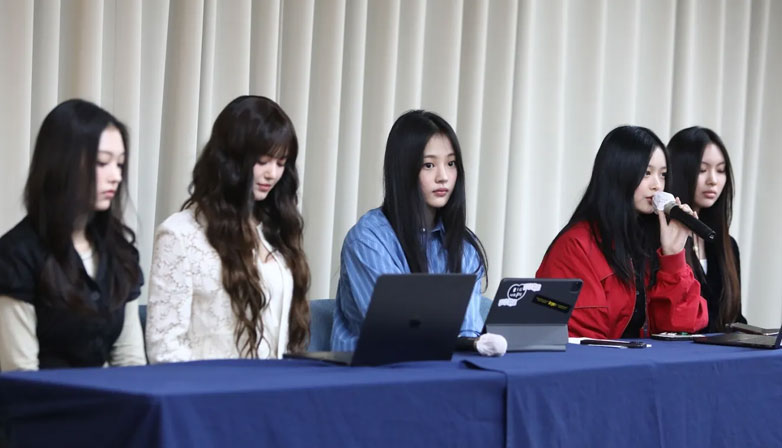
But here’s the issue: the system is NOT built to handle that kind of request.
Despite the fact that K-pop has been one of the core export industry and source of influential ‘soft power’ in the country, South Korea still does not have independent mediator dedicated to idol welfare. There’s no designated ombudsperson. And no third-party ethics board for entertainment disputes.
When companies clash with their own artists, the only safety net is litigation—or silence. And in NewJeans’ case, that silence comes with a billion-won invoice.
“Just Pay the Penalty and Leave”? It’s Not That Simple.
Now, this has been the main reactions from fans against NewJeans. The girls are facing fierce backlash, demanding them to just “pay the fine and go.” Meanwhile, others question their true motives, the credibility of their lawyers, even their mental health after their personal statements—have they been groomed by Min Hee Jin?
But really, it’s not that simple. From previous cases (like what happened to JYJ, FIFTY FIFTY, and EXO), we know that idols cannot simply just break a contract and walk away from the agency.

Contracts in the K-pop industry are multi-layered. They involve corporate parent companies (in this case, HYBE), subsidiary labels (ADOR), and layers of revenue-sharing structures.
So when idols want to leave, it’s rarely just about walking away or paying a fee—they’re stepping into a storm of legal, financial, and political consequences.
Now, in the case of NewJeans K-pop lawsuit, it’s even more personal.
What NewJeans experienced was beyond losing trust in the company. They watched the leader who built their group—Min Hee Jin—get pushed out. Then, almost overnight, the entire staff who had guided their careers disappeared too.
And that was the old ADOR with the original staff team (which were NOT previous employees of HYBE) that promoted NewJeans really well and treated them like humans. if y'all like to give your two cents on situations atleast keep yourself updated. https://t.co/lev1pVN91q pic.twitter.com/3nNy7gHxmB
— luna ୨ৎ (@luenacore) November 29, 2024
That is why when fans ask why the group can’t just stay and move on, the answer is: there’s no one left in the building they still feel safe with.
And that kind of trust doesn’t slowly fade. It collapses all at once.
The Idol Safety Net: Who’s Missing from the Picture?
In other entertainment industries, there are precedents for artist protection. Child actors in Hollywood have unions, coogan laws, welfare supervisors. Musicians in the West often have representation and legal advocates independent of their labels.
But in K-pop, idols sign with the same agency that houses their producers, managers, stylists, legal teams—and sometimes even their therapists.
Therefore, when that agency becomes the source of distress or conflict, there’s no neutral party left in the room.
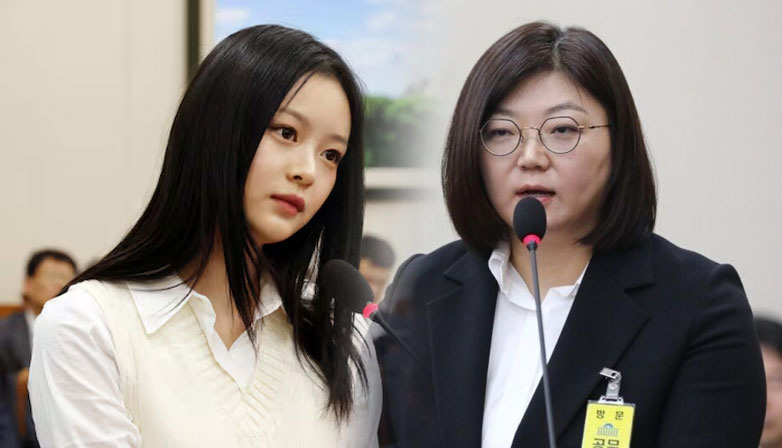
In the current case on NewJeans K-pop lawsuit, you’re seeing what happens when there’s no safety net for idols once things fall apart, just like it did during the July court hearing:
- There are arguments over deleted surveillance footage and how it was used.
- The members say they feel anxious just being near the ADOR building.
- They’ve submitted a handwritten petition comparing their emotional state to school bullying victims.
- Their legal team is even pushing back on what evidence should be shared openly in court.
No matter where you stand, one thing is hard to deny: there’s no built-in safety net for idols when leadership changes or trust breaks down, and no industry rulebook for what happens when the person who built your career suddenly disappears from the picture.
They simply don’t have that emotional protocol.
Insights from NewJeans Case Lawsuit: Even Most Powerful K-pop Idols Still Need Protection
To the outside world, NewJeans is a rare and unstoppable force in K-pop: their songs trend globally and their faces are on global runways and magazine covers.
But this lawsuit pulls back the curtain on something most fans don’t usually see: being famous doesn’t mean you’re in control. Even the biggest K-pop idols can find themselves locked out of decisions, and not sure of what comes next.
And when that happens, there’s simply no clear guide for what to do.
ADOR says the contracts are still valid, so NewJeans should return. But the members say the label they once trusted is gone—along with the creative environment and the very people who helped build their success.
The agency says a comeback is ready, but the group says they can’t go back to a place that no longer feels safe.
No one stepped in to guide or mediate these conversations behind the scenes. And that’s why, instead of finding a resolution internally, they ended up in court.
Where Does That Leave Future Idols?
Ultimately, ADOR case and lawsuit against NewJeans will eventually reach a conclusion. It may be through a court ruling, or through a private agreement.
Yet, its impact won’t stop with NewJeans.
Because now, every K-pop agency is watching closely. And they’re not just thinking about contract violations. They’re thinking about what happens when idols speak up—when personal trust breaks down, and emotions spill into the spotlight.
And as fans, the very stakeholders that build K-pop in the first place, you can join the train by discussing these questions:
- Who looks after an idol’s mental and emotional safety when leadership suddenly changes?
- What happens when workplace conflicts get personal?
- And when trust falls apart, who steps in to help—if anyone at all?
Right now, there’s no clear answer. And that silence is part of the problem.
The Most Expensive K-pop Lawsuit Explained: Why Does This Moment Matters, Really?
The court ruling for NewJeans VS ADOR lawsuit is still pending for now, and the next mediation is set for August 14. But whatever the result, this most expensive K-pop lawsuit has changed the whole industry.
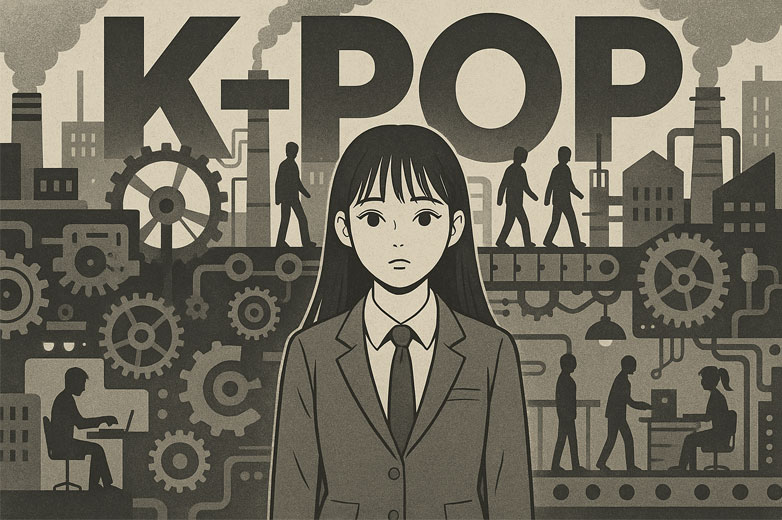
As one of South Korea’s biggest sources of global power, the K-pop system has been stunningly successful in manufacturing stars.
But unfortunately, even after over two decades, it still hasn’t figured out how to protect these stars when the system falters.
And this is not just NewJeans’ problem. It’s a question sitting quietly in every trainee contract, in every idol group that calls their company a “family,” and in every stakeholder fan who’s watching their beloved idols slowly disappear.
Because really, when these stars must fight against the company, the CEO, and the very power that builds them, who will protect them in the end?
What do you think? Join the discussion and share your ideas in the comments below.
Join us on Kpoppost’s Instagram, Threads, Facebook, X, Telegram channel, WhatsApp Channel and Discord server for discussions. And follow Kpoppost’s Google News for more Korean entertainment news and updates.











As someone who is not Korean the thing that really strikes me about the New Jeans situation is the lack of child protection and the lack of respect for their contribution to the success (and income) they bought to ADOR and HYBE. It seems that the company and the courts are failing to acknowledge the needs and wellbeing of the artists. I think this speaks to a much bigger issue within Korean society where individuals are mistreated by others based on a hierarchy of age and perceived power. If I was the CEO of a company that had New Jeans as my artists I would worship the ground they walk on. I would bend over backwards to ensure their happiness and well being because they are a massive source of income for the company. However, instead of acknowledging any duty of care for these very young people they have resorted to threats and intimidation through the legals system. Their actions are nothing short of child abuse. I completely empathise with the members analogy in this respect - if you are being bullied at school you would change schools. I find it unconscionable that the court thus far has completely ignored the age and wellbeing of the members in their deliberations. I could say more but I will just say that I find it really upsetting that these incredibly talented musicians are in a position where they are not being cared for and protected by their company or the law. I truly feel for them and their parents!