

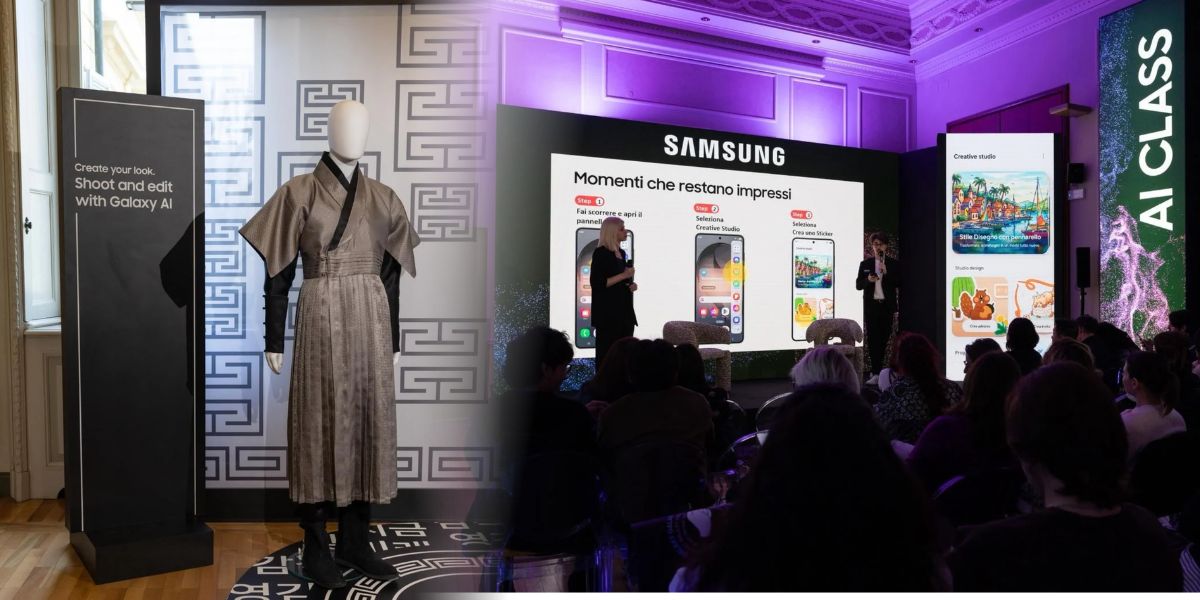
When people imagine a tech presentation, they usually think of slides and technical explanations. At Milan Loves Seoul, the experience felt very different. The event brought together fashion, music, Korean culture, and creativity in the center of Milan. This year, Samsung Italia joined as the main tech partner, presenting the new Samsung Galaxy S26 Ultra and its Galaxy AI features.
Instead of a standard product presentation, Samsung built an interactive space where visitors could test the tools directly. People experimented with AI-generated portraits, created stickers with the Samsung team, attended practical masterclasses, and explored how AI can support everyday creativity.
Over the course of the four days event, the phone stopped feeling like a gadget. It became a creative assistant.
And by the time the final day reached its finale — the red carpet just before the fashion show — many visitors had already spent days discovering how these tools could fit into their lives.
Editorial Note: This article is written by KPOPPOST contributor. The opinions expressed are those of the writer.
The Samsung AI Experience Space
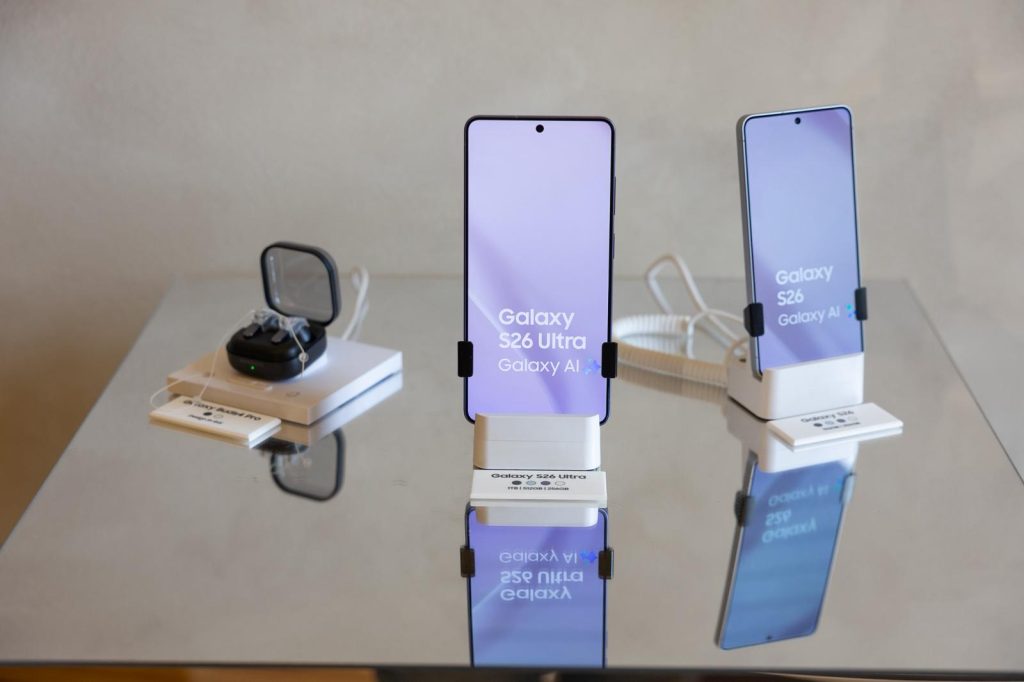
The Samsung activation area quickly became one of the busiest spots of the event.
The setup was simple and open. Several Galaxy S26 Ultra devices were available for visitors to test, while Samsung specialists guided people through the different AI features.
What made the experience work was how intuitive everything felt.
You didn’t need instructions.
People picked up the phone, took a photo, typed a prompt, and immediately saw a result.
Within minutes small groups formed around the tables.
Visitors compared results, tried different prompts, and discussed how they might use the features outside the event.
Instead of presenting technology as something complex, Samsung showed it as something playful.
Anime Portraits: The Most Popular Experiment
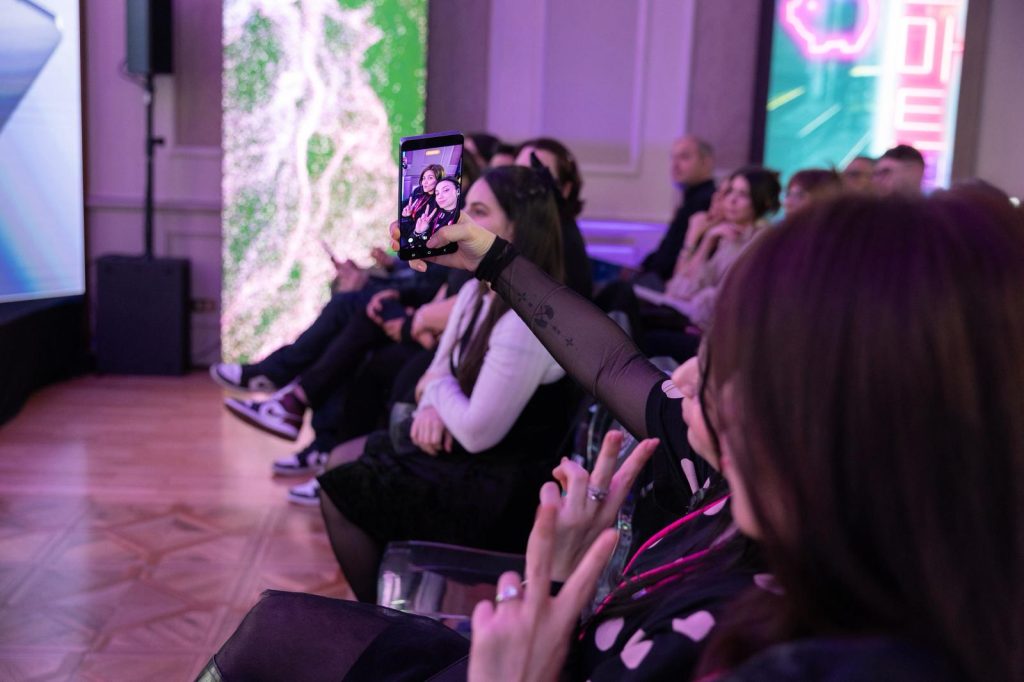
One of the first things visitors tried was the AI portrait transformation.
With a simple selfie, the Galaxy AI tools could reinterpret a face in different styles.
The anime version became the most popular option.
The phone analyzed facial features and recreated them in an illustrated style inspired by Japanese animation. Hair, expressions, lighting, and colors adapted to match the aesthetic.
The result looked like a character from an animated series.
But the real highlight came after the image was generated.
Visitors could print the portrait instantly.
Holding a physical print of an AI-generated anime version of yourself is surprisingly fun. People started comparing their portraits, joking about which version looked more dramatic.
Some created several variations.
Others tried group photos to see how the AI would reinterpret multiple faces.
What could have been a simple demo turned into a social moment.
Live Sticker Creation With Team Samsung
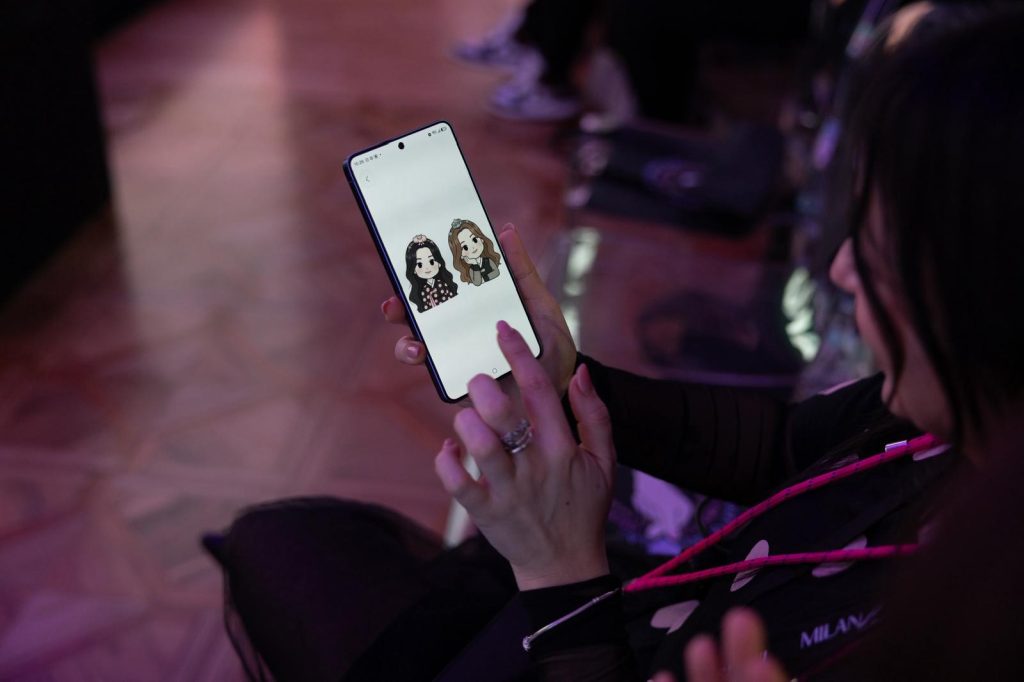
Another corner of the Samsung space felt almost like a small design studio
Here the Samsung team helped visitors turn photos and AI-generated images into custom stickers.
The process was quick.
First, participants chose an image. It could be a selfie, an anime portrait, or a visual generated with Galaxy AI.
Then the phone isolated elements of the image — removing the background or adjusting shapes — to prepare it for sticker format.
The Samsung team helped refine the design before printing.
Within minutes the sticker was ready.
Some people placed them on their phone cases. Others saved them as small souvenirs of the event.
The process showed how AI can support creativity without replacing the human element.
Visitors still made the creative decisions.
AI simply made the tools faster.
The AI Masterclasses
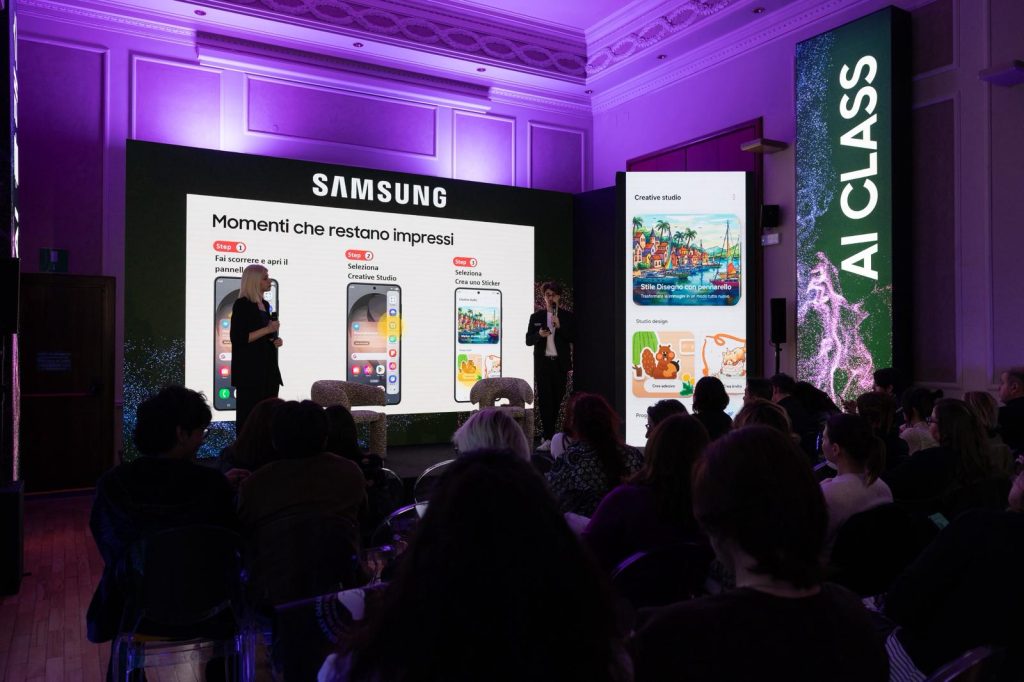
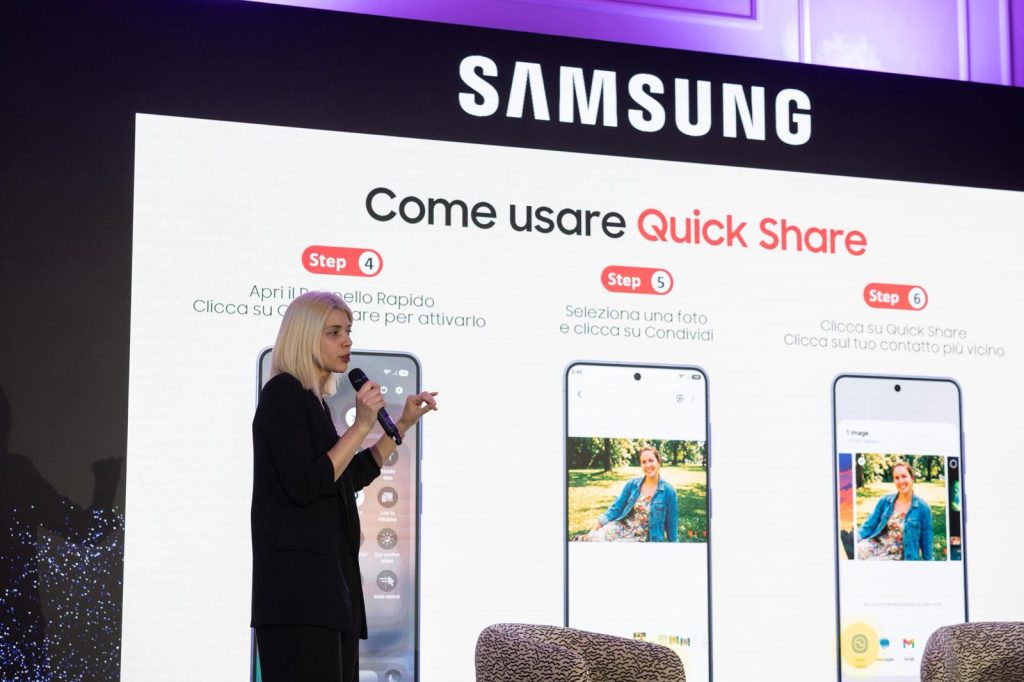
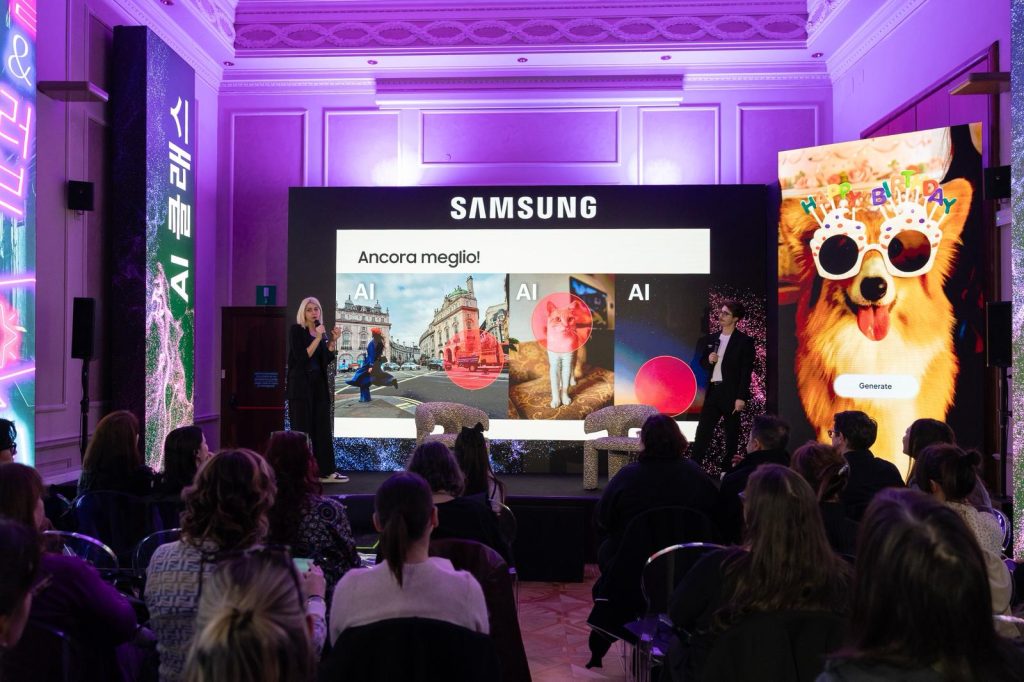
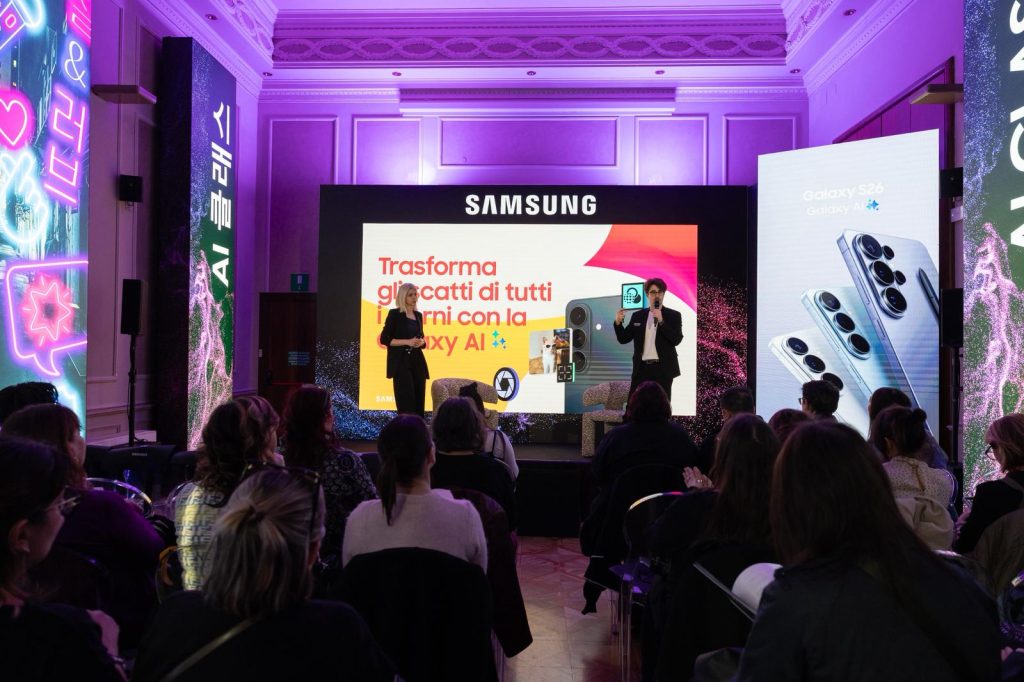
Alongside the interactive stations, Samsung organized masterclass sessions throughout the event.
These sessions explained how Galaxy AI can be used in everyday situations.
Instead of focusing on technical explanations, the presentations showed practical examples.
Participants could see how AI works step by step and try the features themselves.
The sessions covered four main scenarios:
- Travel
- Photography
- concerts and events
- digital privacy and personal content
What made the masterclasses interesting was how relatable the demonstrations felt.
Everyone in the room had experienced the same situations.
Planning trips.
Trying to photograph concerts.
Managing travel information on their phones.
The AI tools addressed those exact moments.
Using Galaxy AI While Traveling
The travel session started with a very common problem.
When planning a trip, information quickly becomes scattered.
Flight confirmations arrive by email.
Hotel bookings sit in another app.
Restaurant suggestions come from messages or screenshots.
After a few days, everything becomes difficult to track.
Samsung demonstrated how Galaxy AI can collect and organize this information automatically.
The process works like this.
If a traveller saves screenshots of travel details — flights, reservations, locations — the phone’s AI can analyze the content and extract the key information. Dates, addresses, booking times, and locations are recognized automatically.
The system then organizes everything into a clean itinerary. Instead of searching through different apps, travellers see a single timeline for the trip.
The AI can also help with translations.
If you photograph a restaurant menu or a street sign in another language, the phone instantly translates the text while keeping the original layout visible.
For international travel, this becomes extremely useful.
Another interesting feature is how Galaxy AI helps with travel photography organization.
During a trip people often take hundreds of photos.
The AI can group them by location or event, making it easier to find specific memories later.
Instead of scrolling endlessly through images, the phone organizes the visual story of the trip.
Using AI for Photography
Another masterclass focused on AI photography tools, especially in difficult conditions.
Many visitors asked the same question.
Why do photos taken at concerts or night events often look blurry?
Samsung demonstrated how Galaxy AI analyzes scenes in real time.
When the camera detects low light, fast movement, or stage lighting, the system adjusts exposure and stabilization automatically.
The goal is to capture clearer images without requiring manual settings.
For example, if someone is taking photos during a live performance, the AI can detect motion and increase shutter precision while balancing brightness.
The result is a sharper image.
Another useful tool is AI object editing.
After taking a photo, users can remove unwanted elements from the background. The AI fills the space naturally, reconstructing the image.
Imagine taking a photo in a crowded square or event.
With AI editing, small distractions can be removed in seconds.
It turns quick snapshots into cleaner images.
Recording Concerts and Live Events
For a crowd interested in music and K-culture, the concert session attracted a lot of attention.
Anyone who has filmed a concert knows the challenge.
You are usually far from the stage.
The lighting constantly changes.
People around you move.
Samsung demonstrated how Galaxy AI helps with zoom stabilization.
When users zoom into a stage, the AI analyzes motion and compensates for hand movement. This allows the phone to maintain clarity even at distance.
Another feature improves audio capture.
During concerts the surrounding noise can overwhelm the recording. The phone’s AI can isolate the main sound source — the stage — and balance the audio accordingly.
This makes recorded videos clearer and more immersive.
For fans who enjoy documenting concerts, these tools make a noticeable difference.
The phone becomes better at capturing what the eye is seeing.
Protecting Your Privacy With AI
The final part of the masterclass addressed something practical but often overlooked: digital privacy.
Smartphones hold messages, banking apps, travel documents, and personal photos.
But many people check their phones in public places.
On trains.
At airports.
At crowded events.
Samsung introduced the privacy screen mode, designed for these situations.
When activated, the phone automatically limits the viewing angle of the display.
Someone looking from the side will see a darkened screen, while the person holding the phone sees everything clearly.
The feature uses AI to adjust brightness and angle sensitivity dynamically.
It may sound like a small addition, but once demonstrated, visitors immediately understood its value.
In busy environments, privacy becomes important.
The Final Moment Before the Fashion Show
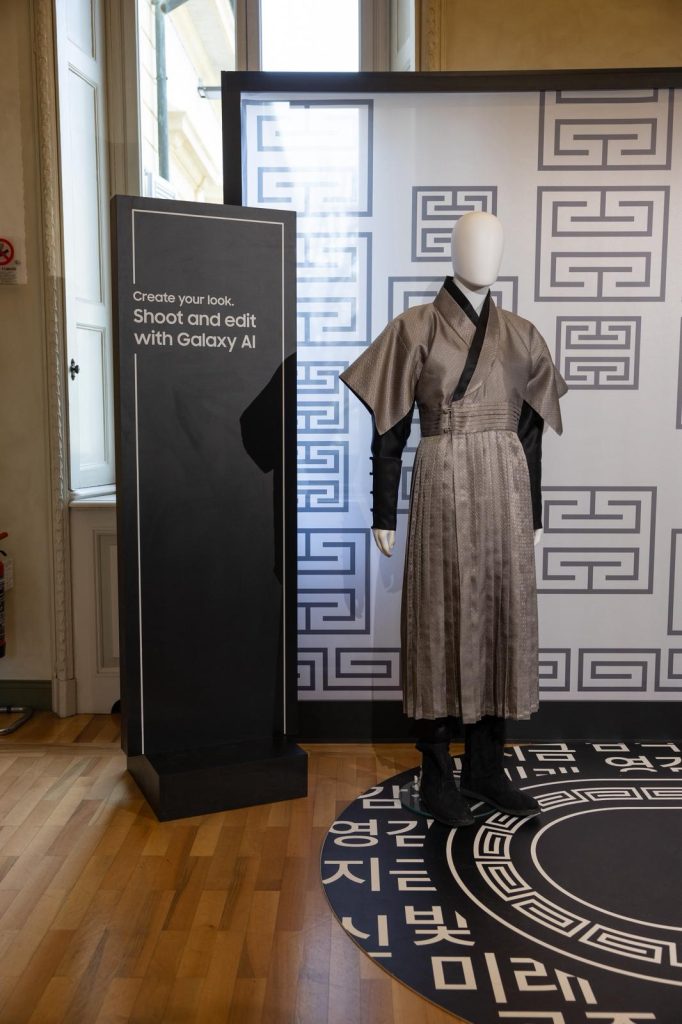
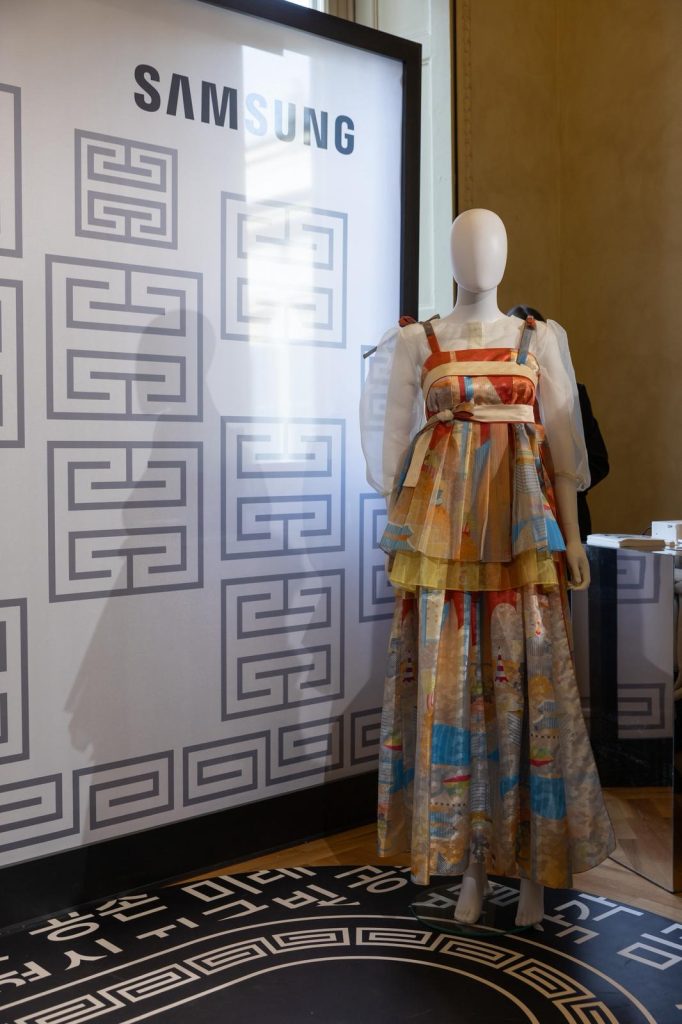
After hours of interactive experiences and masterclasses, the event slowly moved toward its final highlight.
The fashion show.
Just before the runway presentation, the red carpet area became the center of attention.
Guests gathered, photographers positioned themselves, and the energy shifted.
This was the moment I decided to test the AI fashion transformation.
I was wearing a black and white vintage dress.
Elegant but simple.
Curious about the possibilities, Samsung team took a photo with the Galaxy S26 Ultra and wrote a prompt asking the AI to reinterpret the outfit as a traditional Red Korean hanbok.
Within seconds the transformation appeared.
The dress became a deep red hanbok, with flowing lines and a silhouette faithful to the traditional garment.
The AI had reshaped the structure of the outfit.
Sleeves extended.
The waistline shifted.
Textures changed.
It felt like looking at an alternate version of the same moment.
Around me other guests started experimenting with the same feature.
Some tried futuristic fashion prompts.
Others asked the AI to generate K-pop inspired outfits.
It was a fitting closing moment before the runway show began.
When Technology Supports Creativity
Looking back at the Samsung experience throughout the day, one thing became clear.
The technology did not dominate the event.
It supported it.
Visitors created portraits, stickers, and fashion transformations. They attended masterclasses and tested practical tools for travel and photography.
Each interaction produced something personal.
A photo.
A print.
A creative idea.
In an event celebrating the meeting of Italian fashion and Korean culture, AI became another form of cultural expression.
A Different Way to Present Technology
Tech events often focus on numbers and specifications.
Samsung took a different approach at Milan Loves Seoul.
Instead of explaining the technology, they let people experience it.
Transform a portrait.
Create a sticker.
Organize a trip.
Capture a concert.
By the end of the event, visitors were not simply observing a new smartphone.
They had already used it.
And that might be the most convincing demonstration of all.
Editorial Note: This article is written by KPOPPOST contributor. The opinions expressed are those of the writer.
Join us on Kpoppost’s Instagram, Threads, Facebook, X, Telegram channel, WhatsApp Channel and Discord server for discussions. And follow Kpoppost’s Google News for more Korean entertainment news and updates.