


Korean startup global expansion is gaining momentum as global interest in Korean innovation continues to rise alongside the Hallyu wave. Yet, while cultural visibility creates opportunity, turning that attention into real business outcomes remains a significant challenge. In this interview, Sarah Jung shares actionable insights on how Korean startups founders can bridge the gap between global interest and execution, and what it truly takes to succeed in international markets.
Korean Startup Global Expansion: Bridging Hallyu Momentum and Real Market Execution
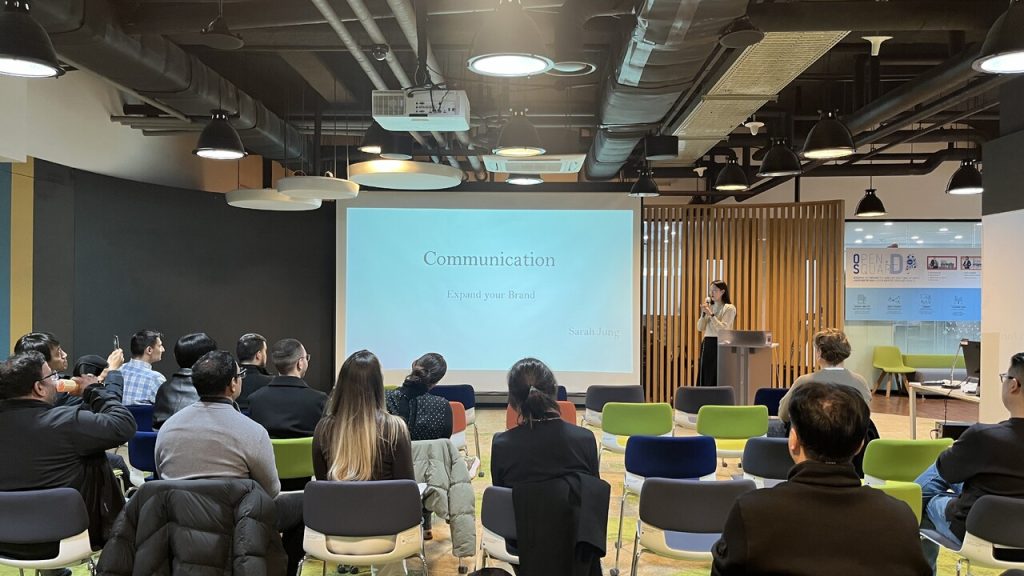
As the founder of SJ Momentum, Sarah Jung works closely with early-stage companies pursuing Korean startups international growth, helping them move beyond strategy into execution.
“My role is not just to advise on strategy, but to help companies actually make global business work in practice,” she explains. This includes refining product-market fit from a global lens, repositioning the business, and strengthening how startups communicate with international stakeholders.
In many cases, the gap isn’t about the quality of the product—it’s about how the business is translated, presented, and carried forward in real conversations.
Her approach highlights a core principle: a strong global market strategy must be operationalized through communication, adaptability, and real-world engagement.
The Real Challenges Korean Startups Face in Global Markets
A recurring theme in challenges Korean startups face in global markets is preparation without contextual adaptation.
“One of the biggest challenges Korean startups face is that they prepare for global expansion in a very ‘Korean’ way.”
While startups often excel at building strong products, they tend to underestimate differences in global communication and decision-making. As a result, many teams struggle not with explanation, but with persuasion.
“They can explain their product, but struggle to lead a conversation, handle objections, or create momentum toward a deal.”
This gap often leads to stalled opportunities, where meetings fail to convert into tangible business outcomes.
Hallyu Effect: A Door Opener, Not a Deal Closer

The Hallyu effect has significantly improved global awareness of Korean brands, creating initial trust and curiosity.
“There’s more openness and often an initial level of trust.”
However, she is clear about its limitations:
“Hallyu can help you get in the room—but it won’t close the deal for you.”
For founders exploring how Korean startups expand globally, this distinction is critical. Cultural relevance may attract attention, but sustained growth depends on delivering clear value and building strong relationships.
How Global Perception of Korean Startups Has Evolved
Global perception of Korean startups has improved markedly over the past decade, with stronger recognition in sectors like tech, beauty, and consumer products.
“There is now a stronger recognition of Korea as a source of innovation.”
Yet, a credibility gap remains:
“There is still a difference between being seen as an ‘interesting company’ and a ‘reliable long-term partner.’”
As more startups enter global markets, expectations around execution, communication, and consistency continue to rise.
Leveraging Hallyu for Korean Startup Global Expansion
Jung advises founders to treat cultural momentum strategically—not as a core business plan.
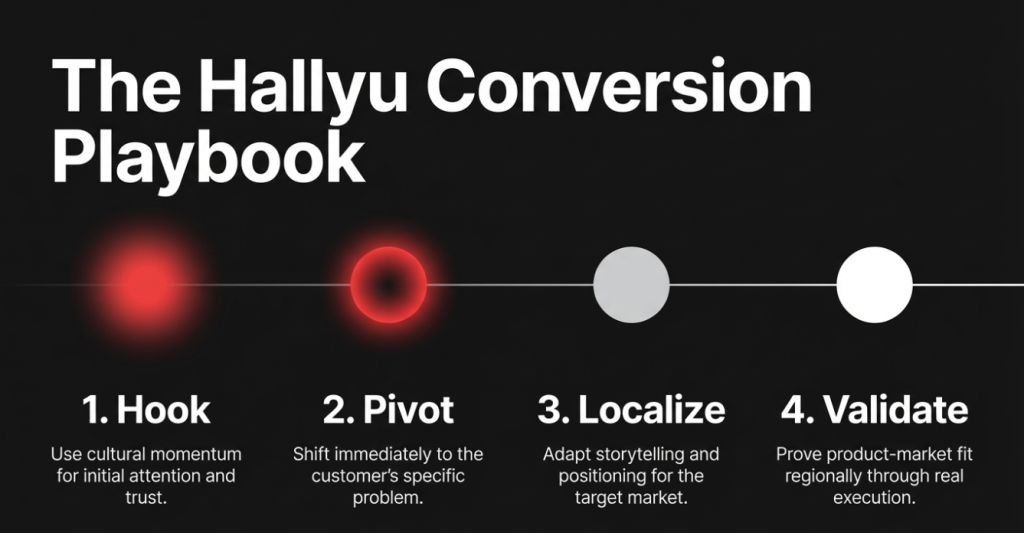
“If founders want to leverage the Hallyu effect effectively, they need to treat it as a starting point—not a strategy.”
Her recommendations include:
- Use Hallyu to gain initial attention
- Quickly shift to customer problems and unique value
- Localize storytelling for each market
- Validate product-market fit in the target region
This disciplined approach strengthens global market strategy while preventing overreliance on branding alone.
What Global Investors Actually Look For
When evaluating startups, global investors prioritize clarity, differentiation, and execution.
“They want to understand what problem you are solving in their market, why your solution is meaningfully different, and whether you can execute reliably over time.”
She emphasizes that communication is not just a soft skill, but a core business capability:
“It’s about structuring conversations, responding to feedback, and building trust over multiple interactions.”
Ultimately, global markets don’t reward potential; they reward clarity and execution.
High-Potential Sectors for Korean Startups
Several sectors are well-positioned for Korean startup global expansion, particularly those with strong domestic validation and global applicability:
- Beauty and consumer brands
- SaaS and niche B2B solutions
- Content, media, and IP-driven businesses
- Climate tech and sustainability
However, Jung stresses that sector alone does not determine success—market understanding and adaptability are far more critical.
Key Trends Shaping 2026
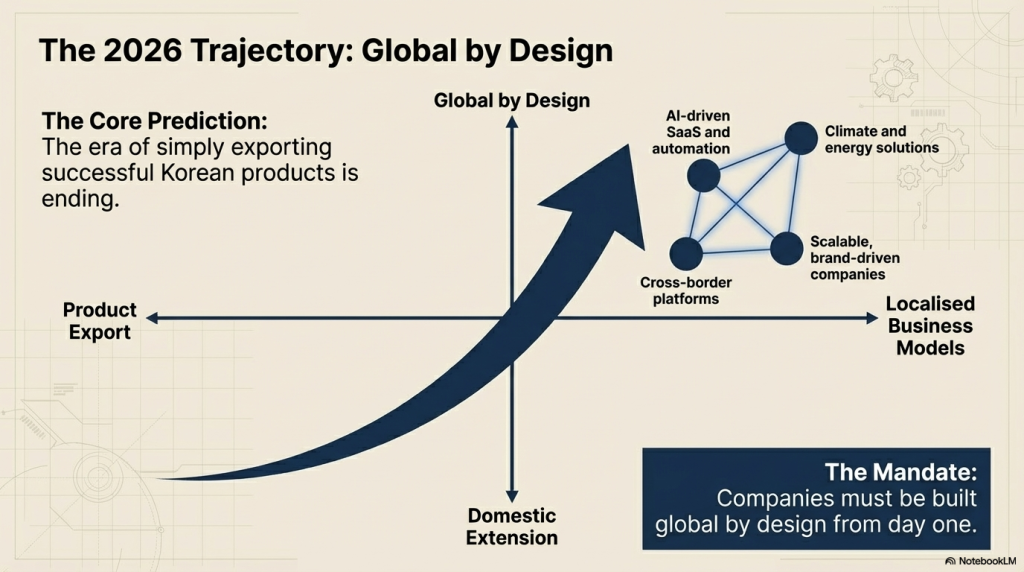
Looking ahead, Jung anticipates a shift in how Korean startups approach global markets.
“I expect to see more companies moving beyond exporting products and focusing on building localized business models.”
Growth areas include:
- AI-driven SaaS and automation
- Climate and energy solutions
- Cross-border platforms
- Scalable, brand-driven companies
More fundamentally, she predicts a mindset shift toward building companies that are “global by design from day one.”
Building a Truly Global Mindset
For founders, success in how Korean startups expand globally depends on rethinking expansion entirely.
“The most important mindset is to stop thinking of global expansion as an extension of the domestic business.”
Instead, founders must:
- Engage directly with international markets
- Adapt strategy and positioning continuously
- Lead conversations with confidence
“Global companies are not built by translating what you have—they are built by continuously adapting based on real market feedback.”
Final Advice for Founders and Global Readers
Jung concludes with a reframed perspective on global growth:
“Global expansion is not about going abroad—it’s about learning how to build relationships and business in a different context.”
For global audiences observing the ecosystem, she adds:
“Korean startups today are highly capable, but many are still learning how to fully operate in a global environment.”
Those that succeed in Korean startup global expansion will be the ones that combine strong products with strong communication—transforming global attention into lasting business success.
Join us on Kpoppost’s Instagram, Threads, Facebook, X, Telegram channel, WhatsApp Channel and Discord server for discussions. And follow Kpoppost’s Google News for more Korean entertainment news and updates.