

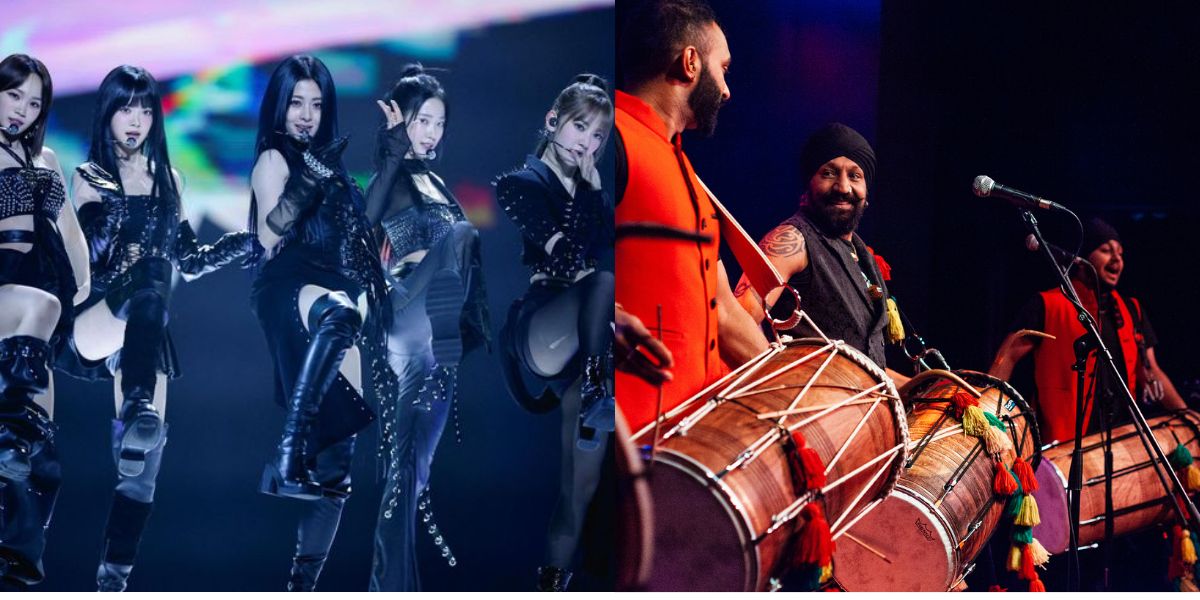
It is an interesting comparison. The South Korean music industry has successfully built a global presence through an artist- and fan-centric model for developing music IP. And the Indian music market has emerged as one of the world’s largest music consumption markets, yet has not captured comparable global value.
Two countries with enormous demographic potential have taken very different paths. South Korea is building music IP as part of its cultural export strategy. India, conversely, produces massive amounts of music through the Bollywood industry. But almost entirely for domestic consumption. Read on to discover the key insights you can take from both.
The Diverging Cultural Export Strategy of the South Korean Music Industry and the Indian Music Market
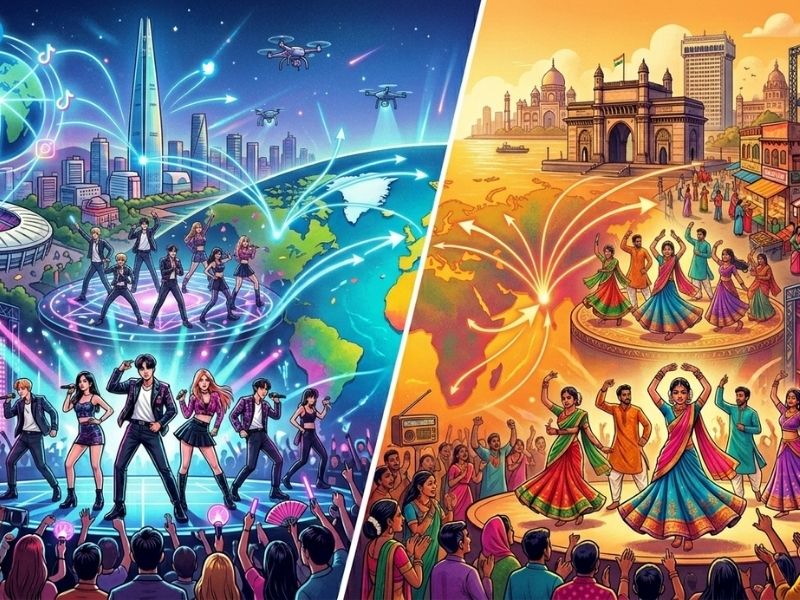
The differences in cultural export strategies between South Korea and India are evident in how they build their music industries. South Korea positions artists as long-term assets, supported by an active fanbase that contributes through albums, merchandise, concerts, and an integrated entertainment ecosystem.
However, if we look elsewhere, such as India, music remains closely tied to the film industry. Songs in that country function more as part of film productions, and artists have not yet been developed as independent brands. The difference lies in the industry structure that determines how music can be transformed into economic value and a global export force.
South Korean Music Industry Built Culture as a Deliberate Export Industry
After the 1997 Asian financial crisis, the South Korean government treated culture not simply as entertainment but as national infrastructure. Music, drama, and games were incorporated into a long-term cultural export strategy, supported by public funding and explicit country-level targets.
By 2025, exports of broader Korean cultural content had grown to become one of the country’s top three export categories, second only to semiconductors and automotives.
Unfortunately, India has never followed the same path. Bollywood produces music in incredible volumes, but it remains a marketing function within film budgets rather than a stand-alone export asset. As a result, the Indian music market has grown domestically without ever being designed for the global market.
Music IP Means an Artist, Not Just a Song Attached to a Film
The most obvious structural difference lies in what each country actually monetizes. Korea’s idol system nurtures artists for years before releasing them as fully-fledged, marketable music IPs, with names, visual identities, and a global fanbase built from day one.
Ritwik Punjwani, a music IP and royalty finance analyst who writes the Music System newsletter covering music rights and the economics of the global music markets, states that Korea has built a model where artists themselves become the IP that fans invest in. Meanwhile, India’s market revolves around songs, often from films, leaving little brand loyalty around individual artists.
“Korea has built an artist-as-IP model where fans buy albums, merchandise, and experiences associated with a group. While India is song-driven, people prefer songs, often movie songs, to artists as brands, so there’s less fan loyalty to monetizable artists.”
Ritwik Punjwani, a music rights and revenue consultant.
This difference explains why a Korean band can sell out concerts at large arenas overseas, while Bollywood hits are rarely widely known by their singers’ names.
Cultural Export Strategy Needs a Single Owner and Korea Built One
K-pop’s global success is inextricably linked to its strategy of involving a single owner. Korean entertainment companies control training, production, marketing, and distribution under one roof, allowing them to treat an artist as a long-term asset rather than a one-off release.
The Indian music market, meanwhile, divides copyrights among studios, labels, and composers, with film soundtracks typically owned by the production house rather than the artist.
Punjwani points to this directly:
“No single actor, and Korea shows why: I believe it was government export policy after 1997, plus vertically integrated companies owning the value chain, plus platforms, together. India’s value is fragmented across studios, labels and composers, so the real unlock is structure, artist-as-IP, controlled rights, proper publishing, more than any one leader.”
Why the Indian Music Market Stayed the World’s Biggest Consumption Market
Scale isn’t India’s problem; monetization is. The country streams music at a volume that other markets struggle to match, but the vast majority of that streaming remains free or ad-supported. So only a small percentage of paying listeners fund the entire industry.
Language also adds another layer of difficulty. India itself has a variety of local languages, which remain a factor in the country retaining more value domestically while not being as massively global.
“On balance, India’s diversity has slowed a unified global identity. Korea exported one language and one tight aesthetic that travels as a single brand. India’s many languages and film industries create a deep homegrown market but fragment the export story. It is shifting slightly with cross-language collaborations, but the diversity makes a single international identity harder.”
Ritwik Punjwani, a music rights and revenue consultant.
Until ownership, structure, and portability of artist identities converge, the Indian music market will likely continue to produce at scale for itself rather than for the world.
The Real Difference Lies in Industry Structure
The difference between South Korea and India lies not in market size or talent quality, but rather in how the music industry is structured.
South Korea has designed music from the outset as part of a cultural export strategy, positioning artists as long-term assets that can be monetized globally through an integrated system. Meanwhile, India has successfully built one of the world’s largest music markets, but remains focused on domestic consumption driven by the film industry.
The contrast between the two markets shows that building a successful global music industry requires more than scale alone. It depends on creating structures that turn creativity into high-value intellectual property.
Join us on Kpoppost’s Instagram, Threads, Facebook, X, Telegram channel, WhatsApp Channel and Discord server for discussions. And follow Kpoppost’s Google News for more Korean entertainment news and updates.