

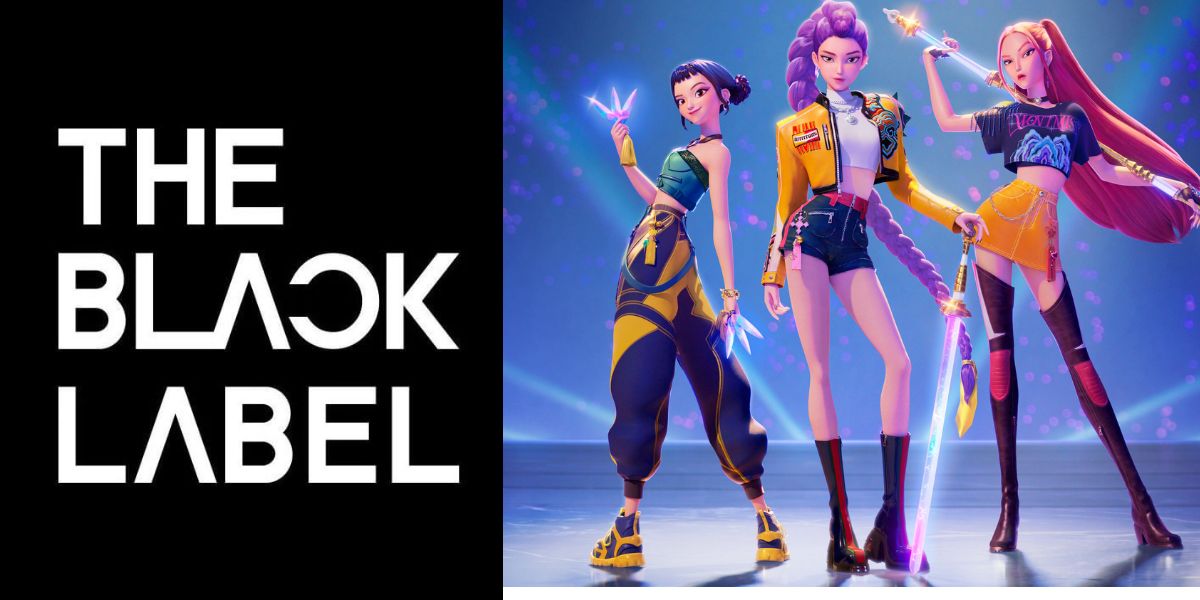
When Bloomberg covered The Black Label’s 120 billion won investment, their headline read: “K-Pop Studio Demon Hunters Attracts Tencent and Krafton Investment.” Korean media focused on valuation, KOSDAQ’s ambitions, and artists. Same deal and also different interpretations. The distinction is crucial. Global investors seem to view The Black Label investment not simply as a bet on a music label, but as part of a broader music IP ecosystem strategy. In this framework, value comes from scalable intellectual property across the entertainment sector. The story now revolves more around IP infrastructure.
Why The Black Label Investment Is More Than a K-Pop Deal
The Black Label recently raised 120 billion won (approximately US$80 million) in a Series B funding round, attracting investors such as Tencent Music Entertainment Group and Krafton, the company behind PUBG: Battlegrounds. The deal reportedly valued the company at approximately 1 trillion won (US$660 million), with existing investor Saehan Ventures also participating.
What makes this investment significant is the profile of the investors involved. Tencent Music dominates China’s music streaming market, while Krafton is a gaming company, indicating interests beyond traditional music activities. Neither is in the business of betting on artists, but rather on infrastructure.
This means this investment is about who controls the pipeline connecting music with gaming, storytelling, and virtual worlds.
What HOYO-MiX Streaming Reveals About the Future of Music
The question is simple: why would a gaming company like Krafton be interested in investing in a music label?
One clue comes from HOYO-MiX. In “Asia: A Global Force in Music,” a report released in March 2026, Hoyoverse’s in-house music team was the most-streamed China-based artist in the United States in 2025, with 165.4 million streams.
Most listeners don’t consume HOYO-MiX as Chinese music. They know it as part of Genshin Impact. Now, beyond the composers who contribute to the music, the world, characters, and experiences the music creates are crucial for bringing the audience to life.
From this perspective, Krafton and Tencent’s investment in The Black Label becomes easier to understand. What’s at stake isn’t just the artists or the song catalog, but the ability to build IP that can thrive across multiple platforms. On the other hand, this IP ecosystem could potentially blur national identities. Christian Kmnachi, creator of virtual boy group Constell8tion, sees a similar dynamic in his project.
“The future of entertainment, whether we’re talking about human artists, AI artists, or virtual artists, needs a much stronger connection with fans. That said, the artists’ nationalities aren’t just background details. They do play a role in the story. Nationalities add another layer of realism in the virtual IP ecosystem.”
Christian Kmnachi.
The Music Gaming Crossover That Investors Are Actually Betting On
Seen from this perspective, Krafton’s investment in The Black Label begins to make more sense. Until now, music labels have been judged based on their artists, catalogs, and commercial performance. However, in the music IP ecosystem model, music is just one component of a larger asset.
K-Pop Demon Hunters makes sense in this case. Of course, many people recognize the song because of the world and story behind Netflix, not just because of the singer. At its core, music gaming crossover is about integrating music into a broader IP ecosystem, allowing it to create value beyond the song itself. Christian sees this not as a new trend, but as a pressing need.
“Fans want to engage with artists and characters through a variety of experiences, not just the music itself.”
A song can go viral because of its artist. But when a song becomes part of a world, its life can live on through games played by millions, characters loved by fans, or stories that continue to evolve.
K-Pop Virtual Artists and the Next Chapter of IP Ecosystem Music
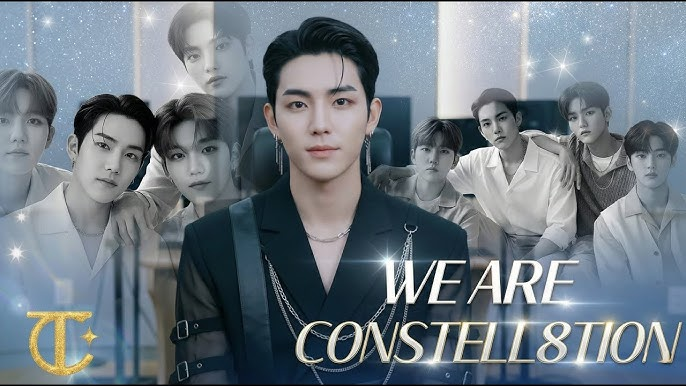
Talking about the future of music, Christian Kmachni believes that it would be interconnected IP. He himself illustrated his own model with Hannah Montana. According to him, what’s new about this model is the complementary infrastructure.
“I think the answer is interconnected IP franchises. In my pitch, I called it the ‘Hannah Montana’ model. Hannah Montana is a fictional character, but she became so popular because she was accessible across various media, including TV series, movies, music, and more. That’s what we want for Constell8tion.”
Christian Kmachni.
However, there’s one dimension that’s often overlooked in discussions about the IP ecosystem: the role of fans. In this model, fans aren’t just consumers.
What made K-pop special in the early 2010s was that sense of community. Today, much of it has become fragmented, with fandoms competing rather than supporting each other. A well-built IP ecosystem can re-energize that community, as fans aren’t tied to just one artist but to a single universe. So from there, the 120 billion won investment in The Black Label is a signal that global capital has seen where music is moving, involving structural integration like IP.
Join us on Kpoppost’s Instagram, Threads, Facebook, X, Telegram channel, WhatsApp Channel and Discord server for discussions. And follow Kpoppost’s Google News for more Korean entertainment news and updates.











정말 멋져 보여!
I really like those clothes.