

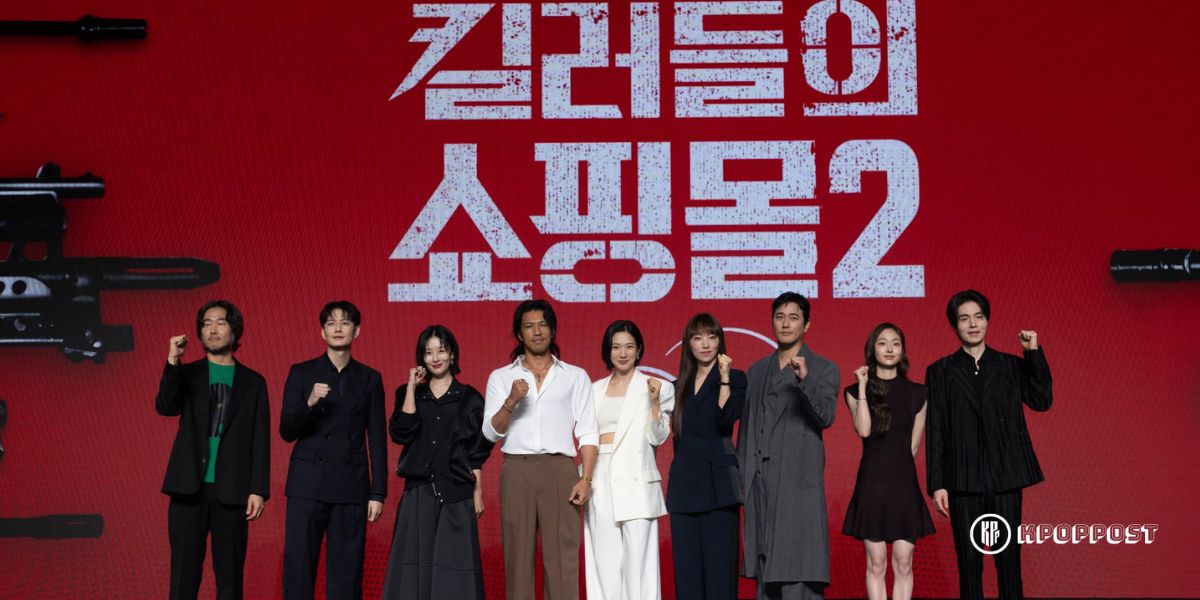
There are press conferences designed to promote a new series, and then there are those that offer a genuine glimpse into the creative process. The media conference for Disney+’s “A Shop for Killers Season 2,” held at Conrad Seoul in Yeouido, belonged firmly to the latter.
Attending the event as an invited guest, I expected discussions about bigger action sequences, new cast members, and the inevitable question surrounding Jeong Jin-man’s fate after the explosive finale of Season 1. Those topics certainly surfaced, but they were far from the heart of the conversation.
Instead, director Lee Kwon and the cast repeatedly returned to a different idea: growth.
Not simply the expansion of the series itself, but the emotional evolution of its characters, particularly Ji-an. The creative team emphasized that Season 2 is not interested in repeating what made the first season successful. Rather, it aims to build upon that foundation by exploring what happens after survival becomes a choice instead of an instinct.
That philosophy was reflected in nearly every answer throughout the afternoon.
A Sleeper Hit That Became One of Disney+’s Biggest Korean Originals
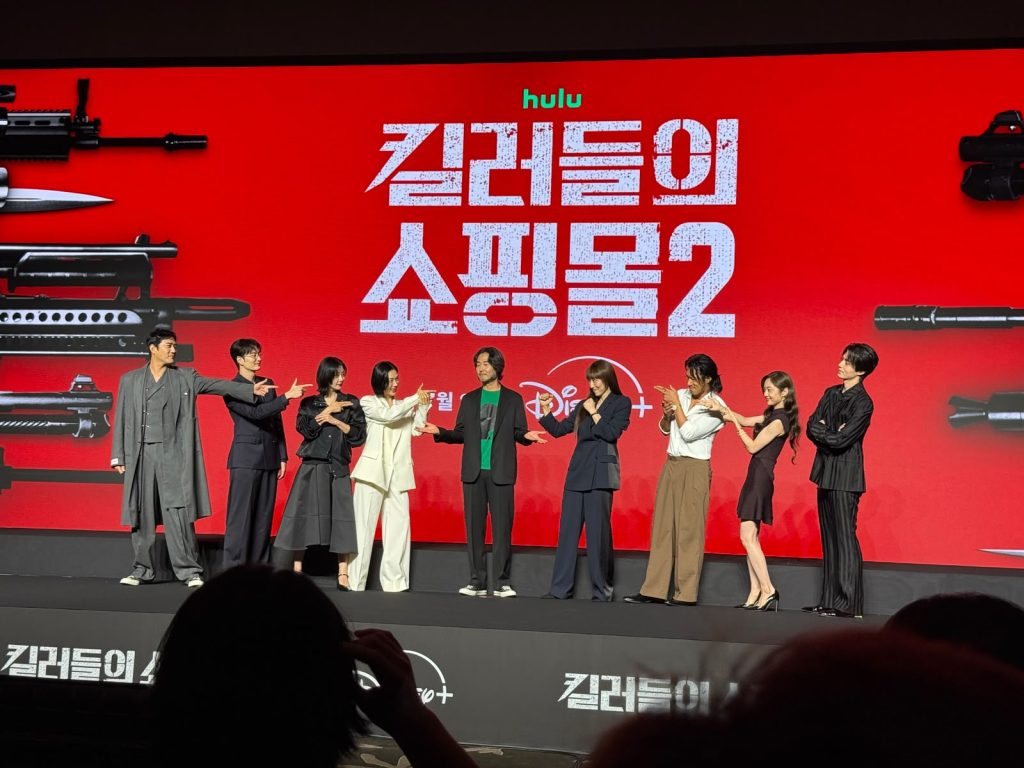
When A Shop for Killers premiered in January 2024, it quietly distinguished itself from the growing number of Korean action thrillers entering the global streaming market.
Adapted from Kang Ji-young’s novel The Killer’s Shopping Mall, the series followed college student Jeong Ji-an (Kim Hye Jun), whose ordinary life unravels after the apparent death of her uncle, Jeong Jin-man (Lee Dong Wook). As she uncovers the truth behind the mysterious shopping mall he operated, Ji-an finds herself at the center of a deadly network of assassins and weapons suppliers.
The premise immediately captured viewers’ attention, but the drama’s lasting impact came from something deeper than its action.
While audiences praised its tightly choreographed fight scenes and distinctive visual style, the emotional core remained the unconventional relationship between Jin-man and Ji-an. Every flashback gradually revealed a guardian preparing his niece not merely to survive his absence, but to inherit a dangerous legacy she never asked for.
That balance between intimate character drama and high-stakes action transformed A Shop for Killers into one of Disney+’s most acclaimed Korean originals, earning a passionate international fanbase eager to discover what came next.
The answer, however, would not come from the novel.
Leaving the Source Material Behind
One of the biggest revelations came when Director Lee Kwon discussed the creative direction for Season 2.
While the first season closely followed Kang Ji-young’s original novel, the sequel ventures into entirely new territory.
For fans familiar with the source material, that means entering completely unexplored ground.
Rather than asking how to adapt the next chapter of an existing story, Lee explained that the writing team focused on a different question altogether: What choices would Ji-an make after surviving everything she experienced in Season 1?
That perspective ultimately became the foundation of the sequel.
During the conference, Lee shared the simple phrase that inspired his creative approach.
“When I was young, I came across the phrase, ‘Every attack has a counterattack,’ and it really stayed with me. That is what I wanted to emphasize in the second season. The story unfolds as it zooms in on the choices that Ji-an makes.”
Director Lee Kwon.
The quote encapsulates the central shift between the two seasons.
Season 1 was fundamentally about survival.
Ji-an spent much of the series reacting to danger, relying on the lessons Jin-man had instilled in her long before she understood why they mattered.
Season 2 changes that dynamic entirely.
Instead of merely defending herself, Ji-an begins making decisions that reshape the conflict around her.
It is a subtle but significant evolution, transforming the story from one about endurance into one about agency.
Bigger Doesn’t Always Mean Better
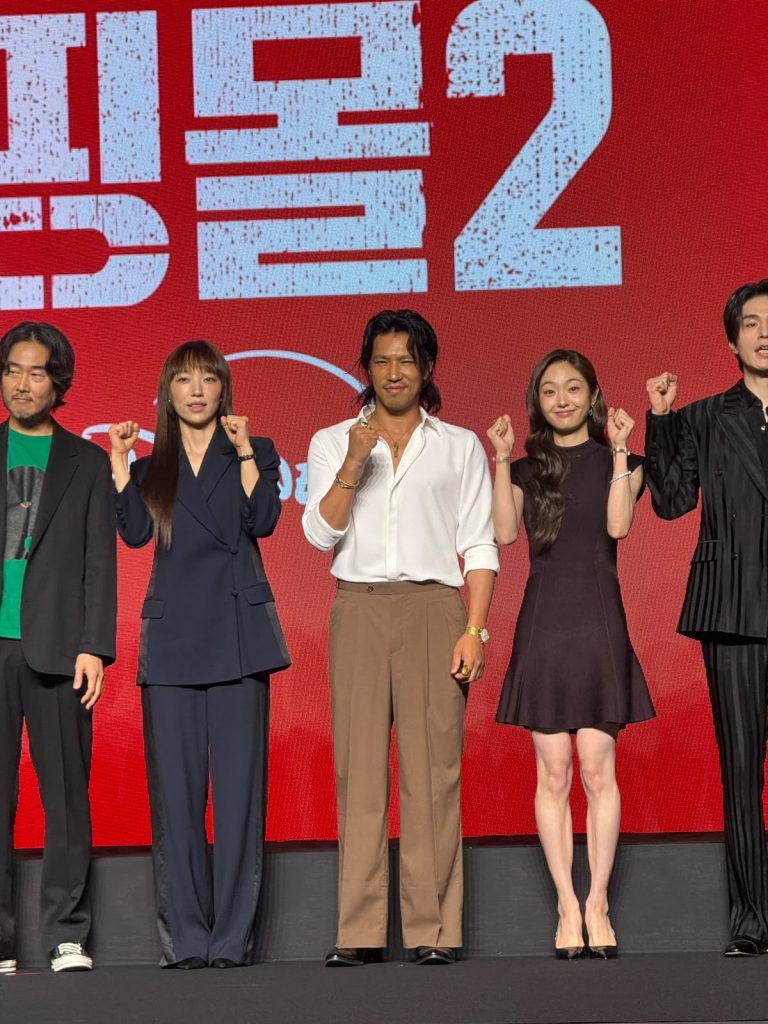
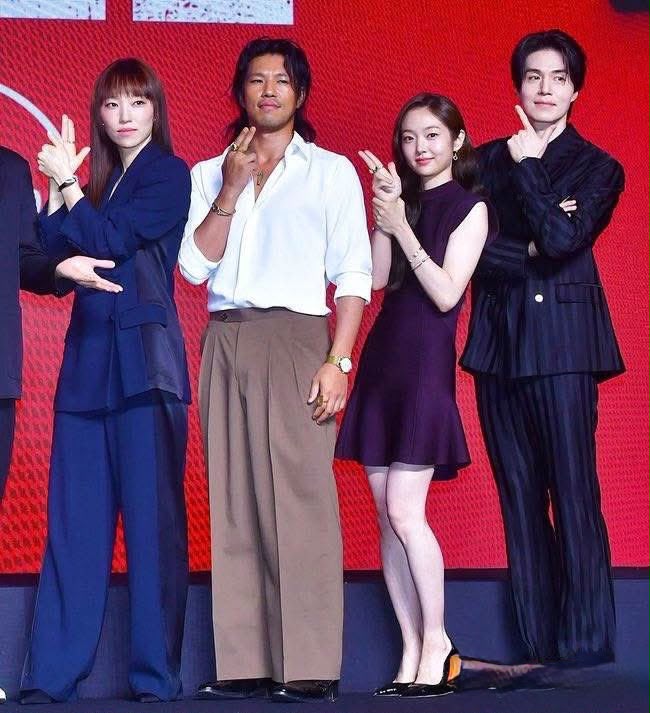
With Season 2 introducing the powerful international organization Babylon and expanding its world far beyond Korea, audiences might naturally expect a sequel defined by larger-scale action.
Yet Lee Kwon repeatedly resisted describing the new season in those terms.
For him, expansion has meaning only if it serves the characters.
Although the action has grown more ambitious, the emotional journey remains the true foundation of the series.
As Lee explained,
“It is true there are many action dramas these days. But our series, at its core, is about how Ji-an grows from a child to an adult through survival and counterattack. That is the most important part and what holds the story together.”
Director Lee Kwon.
It was perhaps the afternoon’s most revealing comment.
In an era where streaming platforms increasingly compete through spectacle, Lee continues to frame A Shop for Killers first as a character drama.
The carefully choreographed fight scenes that defined Season 1 remain important, but they function as extensions of personality rather than visual set pieces designed solely to impress.
That philosophy was evident throughout the conference.
Whether discussing new characters, expanded locations or increasingly elaborate action, nearly every answer eventually circled back to Ji-an’s personal growth.
Lee Dong Wook Returns to an Unfinished Story
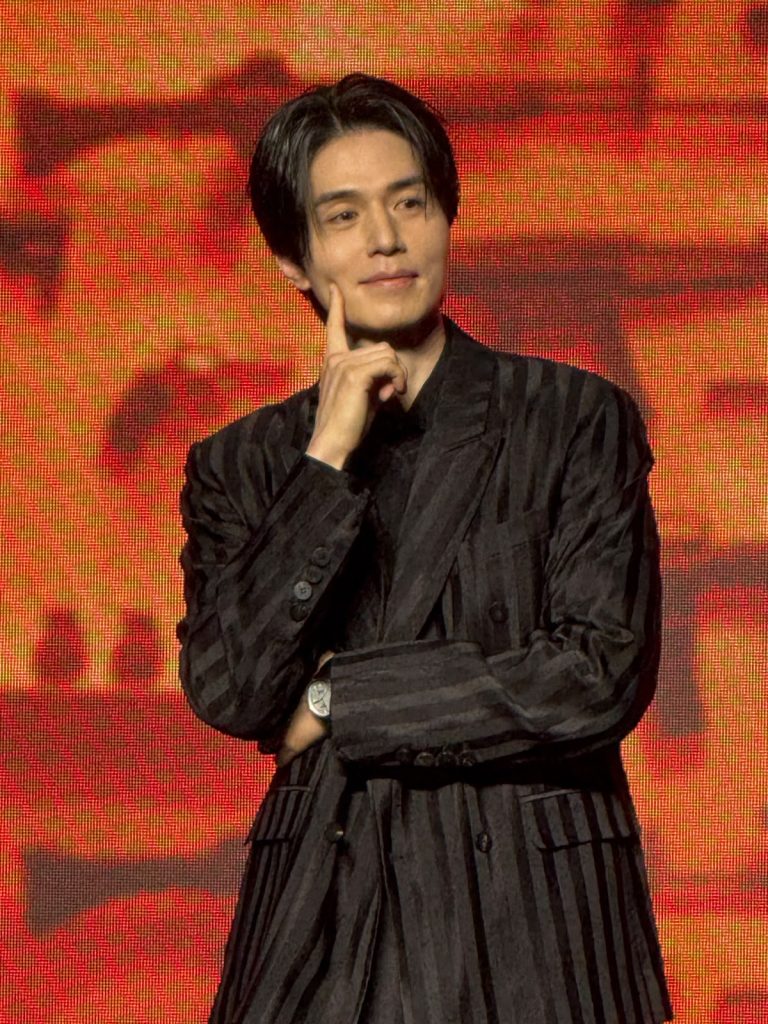
Few actors have navigated Korean television as successfully as Lee Dong Wook.
Across two decades, he has built a career spanning romance, fantasy, noir and psychological drama, continually reinventing himself without losing the quiet charisma that has become his signature.
Jeong Jin-man may be one of his most restrained performances.
He is a man of few words, communicating more through silence than lengthy dialogue. Every lesson he gives Ji-an carries weight precisely because he rarely explains himself.
Watching Lee Dong Wook during the conference, it became apparent that he understands why Jin-man resonated so strongly with audiences.
Rather than discussing the excitement of returning to the role, he focused on the individuality of each character.
One point he returned to several times was the action choreography.
Every fighter in Season 2, he explained, has developed a distinctive combat style that reflects their personality and life experience.
It may seem like a technical detail, but it speaks to the production’s broader philosophy.
Action is never separated from character.
The way Jin-man fights tells viewers who he is long before he speaks.
Lee also acknowledged the expectations surrounding the sequel.
“Following the success of the first season, I felt the pressure to make the second season even better. Otherwise, there would have been no point in making a second season, so I gave it my all.”
Lee Dong Wook
It was an honest admission rather than a promotional soundbite.
Instead of promising audiences that Season 2 would simply be “bigger,” Lee recognized the responsibility that comes with continuing a story so many viewers had embraced.
His return alone answers the lingering question left by Season 1’s finale, but judging by his remarks, Jin-man’s survival is only the beginning of a much larger emotional journey.
Kim Hye Jun Steps Into the Spotlight

If Season 1 belonged equally to Jin-man and Ji-an, Season 2 firmly positions Kim Hye Jun’s character at the center of the narrative.
No longer the frightened college student forced to rely on instinct, Ji-an now carries the responsibility of protecting the people around her while confronting enemies who continue to emerge from her uncle’s hidden world.
Speaking about her character’s evolution, Kim described the shift in remarkably simple terms.
“The second season is about striking back after she realizes that if things continue to go on as they are, everyone around her will get hurt.”
Kim Hye Jun.
The statement aligns perfectly with Director Lee’s vision of “counterattack.”
Ji-an is no longer merely reacting to danger.
She is choosing to confront it.
That transformation represents one of the sequel’s greatest challenges.
A protagonist who survives extraordinary circumstances is compelling.
A protagonist who consciously accepts responsibility for others is even more so.
Throughout the conference, Kim spoke thoughtfully about Ji-an’s growth, emphasizing not only the physical demands of the role but also the emotional burden that accompanies leadership.
Her performance in Season 1 established Ji-an as a believable survivor.
Season 2 appears determined to show how she becomes a leader.
A Story Still Grounded in Family
Perhaps the most striking takeaway from the afternoon was how often the conversation returned to family.
Despite assassins, underground organizations and increasingly complex action sequences, A Shop for Killers continues to define itself through relationships rather than violence.
Jin-man and Ji-an remain the emotional center of the story.
Everything else—the action, the international scope, the expanding mythology—exists to challenge and strengthen that bond.
It is an approach that distinguishes the series from many contemporary action dramas and suggests that Season 2 understands precisely what audiences connected with in the first place.
The world may be growing larger.
The stakes may be higher.
But at its heart, A Shop for Killers remains a story about trust, legacy and the difficult choices that shape a family.
Expanding the World Beyond Murthehelp
While the emotional heart of A Shop for Killers remains rooted in Ji-an and Jin-man’s relationship, Season 2 significantly widens the scope of the story.
The sequel introduces Babylon, an international organization that promises to deepen the mythology surrounding Murthehelp and the shadowy world of assassins first hinted at in Season 1. Rather than treating the expansion as an excuse for larger set pieces, Director Lee Kwon described it as a natural consequence of Ji-an’s decision to stop running.
Once she chooses to fight back, the world inevitably becomes larger.
Enemies who once remained hidden are forced into the open.
Old alliances are tested.
New ones emerge.
It is a direction that feels both ambitious and necessary. Season 1 established the rules of this underground society; Season 2 appears intent on revealing just how vast it truly is.
Yet despite the larger canvas, the creative team consistently resisted describing the sequel simply as “bigger.”
Instead, they emphasized that every new location, every new character, and every new confrontation exists to challenge Ji-an’s growth rather than distract from it.
That creative restraint may ultimately become one of Season 2’s greatest strengths.
A Truly International Ensemble
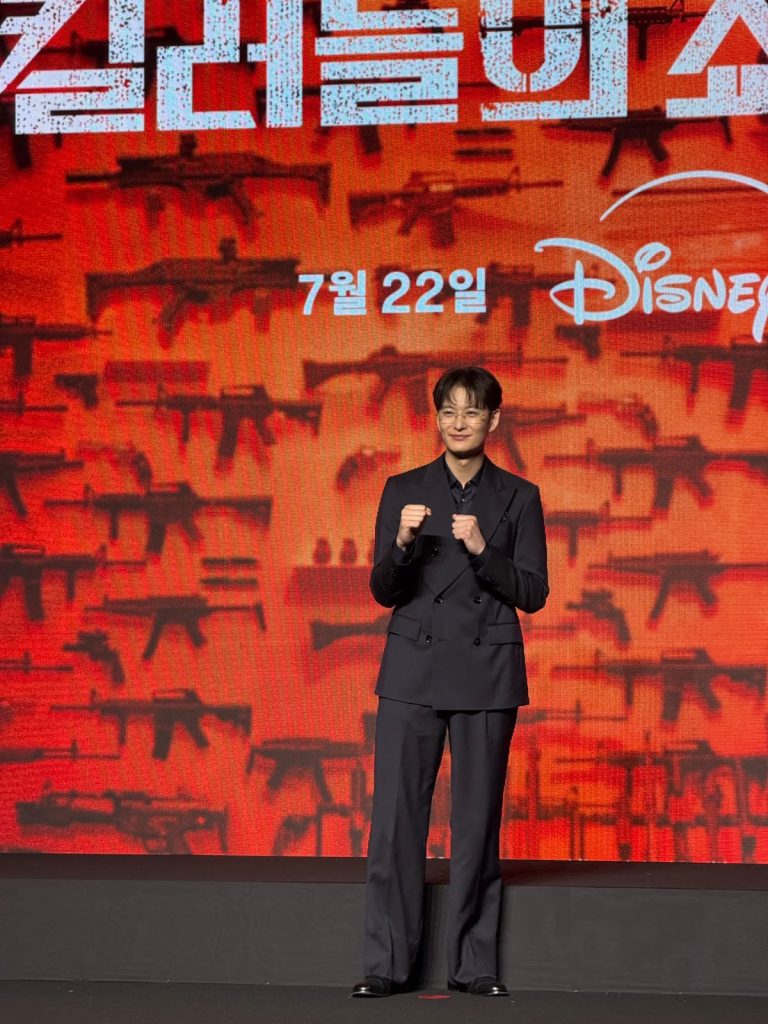
Reflecting its expanded world, A Shop for Killers welcomes an increasingly international cast.
Among the most anticipated additions is Japanese actor Masaki Okada, who joins the series as the enigmatic mercenary J. Speaking during the press conference, Okada shared that the production pushed him beyond his previous experiences with action, requiring him to approach movement almost like another language.
His presence immediately broadens the series’ cultural landscape while reinforcing the increasingly global reach of Korean productions on streaming platforms.
Joining him is Hyunri, whose preparation for the physically demanding role included months of intensive strength training and action practice. During the conference, she spoke about wanting her character’s movements to feel authentic rather than simply athletic—a philosophy that closely mirrors Director Lee’s own approach to action as character development.
Returning cast member Geum Hannah also discussed the extensive preparation required for Season 2, from motorcycle riding to stunt rehearsals and wire work. Her expanded role signals that the sequel intends to give greater depth not only to its central protagonists but also to the supporting figures who populate Jin-man’s dangerous world.
Collectively, the additions reflect a broader trend in Korean entertainment.
Rather than casting international actors simply to increase overseas appeal, productions like A Shop for Killers are integrating multilingual performers into stories where global connections are essential to the narrative itself.
The result feels organic rather than calculated.
Kim Min’s Quietly Memorable Moment
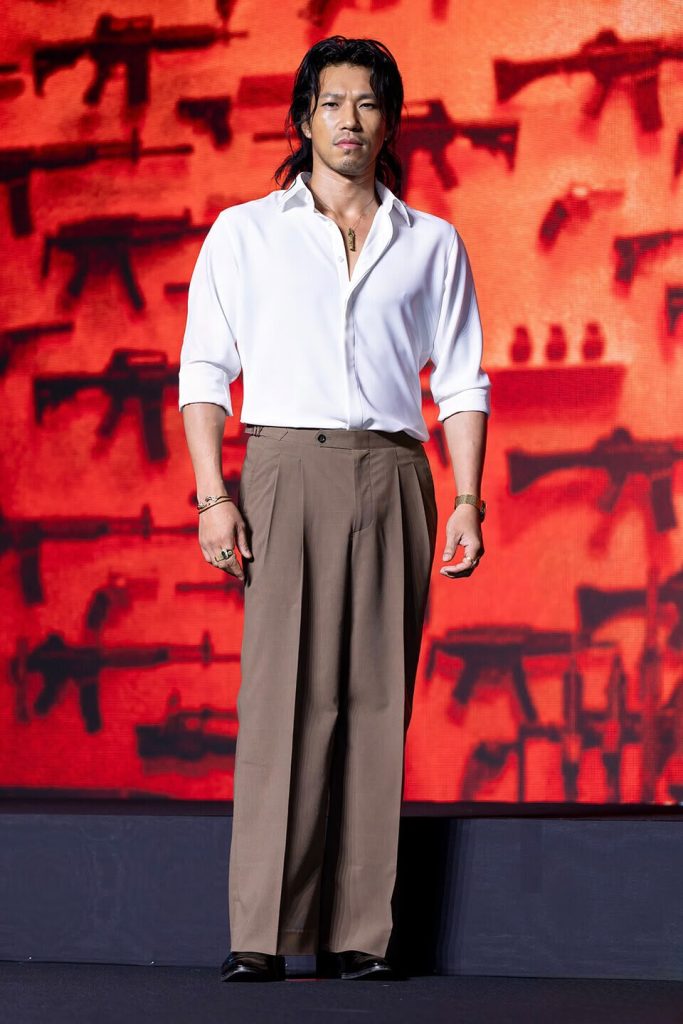
Among the returning cast members, Kim Min delivered one of the most understated yet memorable moments.
His character, Pasin, quickly became a fan favorite during the first season. As Jin-man’s trusted ally and Ji-an’s Muay Thai instructor, Pasin brought both warmth and quiet confidence to a story often dominated by violence and betrayal.
When the moderator pointed out that many viewers had genuinely assumed Kim Min was Thai because of his convincing portrayal—including his fluent Thai dialogue and mannerisms—the ballroom erupted in laughter.
Kim Min smiled modestly.
Yes, he admitted, he had heard that many times before.
But rather than dwelling on compliments about his performance, he shifted the conversation toward the audience that had embraced the series.
The question he receives most often, he shared, isn’t about his nationality.
It’s simply: “When is A Shop for Killers Season 2 coming?”
Fans in Korea asked it.
International fans asked it.
Hearing the same question repeatedly made him realize just how much affection people continued to have for A Shop for Killers long after the first season ended.
It was a brief exchange, lasting less than a minute, but it revealed something difficult to manufacture.
Humility.
Instead of celebrating his own popularity, Kim reflected on the enthusiasm surrounding the series itself.
Listening from the audience, it became clear why Pasin resonated with viewers.
Like the character he portrays, Kim carries himself with an easy confidence that never seeks the spotlight.
Pasin’s loyalty, calm under pressure and quiet dependability made him an emotional counterbalance to the chaos unfolding around Ji-an.
If Season 1 introduced him as a trusted mentor, Season 2 appears poised to explore his role more fully.
For many viewers—including those who mistakenly believed Kim Min was Thai—that will likely be welcome news.
Action With Purpose
Action has always been central to A Shop for Killers, but one of the conference’s recurring themes was that choreography should never exist simply for spectacle.
Lee Dong Wook noted that each character now possesses a distinct fighting style developed around individual personalities and experiences.
That philosophy extends throughout the production.
A veteran assassin moves differently from a newcomer.
A Muay Thai specialist fights differently from a trained mercenary.
Every encounter tells the audience something about the people involved before a single line of dialogue is spoken.
It is an approach that recalls the best action cinema, where movement itself becomes character development.
Rather than repeating familiar choreography, “A Shop for Killers Season 2″ appears determined to make every confrontation emotionally meaningful.
That attention to detail helped distinguish the first season from many of its contemporaries and, judging by the cast’s comments, remains a defining creative priority.
Beyond the Source Material
One of the sequel’s greatest creative risks is also its greatest opportunity.
Because “A Shop for Killers Season 2″ moves beyond Kang Ji-young’s original novel, audiences—whether longtime readers or newcomers—will discover the story simultaneously.
There are no later chapters to consult.
No established ending to anticipate.
Every revelation belongs entirely to Director Lee Kwon and his creative team.
For some productions, departing from source material can be risky.
Here, it feels liberating.
Rather than limiting themselves to adaptation, the writers have embraced the chance to ask what these characters would naturally become after everything they experienced.
That question feels more compelling than simply asking what happens next.
It allows the series to remain emotionally honest while surprising even its most devoted fans.
Disney+’s Growing Confidence in Korean Storytelling
The significance of A Shop for Killers extends beyond the series itself.
Over the past several years, Disney+ has steadily expanded its investment in Korean original productions, recognizing the global appetite for stories that combine strong character work with cinematic production values.
A Shop for Killers has become one of the clearest examples of that strategy.
Its success demonstrates that Korean dramas need not abandon their cultural identity to reach international audiences.
Instead, they succeed precisely because they remain rooted in emotionally authentic storytelling.
“A Shop for Killers Season 2″ appears ready to build upon that reputation.
With its larger international cast, broader scope and original narrative, the sequel reflects a streaming landscape in which Korean productions are no longer viewed as regional successes but as global flagship titles.
A Story That Continues to Choose Character Over Spectacle
As the media conference drew to a close, the cast gathered for one final round of photographs before leaving the stage.
The applause that followed felt less like the conclusion of a promotional event than the beginning of a new chapter.
What lingered after the afternoon wasn’t the promise of bigger explosions or more elaborate fight scenes.
It was the confidence with which the cast and creative team spoke about the people at the center of the story.
Director Lee Kwon never lost sight of Ji-an’s emotional journey.
Lee Dong Wook approached Jin-man not as an invincible action hero but as a guardian still learning to let go.
Kim Hye Jun embraced Ji-an’s transformation from survivor to leader with thoughtful conviction.
Even Kim Min’s brief reflection on the questions he receives from fans quietly illustrated the lasting connection audiences have formed with these characters.
That may ultimately explain why A Shop for Killers resonated so deeply in its first season, making it to the Top6 of Britain’s Official Charts. That alone is a great feat.
Beneath its intricate action sequences, stylish direction and expanding mythology lies something surprisingly simple: a story about family, trust and the choices that define us.
“A Shop for Killers Season 2” undoubtedly promises higher stakes.
It introduces new adversaries, broadens its international reach and ventures beyond the pages of the original novel.
Yet after spending an afternoon listening to the cast and creative team discuss the series, one impression remained remarkably consistent.
They are not chasing scale for its own sake.
They are protecting the emotional foundation that made audiences care in the first place.
Whether “A Shop for Killers Season 2″ ultimately surpasses its predecessor will be decided after it premieres.
But one thing already feels certain.
This is no longer just an adaptation.
It has evolved into a story entirely its own—and judging by the confidence displayed inside Conrad Seoul, everyone involved believes its most compelling chapter is only just beginning.
Editorial Note: This article is written by KPOPPOST contributor. The opinions expressed are those of the writer.
Join us on Kpoppost’s Instagram, Threads, Facebook, X, Telegram channel, WhatsApp Channel and Discord server for discussions. And follow Kpoppost’s Google News for more Korean entertainment news and updates.