

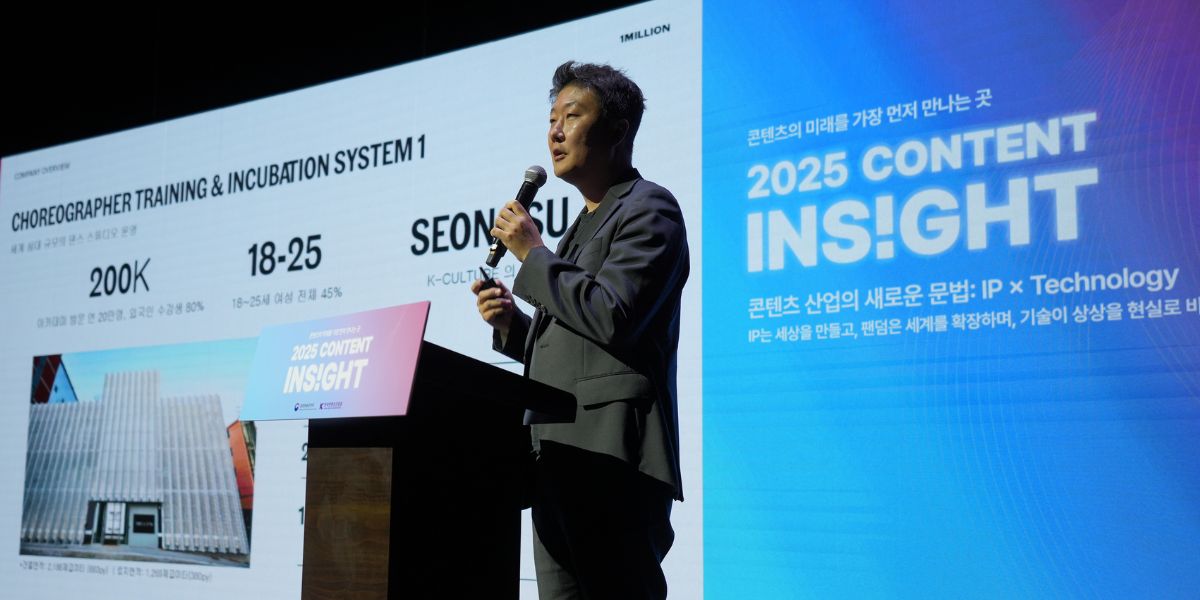
At the KOCCA Content Insight 2025 conference, Jae-hong Kim, Vice President of 1MILLION Dance Studio and former Head of Global Strategy at SM Entertainment, captivated audiences with a deeply reflective and strategic talk on “The Global Expansion of K-pop Artist IP and the Fandom Business.” Combining humor, hard-won industry insight, and a genuine passion for fan culture, Kim offered a rare inside look at how K-pop continues to reinvent itself in an age defined by platforms, fandom, and digital transformation.
Jae-hong Kim, from “Successful Nerd” to Industry Strategist
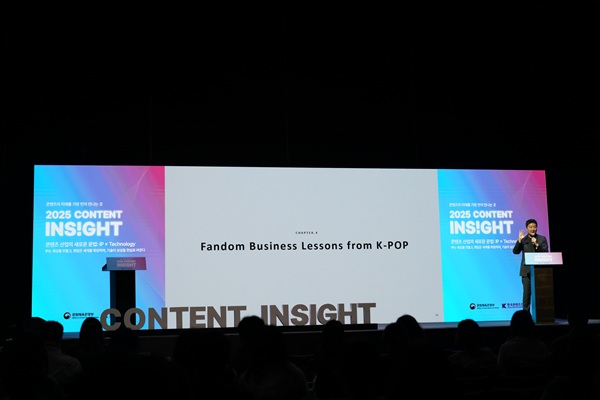


Opening with self-deprecating charm, Kim described himself as a lifelong “otaku” who grew up loving Japanese games, anime, and pop culture—before finding himself shaping the Korean entertainment industry from within. “I was just a nerd who made Gunpla and watched anime,” he said with a grin. “Now I’m a successful nerd who turned passion into a career.”
His message was clear: K-pop’s rise was built not just on systems and strategy, but on people who loved the culture deeply enough to systematize it.
The Evolution of the K-pop System
Tracing the history of Korean pop, Kim outlined its transformation from the manager era to the composer era, and finally to the producer system—a shift pioneered by SM’s Lee Soo-man in the mid-1990s. Producers, he explained, “turned personal know-how into a repeatable system,” establishing the foundation for modern K-pop’s scalable success.
Three pillars—system, globalization, and localization—remain the backbone of the industry. Because the domestic market was small, Korea’s entertainment giants were forced to think globally, partnering with international choreographers and forming multinational groups to win over audiences from Tokyo to Toronto.
From Fan Clubs to “Fandustry”
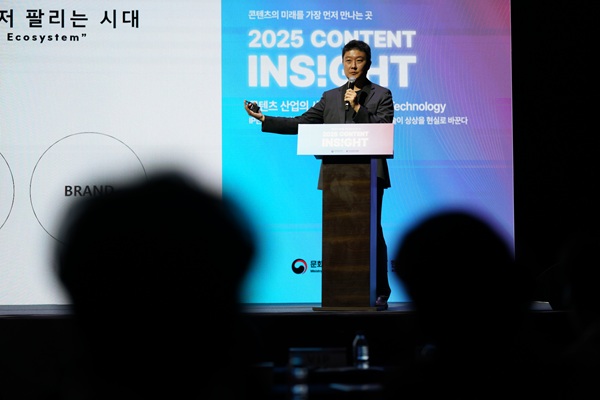
One of Kim’s most compelling insights was his exploration of the evolution of fandom. In the early 2010s, companies managed official “fan clubs.” Today, fans themselves drive the narrative—what Kim calls the rise of “Fandustry.”
“We no longer just manage fans; we communicate with them. Fans aren’t just consumers—they’re co-owners of the brand.”
Jae-hong Kim.
K-pop fandoms, he noted, are unique in their intensity and agency. Fans don’t just consume. They promote, organize, and even help shape marketing strategy. The relationship between artists and fans has shifted from one-way admiration to two-way collaboration.
The Power (and Challenge) of Platforms
Jae-hong Kim emphasized that mastering each era’s key medium is vital for survival. He reminded the audience that in 2015, even the biggest entertainment agencies dismissed YouTube’s potential—until BTS leveraged it to global success. “Those who seize the key medium of their era succeed,” Kim said.
Today, K-pop companies are more sensitive to these inflection points, forging partnerships with tech platforms and embracing fandom-based ecosystems like Weverse and Bubble. These tools, he said, enable “real communication that used to be unthinkable in the fax-and-fan-protest era.”
Fandom as Strategy, Control as Discipline
Yet, Kim cautioned against complete decentralization. While fan-made content has become an invaluable marketing engine, he stressed that brand control remains critical. Companies must preserve their IP identity and values while empowering fans to participate.
“We allow creative freedom—but we control the message together,” he said, crediting fans themselves for helping police malicious or exploitative content online.
No Formula, Only Fundamentals
Addressing the myth of a “K-pop success formula,” Kim laughed: “Ask ChatGPT—it’ll tell you: great content, a hook, storytelling, exposure… but there’s no such formula. These days, it’s a fog.”
In this unpredictable landscape, he urged creators to focus on fundamentals: quality content, good communication, and authentic relationships. And for artists, one principle above all—humility. “We don’t shine on our own; others make us shine,” he said. “Always start with the basics. Greet people. Say hello.”
The Takeaway: IP, Innovation, and Integrity
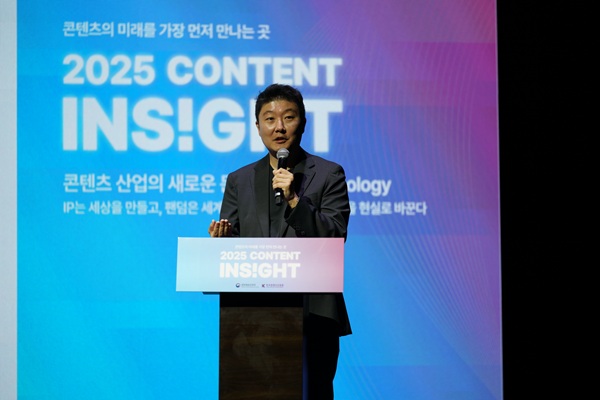
Kim’s talk was a manifesto for a maturing creative industry. He urged K-pop leaders to strike a balance between innovation and integrity, to leverage technology without losing humanity, and to treat their fandom not as a transaction but as a genuine partnership.
“The question isn’t just how to grow fandoms. It’s how to create IP that deserves them.”
Jae-hong Kim.
Join us on Kpoppost’s Instagram, Threads, Facebook, X, Telegram channel, WhatsApp Channel and Discord server for discussions. And follow Kpoppost’s Google News for more Korean entertainment news and updates.