

K-pop conquered the world’s ears. K-drama conquered its screens. Now, a new generation of strategists is trying to conquer something harder to define: the space between fandom and everyday life. Few people are working that space as deliberately as Sunny Kim, CEO of Team8 Partners. She’s the strategist behind the BTS-branded Sinjeon Tteokbokki meal kit and a growing halal-certification push across Korean consumer brands. Kim spoke with us about tteokbokki, trust, and what she believes comes next for Hallyu as a business model.
Meet Sunny Kim, the Strategist Turning Fandom into Infrastructure
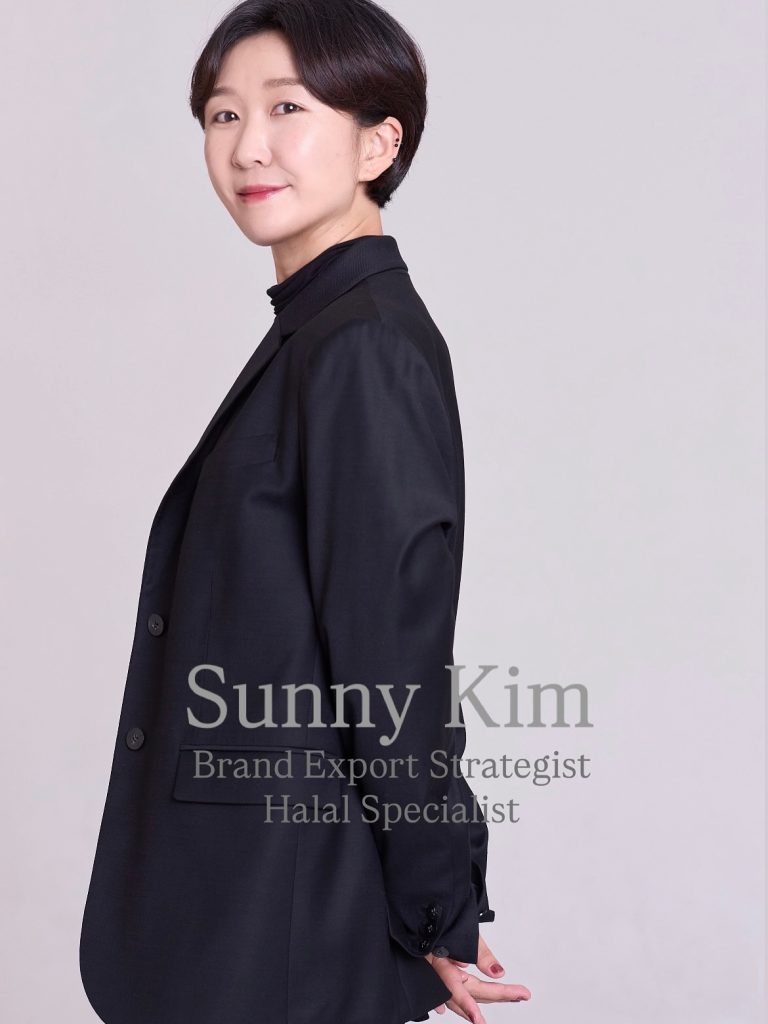
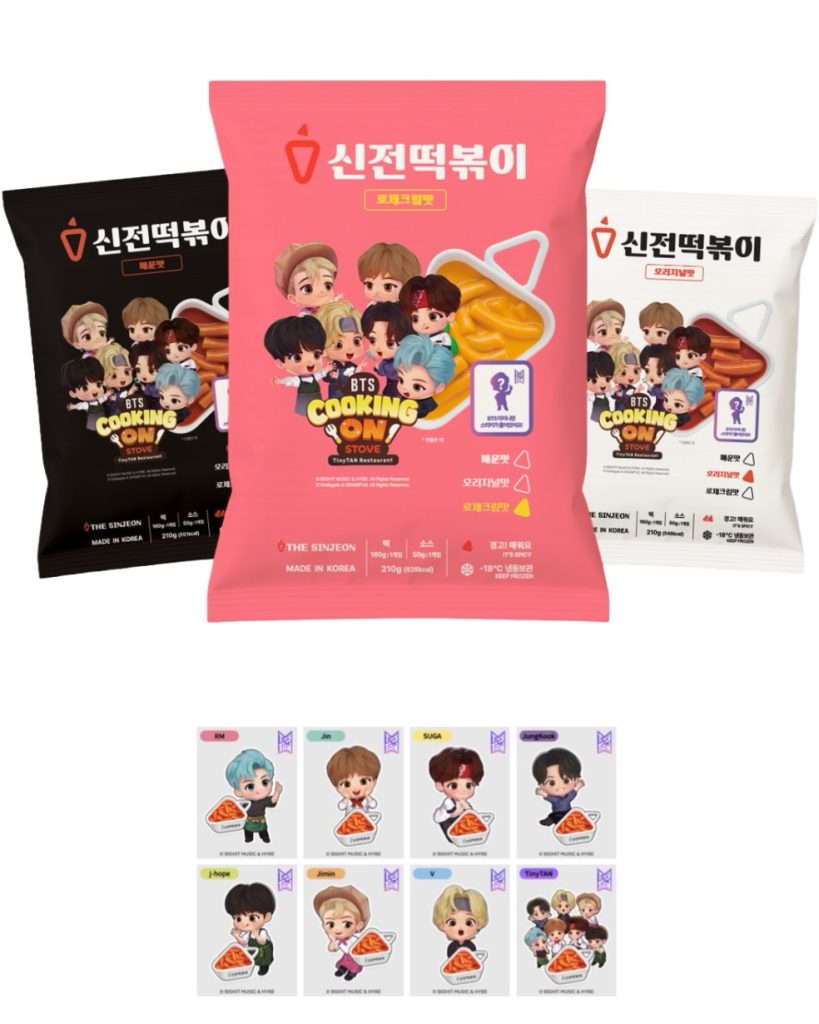
Sunny Kim is the CEO of Team8 Partners, a Seoul-based consultancy. It designs cultural-commercial ecosystems built around Korean IP. Its most visible project is the BTS Cookin’ ON tteokbokki meal kit. The kit was developed with Sinjeon Tteokbokki, a 25-year-old street-food brand. Sinjeon runs roughly 800 locations nationwide.
Sunny Kim also runs e-ustaz, a halal pre-screening diagnostic service built to help Korean companies navigate certification before they ever apply.
Across fashion, food, and faith-based markets, Kim’s throughline is consistent: she doesn’t see fandom as a marketing channel. She sees it as the first customer a brand will ever have, and the hardest one to keep.
Why Sinjeon, and Why Tteokbokki, Before BTS Ever Entered the Room
A Genre Needs Its Own Champion
Kim’s interest in Sinjeon Tteokbokki predates the BTS partnership entirely. Her theory is that K-food’s global rise can’t be carried by one flagship brand alone. “Bibigo can’t be the face of tteokbokki, eomuk, and bibimbap all at once,” she says.
Korean food, in her framing, has genres. And every genre needs its own champion, the way Buldak became the undisputed face of spicy stir-fried noodles worldwide. For tteokbokki, she’d already decided the champion had to be Sinjeon. “This isn’t food,” she remembers thinking. “This is a story.”
“Before BTS even entered the picture, it was Sinjeon Tteokbokki (신전떡볶이) itself that got me excited.”
Sunny Kim.
From Celebrity Endorsement to Physical IP
What separates this project from a typical celebrity tie-in, Kim argues, is that nothing about it is borrowed. A traditional endorsement rents a famous face for the length of a contract. BTS Cookin’ ON works differently. It’s already a world that fans have lived inside virtually, cooking alongside the members inside the game. The meal kit doesn’t advertise that world. It builds a door into it.
“This isn’t a celebrity deal. It’s the physical expansion of an IP.”
Sunny Kim.
She calls the resulting product an “IP-embedded product,” something a fan doesn’t simply consume, but steps into.
Fandom Lights the Fire, The Product Has to Keep It Burning
Fandom as Ignition, Not Fuel
Kim is careful not to overstate what fandom alone can do. ARMY, she says, functions as an ignition force: an active, self-organizing engine that turns enthusiasm into distribution.
But ignition isn’t sustainability. “Fandom brings the first customer,” she says. “The brand has to earn every customer that follows.”
It’s a distinction she returns to throughout the conversation, almost as a discipline: excitement opens the door, but the product decides whether anyone stays inside.
“I tell every client: “The first purchase happens because of BTS. The second purchase is on you.””
Sunny Kim.
The Question That Reveals Everything
Kim has a single diagnostic question she asks every client weighing a celebrity-driven launch: would someone buy this again without BTS attached?
“A long pause in response to that question tells me everything.”
In sixteen years of watching brands rise, she’s seen the pattern repeat: brands built on borrowed heat vanish the moment that heat cools. The ones that last are the ones whose product could have stood on its own from the start.
Halal Certification Isn’t Compliance. It’s Trust Infrastructure
A Multi-Trillion-Dollar Blind Spot
Kim pushes back hard on the idea that halal certification is a niche regulatory checkbox. The global Muslim population sits at roughly two billion people!
And, the halal economy now spans far beyond food: into beauty, fashion, finance, and tourism. Treating certification as paperwork, she says, means understanding “maybe half of what this market actually is.”
The Mark That Buys Trust No Ad Budget Can
For Muslim consumers, Kim explains, purchasing decisions don’t start with preference. They start with faith in practice. Presented with two otherwise similar products, a Muslim consumer will choose the certified one, often even at a higher price, before marketing ever enters the conversation. That, she says, makes halal certification not a differentiator but a prerequisite: “A brand without it doesn’t even make the shortlist.”
Three Stages of Difficulty
Kim breaks down where Korean companies typically get stuck:
- Information asymmetry: most companies underestimate how comprehensive halal standards actually are, covering full ingredient traceability, slaughter practices, and cross-contamination controls.
- Internal resistance: reworking existing recipes and production lines is costly and rarely welcomed internally.
- The post-certification gap: many brands earn the mark and then have no idea how to communicate it globally or find halal distribution channels.
Team8’s e-ustaz service, she says, exists specifically to close that first gap before a company ever files an application.
Buldak as Proof of Concept
Kim points to Samyang’s Buldak as the clearest evidence that halal certification can function as a genuine competitive advantage rather than a defensive requirement.
As certifications rolled out across new markets, the response wasn’t manufactured. It was organic, viral, and visual, with YouTubers across the Middle East filming themselves attempting “this absolutely insane spicy noodle.”
Certification opened the door.
Content filled the room.
What Buldak proved for K-food, Kim believes, is still waiting to be replicated across K-beauty, K-fashion, and K-lifestyle.
Designing the Ecosystem, Not Just the Product
The Triangular Anchor
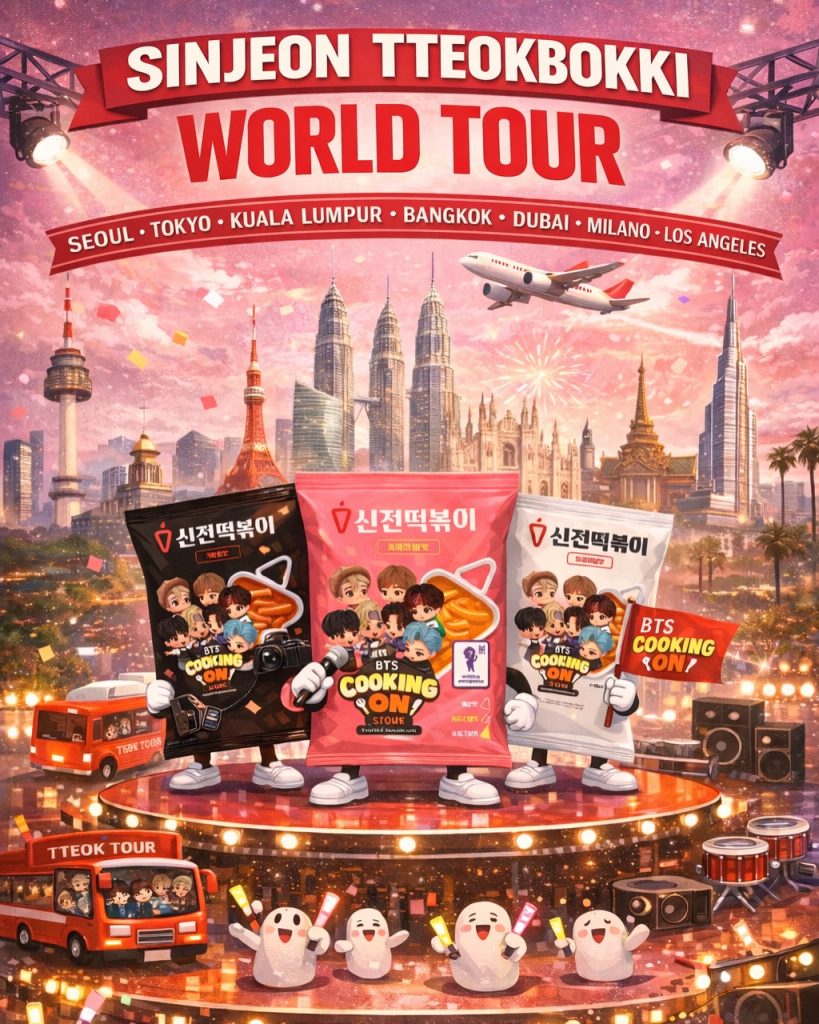
Kim describes her core methodology as a “triangular anchor” of three reinforcing elements: entertainment generates the crowd and the emotional high, the event creates a physical touchpoint, and the product becomes the vessel fans carry home.
“When all three operate at the same moment, in the same city, with the same message: that’s where the synergy happens. Any single element creates a fleeting impression. All three together create a memory that sticks.”
Sunny Kim.
Mapping Tours Like Distribution Networks
In practice, this means Kim treats a BTS World Tour schedule the way a retailer might treat a market-entry calendar. Every announced tour date gets plotted alongside local distribution networks and fandom density, so that pop-up planning, product launch, and marketing move on one shared timeline. It’s less spontaneous than it looks from the outside. The “cultural moment” is, in her telling, carefully engineered logistics.
“Every time a BTS World Tour date is announced, I put that city on a map and simultaneously analyze local distribution networks and fandom community density. Tour timing, product launch, and local marketing all need to move on a single shared timeline. That’s where pop-up planning begins — and where the cultural ecosystem starts to take tangible shape.”
Sunny Kim.
What Separates Brands That Last
Asked what will define successful Korean brands over the next five years, Kim doesn’t point to product innovation or marketing budgets. She points to something slower: the accumulation of localized trust.
She has watched brands blaze through markets on celebrity heat and disappear the moment it cooled, and others build quietly until, one day, they were simply discovered. And stayed loved.
“Anyone can ride a wave. The brands still standing on the shore after it recedes — those are the real global brands.”
Sunny Kim.
For Kim, that’s the real shape of where Hallyu is heading: not a trend to be ridden, but a platform to be built. It’s one where a fan who fell in love with the music ends up, eventually, eating the food, wearing the fashion, and booking the flight. Every node in that journey, she believes, is a business waiting to be designed.
“A K-pop concert in a city. A K-food pop-up nearby. A K-beauty brand hosting a fan experience activation. Every touchpoint connected as a single K-lifestyle journey. I’m already designing that architecture — and I plan to keep making it denser, richer, and more connected.”
Sunny Kim.
Join us on Kpoppost’s Instagram, Threads, Facebook, X, Telegram channel, WhatsApp Channel and Discord server for discussions. And follow Kpoppost’s Google News for more Korean entertainment news and updates.