


Korean entertainment no longer needs an introduction. What once began as a regional cultural movement has become one of the most influential creative forces in the world. Korean dramas lead streaming conversations across markets, K-pop continues to expand beyond music into lifestyle and identity, and Korean storytelling has secured a place inside the global entertainment ecosystem.
But after visibility comes a different question: what happens next?
For Dr. Hojin Kwon, the answer is not simply bigger productions, larger budgets, or more international attention.
Interview: “The Real Question Is Whether Korea Can Transform Popularity into Sustainable Leadership”
A Korean media strategist, K-content expert, and former Senior Executive Director at SBS Medianet, Dr. Kwon spent 34 years helping shape Korea’s broadcast industry through international distribution, content acquisition, channel development, co-production, commissioning, and executive production. Throughout his career, he contributed to introducing Korean content internationally long before global streaming transformed access to K-dramas.
Today, as a board member of the Korean Association for Broadcasting and Telecommunication Studies and an active participant in international media networks and festivals, Dr. Kwon continues to observe how Korean entertainment is evolving from inside both the business and creative sides of the industry.
Ahead of his participation as a jury member at the Monte-Carlo Television Festival, KPopPost spoke with Dr. Kwon about the future of Hallyu, ownership in the streaming era, why cultural specificity remains Korea’s biggest strength, and why the next challenge is no longer becoming global, but learning how to lead globally.
From Periphery to Center: How Far Korean Television Has Traveled
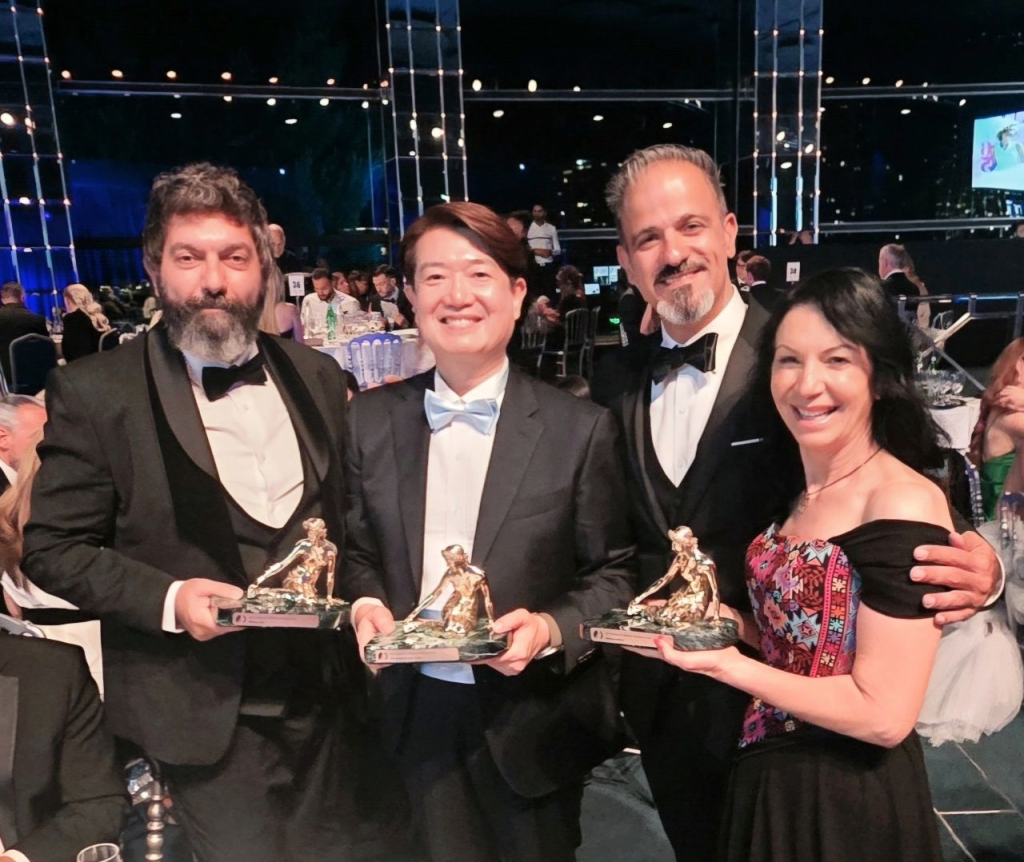


You are participating in the Monte-Carlo Television Festival jury, bringing a unique international perspective. As you prepare for that experience, what do you hope it will reveal about where Korean television stands today in the global creative landscape?
“Participating as a jury member at the Monte-Carlo Television Festival is meaningful to me not simply as a personal honor, but as a symbolic moment in the evolution of Korean television.
When I first began introducing Korean dramas to international markets in the early 1990s, Korean content was largely unknown. At that time, even getting international buyers to watch a Korean drama was difficult.
Today, Korean television is no longer merely being introduced to the world; it is being watched, discussed, compared, and evaluated within the mainstream of global storytelling.
What I hope this experience reveals is how far Korean television has moved from the periphery to the center of global creative dialogue. At the same time, Korean content must continue to be judged by global standards of originality, craft, narrative discipline, and emotional truth.
Korea’s position today is not simply successful. It is responsible.”
The Future of Hallyu
Looking ahead five to ten years, what will define the next phase of Hallyu?
“The next phase will not be defined by one genre, one platform, or one superstar.
It will be defined by the expansion of Korean storytelling into a broader IP ecosystem.
We already moved from exporting finished dramas to simultaneous global distribution through OTT platforms. The next stage will connect drama, film, music, webtoons, animation, games, live experiences, merchandise, and immersive technologies.
I sometimes call this transition moving from K-content to A-content—Asian content with global relevance.
The real question is not whether Korean content can remain popular. The real question is whether Korea can transform popularity into sustainable cultural and industrial leadership.”
Korea’s unique creative strengths
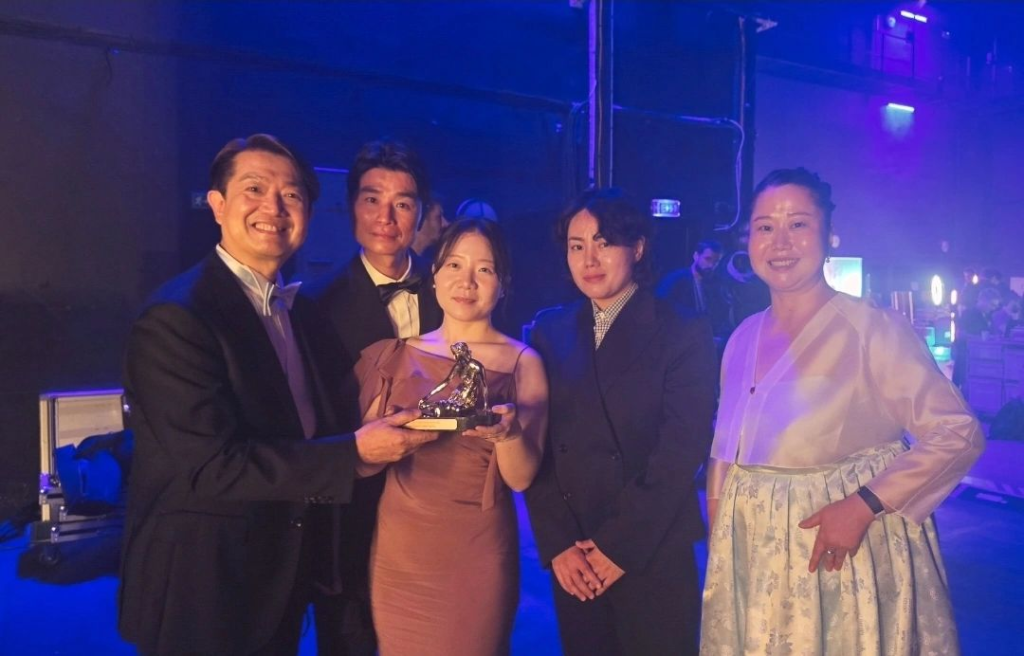
Korean content now competes with originals from every major platform. What strengths does Korea still have that others struggle to replicate?
“Korea’s greatest strength is emotional density.
Korean stories combine emotion, social tension, entertainment, and moral complexity in ways that reflect our historical experience and social reality.
Another strength is genre hybridity. Korean creators naturally mix melodrama, thriller, romance, social commentary, fantasy, and realism.
And perhaps most importantly, Korean content learned that international growth does not require losing identity.
The more authentic and specific a story becomes, the more universal it often feels.”
Cultural Specificity Vs. Global Appeal
Many Korean productions succeed internationally because they remain culturally specific rather than globally neutral. How do you see that balance?
“I do not believe Korean content should become culturally neutral to become global.
Audiences want stories that feel truthful.
Family structures, workplace pressure, education culture, historical emotion—international viewers may not understand every detail immediately, but they understand the human experience behind it.
Localization should create access, not flatten culture.
The heart of the story must remain authentic.”
Business Models For The Next Decade
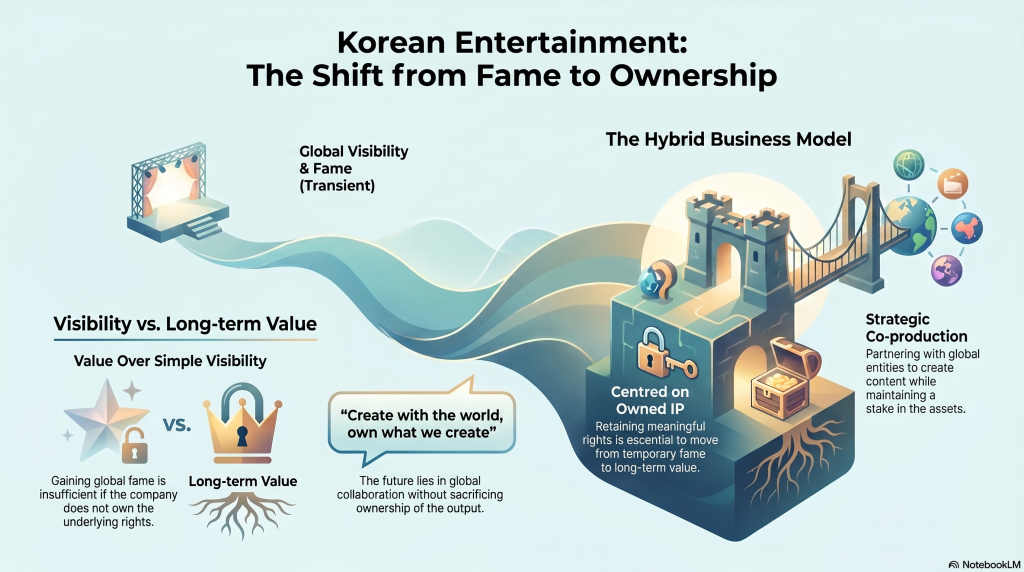
From a business perspective, what model will become most important for Korean entertainment over the next decade?
“A hybrid model centered on owned IP and strategic co-production.
Visibility is valuable, but if Korean companies do not retain meaningful rights, they may gain fame but lose long-term value.The future is not simply selling content globally.
It is creating with the world while owning enough of what we create.”
Securing Long-Term Global Standing
What should Korean productions do now to secure long-term global standing?
“Korean content must move from visibility to strategy.
We need stronger IP architecture. We need more global executive producers. We need stronger talent pipelines. And most importantly, we must maintain creative courage.
The greatest danger after success is formula.
Korea became globally influential because it took risks.”
Technology in Service of Storytelling
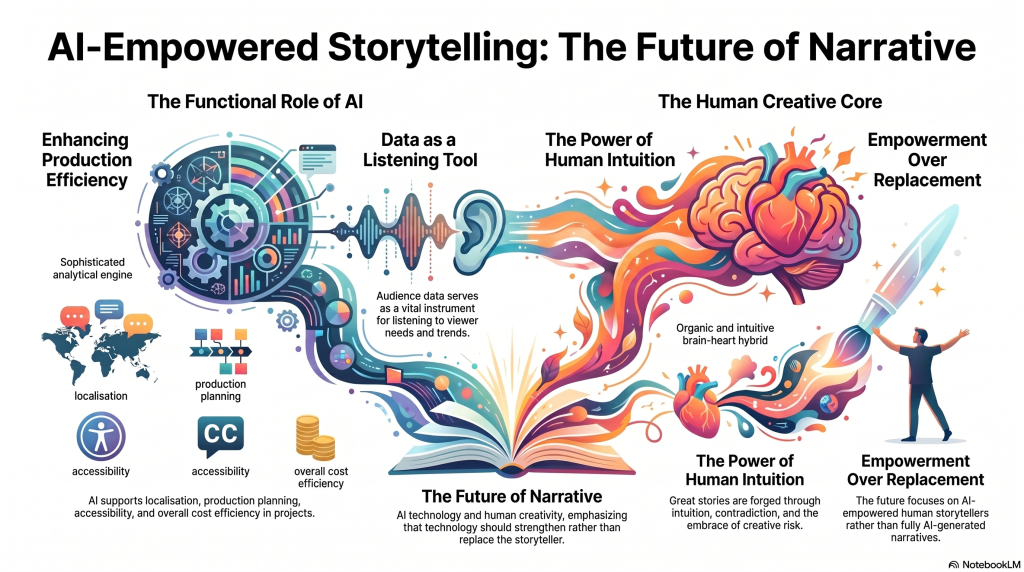
AI and audience data are becoming major industry conversations. What role should technology play?
“Technology should strengthen storytelling—not replace it.
AI can support localization, production planning, accessibility, and cost efficiency.
Audience data is useful as a listening tool.
But great stories are still created through intuition, contradiction, and risk.
The best future is not AI-generated storytelling.
It is AI-empowered storytellers.”
What Korea Can Learn from Global Peers
What differences do you notice between Korean, European, and North American media industries?
“Korea traditionally values speed, ratings, audience reaction, and export performance.
Europe often emphasizes cultural value and institutional sustainability.
North America focuses on scale, franchise growth, and IP ownership.
Korea has learned from both.
Now the challenge is combining speed with long-term systems and preserving institutional knowledge.”
The Hidden Risk Behind Global Expansion
Where do you see the biggest opportunities and risks for Korean media companies?
“The opportunity is global IP expansion.
The risk is cost inflation without ownership.
If budgets increase while rights disappear, the industry may become globally visible but internally fragile.
We also need diversified distribution and stronger bargaining power.”
Inherit the Spirit of Challenge, Not the Old Formula
What advice would you give the next generation of Korean producers?
“Learn what happens after the hit.
Understand rights.
Understand ownership.
Understand global collaboration.
Develop humility and curiosity.Hallyu was built through failures, experiments, and persistence.
The next generation should inherit the spirit of challenge—not repeat old formulas.”
Korea’s Next Challenge Is Not Visibility

Speaking with Dr. Hojin Kwon, one idea returned again and again: Korean entertainment has already crossed the visibility threshold.
The world is watching.
But recognition alone does not guarantee leadership.
For Dr. Kwon, the next chapter will depend on whether Korean entertainment can move beyond exporting content and begin building lasting creative infrastructure—through ownership, collaboration, talent development, and long-term strategy.
His vision is not about making Korean stories less Korean. If anything, he believes the opposite.
The future belongs to stories that remain emotionally honest, culturally grounded, and strategically designed to travel.
The Hallyu era proved Korean entertainment could reach the world.
What comes next may determine whether it can help shape it.
Editorial Note: This article is written by KPOPPOST contributor. The opinions expressed are those of the writer.
Connect with the author Maggie A. R. on LinkedIn
Join us on Kpoppost’s Instagram, Threads, Facebook, X, Telegram channel, WhatsApp Channel and Discord server for discussions. And follow Kpoppost’s Google News for more Korean entertainment news and updates.