
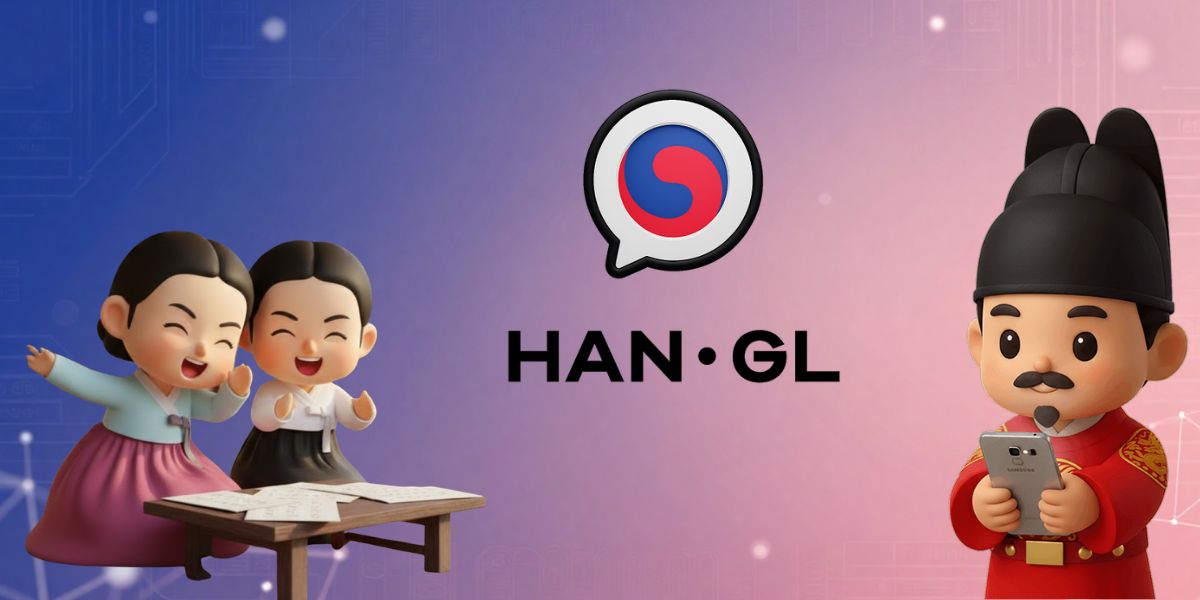
Meet HAN•GL, the winner of the K-Style Expo Q2 2026, a Korean learning app built for real fluency. It’s the work of a trilingual Korean-American founder who built the entire app solo, using AI agents, for just $1,000 total. And despite zero ad spend, HAN•GL has grown fast and organically now reaching over 16,000 learners across 140 countries.
By replacing rote memorization with a unique pedagogy that teaches the logic of Hangul through its origin story, the app provides an authentic gateway for the 225 million global Hallyu fans eager to move beyond subtitles.
Meet the Founder of HAN•GL, The Story, and His Vision
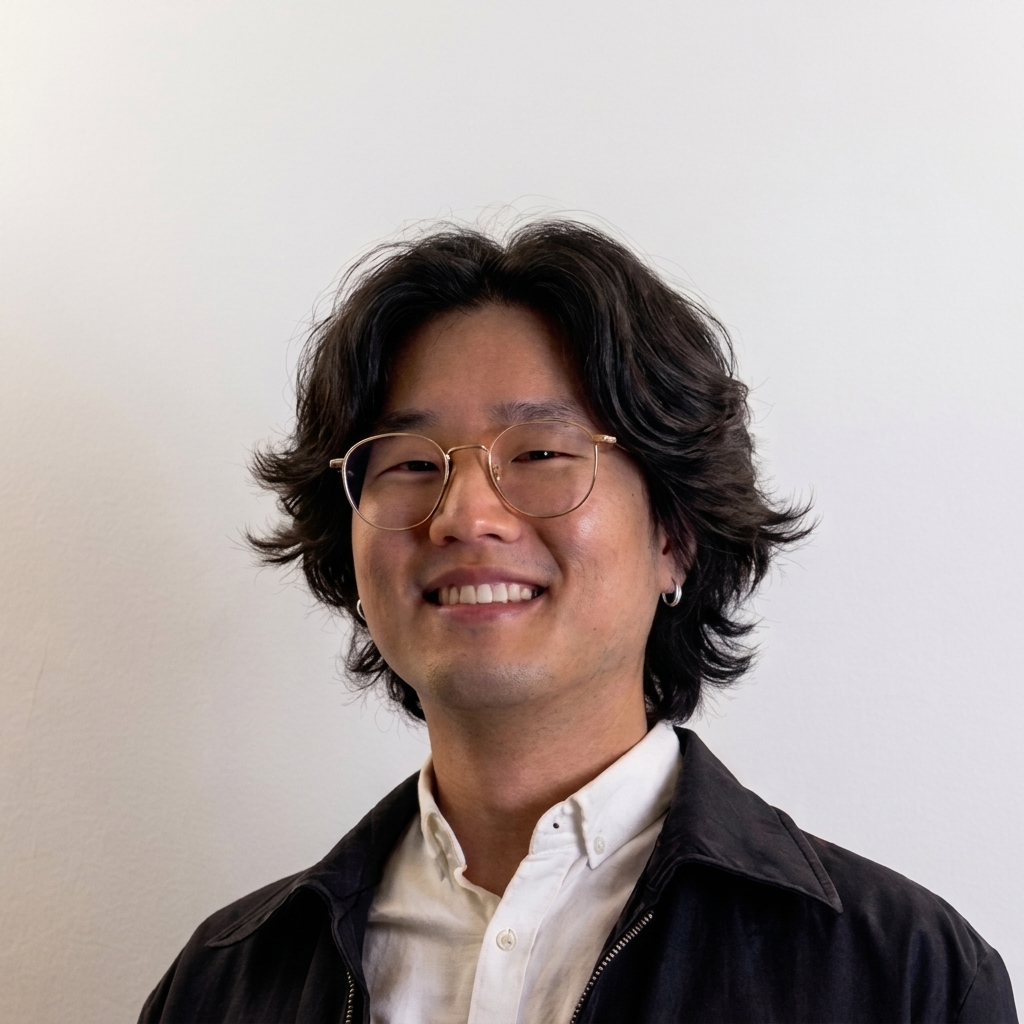
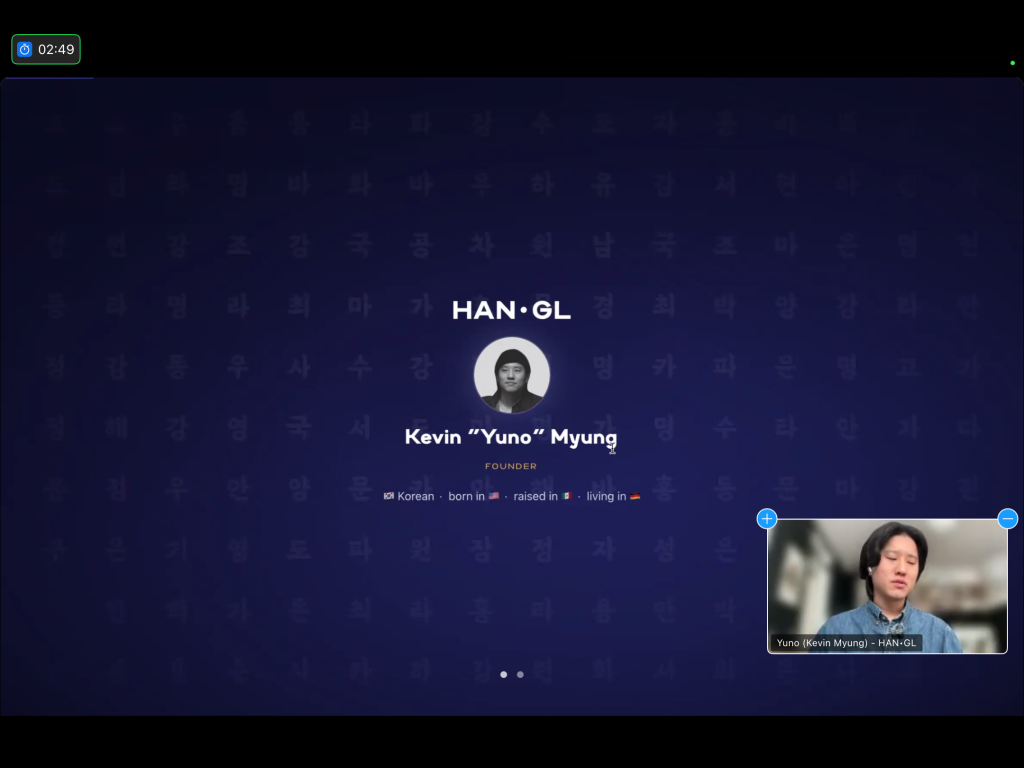
Yuno (Kevin) Myung is a trilingual Korean-American founder who created HAN•GL,a language app built to help people connect with Korean culture. He built the entire app by himself, using AI agents, for around $1,000 total. It’s a remarkably lean approach that let him compete with much bigger, venture-backed competitors.
His teaching method is also different: instead of rote memorization, HAN•GL teaches the Korean alphabet through the story of how it was invented. It helps learners understand the logic behind the language rather than just memorizing shapes.
Under Myung’s leadership, HAN•GL has grown fast and organically, reaching over 16,000 learners in 140+ countries in just four months, without spending anything on ads.
A key part of that growth came from his decision to focus first on Spanish speakers, especially in Mexico, which now makes up 83% of his user base.
The “Spanish-First” Strategy & Global Fanbase
@hangl.app 🥹 Thanks everyone for following my journey… can’t believe it’s been almost 4 months since I released HAN•GL into the world.
♬ sonido original – madakaju
While global language-learning apps chase scale with “one-size-fits-all translated templates,” HAN•GL made a different bet early on: go deep, not wide.
Interestingly, the focus on Spanish speakers was not the initial plan; Myung first launched with English content, but he pivoted after noticing significant traction and comments in Spanish on his Instagram.
As a Spanish speaker himself, Myung’s research revealed that the market was “vastly underserved,” as most high-quality resources were only available in English.
“My market research showed me that there’s basically no competition in the Spanish speaking market. All the big apps, all the free resources, the best ones are always in English.”
It’s a move that proved highly successful: Spanish speakers now make up 83% of the user base, with Mexico emerging as the world’s #2 Korean-wave market.
HAN•GL’s real challenge isn’t attracting these fans. It’s converting them. Myung puts it, that shift is aready underway:
“Korean content is getting more popular; it’s becoming more mainstream…”
The app is built to walk someone from passively consuming Korean content to actively understanding and writing the language itself. It’s not a mere tool. It’s a bridge from fandom to fluency. HAN•GL now serves as a “smooth on-ramp” for the “new emerging fandom” of K-pop and K-drama fans transitioning from passive consumption to active fluency.
Reimagining Korean Pedagogy
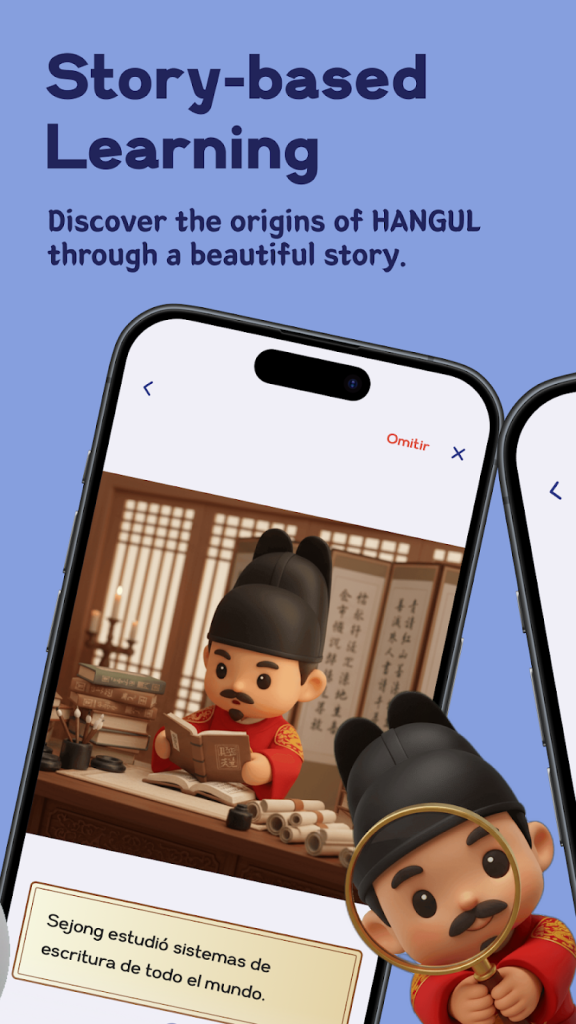
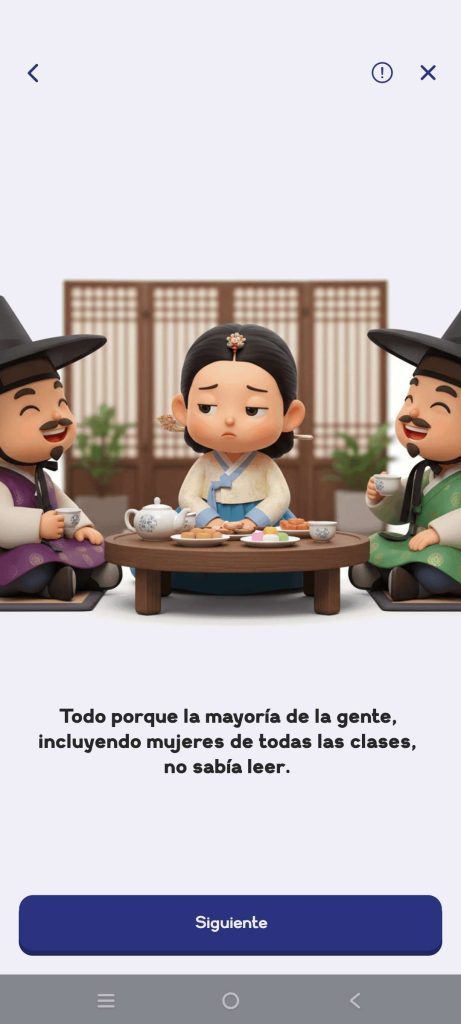
Most language apps treat the Korean alphabet as a memorization drill: rows of characters to be drilled until they stick. HAN•GL takes the opposite approach, teaching Hangeul through the story of its own invention, letting learners grasp not just what each character looks like but why it’s shaped that way.
For someone intimidated by a textbook, that narrative context turns abstract symbols into a logical system they can reason through, rather than a wall of shapes to memorize by brute force. Myung explains the thinking behind that choice:
“The Korean alphabet is perhaps the only one in the world that has a story behind who created it and why. So, I figured I might as well use that to my advantage. The story itself is quite dramatic. I took inspiration from video games, creating a ‘main story mode’ and ‘side quests’ that let you level up your character.”
This same philosophy extends beyond the alphabet: rather than retrofitting a generic language-learning framework onto Korean, HAN•GL was built from the ground up for Korean specifically, honoring the linguistic structures and cultural nuance that a one-size-fits-all app inevitably flattens.
By “breaking the alphabet apart” and systematically introducing it in an order that makes sense for native English and Spanish speakers, the app provides a logical system rather than the generic “cheat sheets” offered by competitors. His trilingual fluency, he says, is exactly what shapes his approach:
“Because I speak all three languages (Korean, English, Spanish) fluently, I can ask myself: “If I were an English speaker, how would I want to learn Korean?”. I understand both the language and the best way to learn it, which allows me to find a balance that other apps have missed. My goal is to use this unique perspective to help you truly connect with the language and bridge the gap between our cultures.”
Organic Growth & Market Traction
@hangl.app Gracias a los 10,000 estudiantes que probaron HAN•GL 🥹 No puedo creer que logré esto gastando $0 en promociones. A penas llevamos 100 días juntos. Quédense atentos porque estoy desarrollando muchísimo más para ayudarles con sus estudios. Todo esto gracias a ustedes que me dan sugerencías, reportan problemas, y comparten mi contenido. Y por supuesto, gracias a los que aportan el proyecto con suscripciones ❤️
♬ original sound – remy
The app’s growth has been 100% organic. A key strategy involved offering a “free complete course” to content creators, who were then eager to share high-value content with their audiences. This community-driven advocacy has resulted in a 4.9-star rating and early profitability. Myung credits the momentum entirely to one platform:
“Everything organic. It’s just been TikTok. In the beginning, before I even launched the app, it was just mostly English content. And then, like I said, the Spanish content started getting some traction.”
With trial-to-paid conversion already strong right out of the gate, HAN•GL’s early monetization numbers offer an early signal about a global market often assumed to be casual or hobbyist.
As the online language-learning industry heads toward a projected $54.8 billion valuation, this kind of willingness to pay suggests that K-culture fans aren’t just passive content consumers. They’re a highly motivated, purchase-ready audience eager to invest in real fluency. It’s not a fandom. And, it’s a market!
Lean Innovation & The AI Roadmap
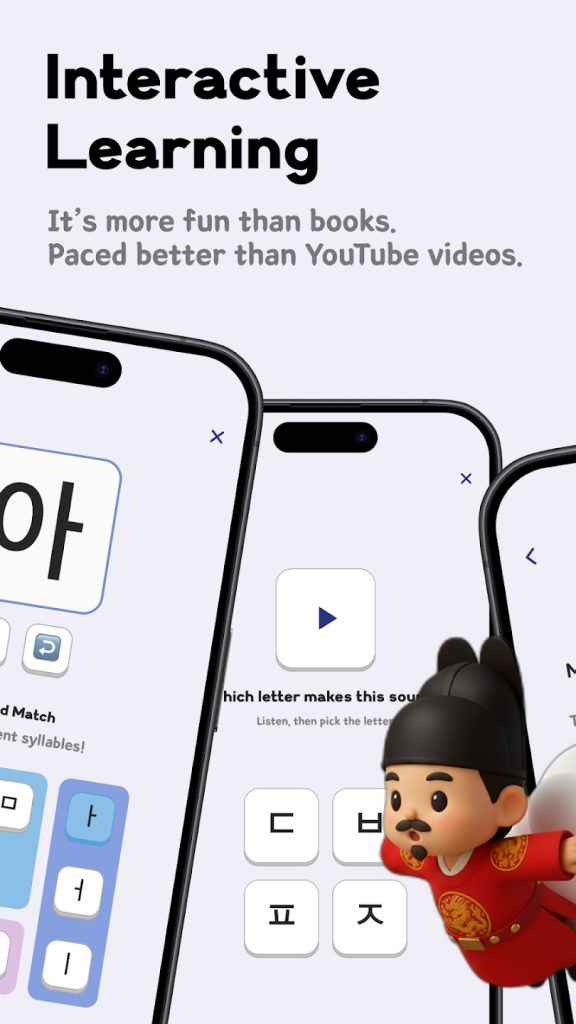
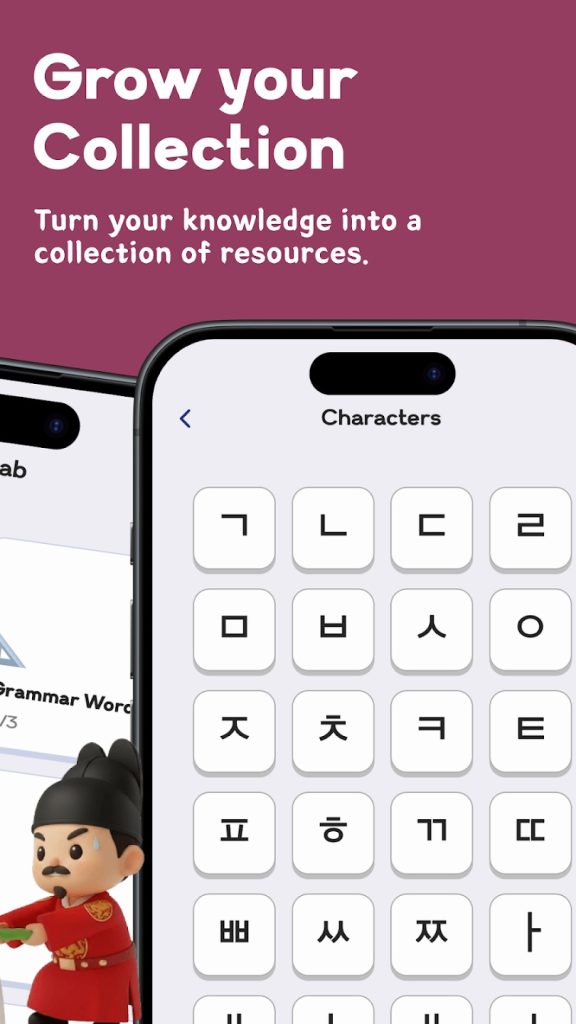
Myung manages the business as “the only human” by building an “army of AI workers” that handle data analysis and report on learning patterns. This lean model allows for faster iteration and a tighter product-market fit than venture-backed incumbents.
“I’ve got, like, steadily building an army of AI that’s going to, like, do my job for me. And this is actually, like, how I’ve been able to do this all alone. It’s because I’ve got, like, AI workers.”
The upcoming AI tutor is designed to handle grammar and conversation practice. It moves HAN•GL beyond vocabulary and alphabet fundamentals. Instead, it targets the real-world fluency fans actually crave. That could mean drafting a heartfelt letter to an idol. Or it could mean navigating daily life on a trip to Korea.
It reimagines the app not just as a study tool but as a patient conversation partner, a “chingu” (friend) that meets learners exactly where their motivation already lives. It’s not a grammar drill. It’s a rehearsal for real connection.
The Road Ahead & Strategic Goals
Fresh off a win at the K-Style Expo Q2, Myung is preparing for “Volume 2,” which will tell the story of how Hangul survived and evolved through Korean history.
“I’m going to release soon the volume two… the additional story after Hangul was invented… how Hangul survived over the time, how it evolved and how it took root in Korean society.”
He is also planning a grammar module for TOPIK 1 concepts and exploring the creation of “collectible” word cards similar to Pokémon trading cards to further gamify the experience.
Currently seeking $200,000 in funding, the startup is looking for strategic partners with genuine access to the Korean cultural ecosystem to help scale HAN•GL to its first million users.
Message to Learners
Ultimately, Myung views Hangul as a “scientific way… to capture sound”.
His message to learners is that mastering this system provides a “secondary alphabet” that can actually assist in learning any foreign language, serving as a permanent bridge between cultures.
“You don’t need to learn the Korean alphabet just to learn Korean — Hangul is really just a scientific system for capturing sound. I actually used it as a secondary alphabet to master English pronunciation myself, and I think it could help anyone learning a foreign language.”
It’s a message rooted in the belief that language isn’t just a skill to acquire, but a bridge to genuine understanding. And that every learner’s journey, however slow or nonlinear, is a valid path toward real connection.
If you are ready to start your learning journey, download HAN•GL on AppStore or PlayStore.
Join us on Kpoppost’s Instagram, Threads, Facebook, X, Telegram channel, WhatsApp Channel and Discord server for discussions. And follow Kpoppost’s Google News for more Korean entertainment news and updates.